
[ad_1]
Athman Khilji & Navami Krishnamurthy


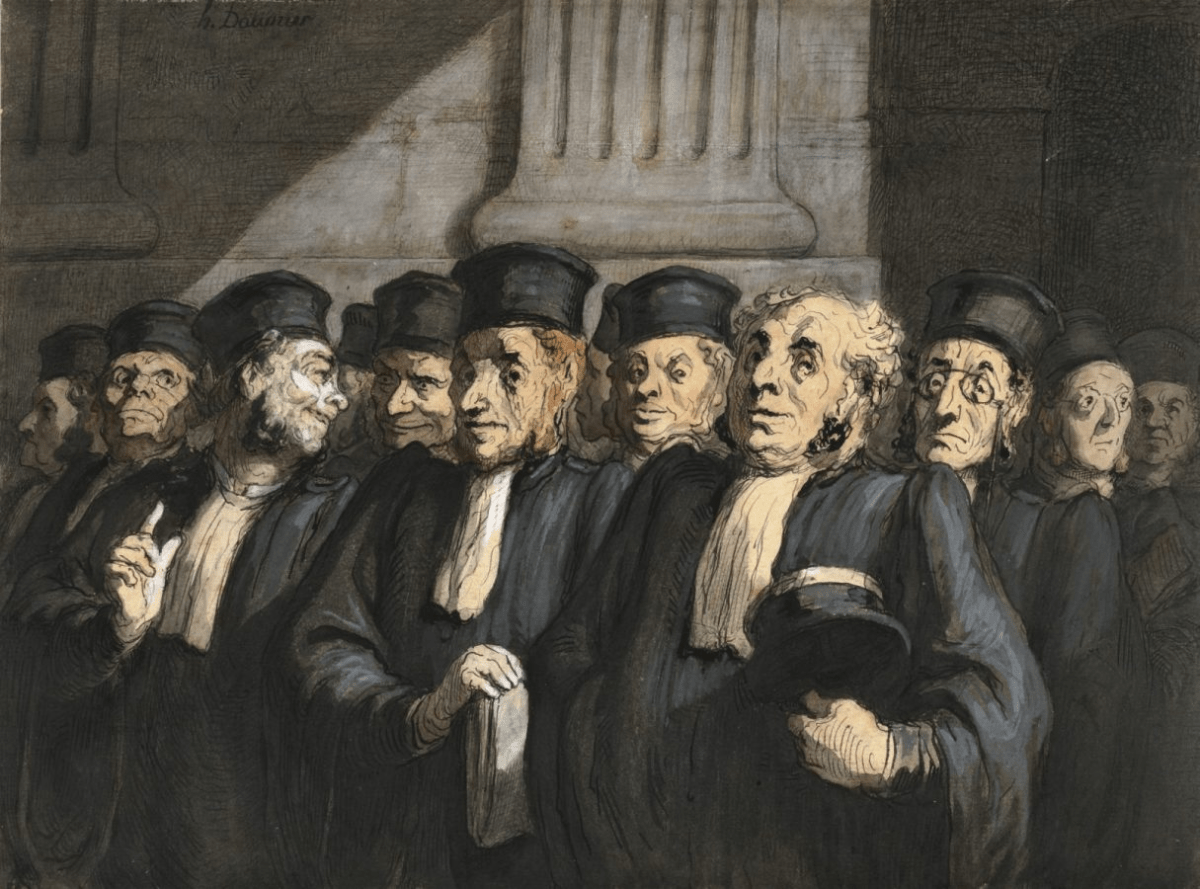
Source: Daily Art Magazine
Abstract: This article examines whether a system that continues to rely on informal structures can remain commercially sustainable and respond to the evolving demands of the modern legal services market. It advocates for structural reforms focused on greater formalisation and professionalisation as essential mechanisms for the growth of the profession in India.
Introduction
India’s litigation ecosystem continues to closely mirror the framework established during the British Raj. For as long as the profession has existed, litigating lawyers have represented clients in court, charged fees in return for their services, and safeguarded the rule of law. While the emergence of firm and chamber-like clusters over the past two decades has brought in some change, the traditional model persists.
Then, as now, a select group of front-ranking lawyers continue to enjoy the more complex and rewarding briefs and, as a result, command premium fees in return for their services. Amidst this, the profession has become personality-driven and devoid of meaningful upward mobility for the rest. While it may be overstated to say that the system is flawed, the prevailing practice warrants dialogue: can a system that continues to operate through informal structures remain commercially sustainable and survive the demands of the modern legal services market?
The litigation services industry remains predominantly unregulated. While chamber practices operate completely outside the regulatory landscape, litigation teams in law firms offer a certain amount of structure and regulatory protection. At its core, there is an ongoing problem of visibility and information advantage. Established practitioners benefit from prestige, visibility and inherited professional networks. Newer entrants, by contrast, operate in a market where professional access is scarce, and pathways for growth remain limited.
In this backdrop, the anticipated entry of foreign law firms has created a sense of unease within the fraternity, prompting a reassessment of whether traditional litigation structures can grow commercially or have grown out of their current structures. These developments prompt an urgent need to revisit the existing framework.
What the sector perhaps requires is a structural reform of litigation services: one that moves decisively toward greater formalisation and commercialisation of the market.
(i) Current Challenges in Litigation: Regulation, Execution, and Oversight (Formalisation)
Both in execution and regulation, the litigation market has been informal and inconsistent. This lack of structure enables arbitrary decision-making, ranging from revenue sharing to administrative practices and professional access. In turn, the concentration of resources is only at the top.
To understand this, consider the existing regulatory framework. Under the Advocates Act, 1961 and the Bar Council of India Rules, 1975 (‘BCI Rules’), law firms and chambers are not recognised as independent juridical entities. Instead, the framework centres exclusively on the individual advocate and their right to practise – treating firms and chambers merely as aggregations of practising lawyers. This is in contrast to the Chartered Accountancy framework under the Institute of Chartered Accountancy of India (‘ICAI’), which recognises firms as regulated entities, stipulating clearer rules on fee structures and professional accountability.
This individual-centric model creates significant constraints and can even be seen as attributable to the personality-driven market that engulfs the litigation industry. The consequences of this model translate into how litigation work has historically been remunerated. Leading senior counsels occupy a distinct and highly individualised space within the profession where their seniority translates into elevated standing and significant human capital in the form of reputation, experience, and professional goodwill. On average, they command exceptionally high professional fees, with some top silks charging in the range of Rs. 12–15 lakhs for appearances before the High Courts and the Supreme Court.
To avoid oversimplification, this is not to say that the high fees charged by senior counsels are unjustified. Senior members of the Bar are legal specialists and significantly influence the outcome of court actions, given their legal prowess and professional goodwill. They also often put their own reputation on the line for litigants in socially, politically and financially sensitive disputes. The focus, rather, is that the industry does not view litigation activity as a ‘team-driven exercise’. This is despite the efforts put in by various stakeholders, much before a case is argued before a court of law. The economic asymmetry is thus policy-driven.
This ambiguity becomes clearer in practice. Senior counsels are routinely engaged by firms or junior counsel to plead their cases before the court, built around a revenue structure that is largely self-determined. A large portion of these fees is usually retained by the head of the chamber, given that the law does not mandate any minimum standard or structured framework for payments, leaving the remuneration of junior lawyers to the discretion of their lead counsels.
In contrast, litigation teams in law firms, that ordinarily represent corporations or high-net-worth individuals in court actions, operate on relatively more formal systems built around the billable hour. These firms typically engage senior advocates on a case-by-case basis, depending on the nature of the dispute, client preferences, and the quantum involved. Collaboration between firms and senior counsel remains episodic and transactional, reliant on client considerations such as urgency and cost allocation.
While core litigation activity is largely interconnected, it remains equally unorganised. While we see briefing counsels and senior advocates collaborate on individual matters, the interactions seldom develop into sustained or integrated relationships and remain largely transactional and case-specific. Underlying this fragmentation is a mutual reluctance to integrate more closely. In fact, the fragmentation must be viewed as deliberate, given the power imbalances that persist between its stakeholders.
Further, advocates are barred from undertaking part-time roles such as teaching or consultancy outside their practice. This limits opportunities for interdisciplinary engagement and the development of academic, consultancy or advisory work. Similarly, strict prohibitions on advertising limit the ability of advocates and firms to solicit work. These restrictions result in an uneven playing field where established practitioners continue to benefit from decades of visibility and media presence, while newer entrants face barriers to building their practice.
At a broader level, these parallel yet intermingling work streams are reinforced by the existing legal framework, which, on account of prolonged inaction, further enables fragmentation and discourages cohesion. This has resulted in a silent, market-driven transfer of power towards certain lawyers over others.
(ii) Future Challenges to Litigation: Scaling, Competence and Competition (Commercialisation)
A significant factor shaping the domestic legal services market is the potential entry of foreign law firms into India. In March 2023, the BCI notified the BCI Rules for the Registration and Regulation of Foreign Lawyers and Foreign Law Firms in India 2022, which, in principle, allowed foreign lawyers to practice international law in non-litigious matters in India on a reciprocal basis, subject to restrictions and registration requirements.
In a way, formalising the sector presents an attractive opportunity for litigating lawyers to position themselves for when foreign law firms require local assistance for their clients before courts, tribunals and regulators. To present the most effective value proposition, these professionals must recalibrate and navigate the (largely self-created) logistical hurdles when the time comes. This perspective is echoed by various scholars that the entry of foreign law firms could accelerate the ‘professionalisation’ of the Indian legal sector. They argue that external presence would demand a shift toward higher standards of service delivery that reward consistency and reliability, as opposed to individual reputation, deep networks, or portfolio-driven metrics.
The larger concern, however, is that the market is, as it stands, not adequately equipped to compete with global firms that operate within more sophisticated legal and regulatory ecosystems.
Certain blame is attributed to the litigation segment, largely failing to evolve from a commercial standpoint. Traditional frameworks and regulatory constraints have hindered litigation firms from viewing their core activity from a business standpoint: scaling of operations, integration of technology, and forming strategic partnerships with non-law professionals to achieve sustainable growth of the firm, practice, and clientele.
For instance, Part VI, Chapter II, Rule 2 of the BCI Rules prohibits advocates from entering into partnerships or any form of remuneration-sharing arrangement with individuals who are not advocates. Advocates are also prohibited from formally collaborating with professionals from other disciplines, such as tax advisors, engineers, or AI specialists. As a result, legal practice often operates through fragmented, reliance-based arrangements rather than as a self-sufficient, integrated service capable of addressing a client’s varied needs under one roof. For instance, where a client requires tax-related assistance or specialised technical advice, the firm may be compelled to outsource the matter due to the absence of in-house expertise.
Who bears the cost of a restrictive framework? Ultimately, the consequences of this regulatory silence and fragmented mode of practice are not confined to a single group; they cut across the profession. On one hand, new entrants remain at a clear disadvantage where current mechanisms leave limited room for merit-based mobility or meaningful competition.
On the other hand, even those who currently benefit from this structure are not insulated from its long-term drawbacks. Given that global standards have adopted technology integration and multidisciplinary service delivery, the same resistance to formalisation, collaboration, and commercialisation that preserves their position today may hinder their ability to scale, innovate, and respond competitively. In this sense, the present framework produces a dual loss: it restricts entry at the bottom while constraining growth at the top. Recognising this shared vulnerability is critical, as it underscores the need for structural reform that not only broadens access but also prioritises sustainability in an evolving legal services market.
Strategic Responses for Litigation Firms: reform, engagement and frameworks
(i) Regulatory Reform
At its core, regulatory reform requires rethinking what an effective litigation practice should look like and, on this basis, what reforms ought to be permitted. Should it allow broader cross-professional collaboration, or should it give firms greater flexibility to design their own organisational models? If so, what safeguards are necessary to preserve the profession’s independence and maintain robust ethical standards?If the litigation sector is to scale up, it must move toward a more professional framework that aligns with international standards.
A primary reform lies at the regulatory level. Reforms that balance the incentives available to all stakeholders of the litigation cycle would effectively address fragmentation in the profession by enabling clearer, institution-level frameworks for inter-professional collaboration. A more comprehensive approach could involve recognising and regulating firms and chambers as entities, rather than focusing solely on individual advocates. While the 2025 amendments to the Advocates Act have, for the first time, proposed to broaden the definition of “legal practitioner” to include not just individual advocates or law graduates but also legal professionals working with public or private organisations,[1] this remains an initial step.
Existing provisions, discussed above, continue to limit not just the litigation sector but the legal services industry from exploring more progressive models, if firms wish to adopt them. Models such as Alternative Business Structures, Multi-disciplinary Practices or other forms of cross-professional collaboration that are increasingly relevant in today’s legal landscape can be implemented if the framework paves the way. For reference, jurisdictions such as the UK and New South Wales have moved towards liberalised frameworks that have allowed firms to scale, attract investment, and better respond to evolving client expectations. A notable example is Ashurst, which in 2025 leveraged generative AI alongside its multidisciplinary teams to manage complex client mandates.
Ultimately, the current system’s reliance on informality, while historically functional, may benefit from a gradual move toward greater professionalisation and formalisation.
(ii) Active Engagement
There is a familiar objection to commercialising litigation activity: that the ‘Bar is not a business’, that the legal profession is noble and must be shielded from economic factors. The uncomfortable truth, however, is that commercial considerations have already seeped into every level of litigation activity, only without adequate checks and oversight. As has been argued many times in this article, the prevailing attempt at detaching the profession from its financial element has resulted in the benefit of a select few.
Indian lawyers may, in this context, draw inspiration from commercial sets of barristers prevalent in the United Kingdom. These sets mobilise a group of legal specialists and advocacy experts across various areas of law while pooling administrative and professional resources. Such a model introduces business-minded considerations such as branding, collaboration and scalability without compromising the professional demands of practice before courts and tribunals.
Another emerging pathway for reform lies in a shift away from a purely reactive, task-based form of lawyering to a more proactive and strategic model of engagement. Some Indian corporate law firms have already begun positioning themselves as active participants in what scholars describe as “strategic lawyering,” where lawyers move beyond core litigation or transactional work to advance their firm as well as the client’s interests. In contrast to the conventional ‘service’ model, which focuses on resolving immediate client issues, this strategic approach involves influencing policy design, negotiating regulatory outcomes, and aligning client operations with anticipated legal developments. For instance, corporate law firms have started to increase engagement with government stakeholders on matters such as foreign direct investment (FDI) policy, offering inputs that reflect both domestic priorities and the expectations of foreign clients.
This shift has clear commercial implications. By shaping the regulatory environment, firms and litigation practices are able to create more predictable and favourable conditions for their clients, enhancing client satisfaction while simultaneously strengthening their own market position. It allows firms to move up the value chain from being just problem-solvers to positioning themselves as trusted advisors. In return, they can unlock new revenue streams, deepen client relationships, and position themselves as indispensable stakeholders in the conversation surrounding market and policy regulation.
Conclusion
The efforts of policymakers and the various stakeholders of the fraternity to bring about meaningful reform may ultimately shape the trajectory of the legal services market in the coming decades. While resources and opportunities remain concentrated at the top, the rigidity of the regulatory framework and prevailing professional mindsets continue to inhibit commercialisation and scalability.
With the evolving needs of domestic and foreign clients in the region, the resulting challenges extend beyond new entrants and smaller firms, carrying wider implications for the legal sector as a whole. It is, thus, imperative that counsel-led practices adopt a holistic approach – one that preserves their role as officers of the court while balancing commercial risk, regulatory challenges and client expectations. If the litigation sector is to achieve these goals, the first step must be to reimagine how these practices operate. Meaningful reform must begin by looking inward.
[1] Advocates (Amendment) Bill, 2025, Section 2(i).
Athman Khilji is an Advocate practicing in the Madras High Court, where his primary focus lies in commercial and tax litigation, arbitration and pre-litigation advisory.
Navami Krishnamurthy is a Research Fellow (Founder’s Office) at the Vidhi Centre for Legal Policy, where she works on independent, collaborative and government projects relating to the law and legal rights.
Related
[ad_2]
Source link

