
[ad_1]
INTRODUCTION
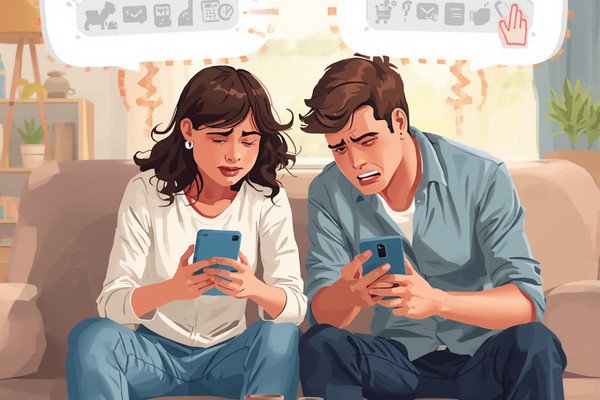
Marriage has traditionally been seen as a space of privacy, where disagreements and personal struggles remain between the spouses. In earlier times, even serious conflicts rarely went beyond the walls of the home. However, with the rise of social media, this idea of privacy has gradually weakened. Today, relationships are no longer confined to personal spaces—they are constantly reflected through posts, messages, and online interactions.

This change has affected not just how couples communicate, but also how conflicts arise and intensify. What may appear to be a simple online act—such as posting a sarcastic remark, sharing a personal grievance, or closely monitoring a partner’s digital activity—can have a deeper emotional impact than expected. The public nature of these actions often makes the harm more severe, as it exposes personal issues to a wider audience.
This brings up an important legal concern: can such digital conduct be considered cruelty for divorce?
Under the Hindu Marriage Act 1955[1]Cruelty is a recognised ground for divorce. Over time, courts have clarified that cruelty is not limited to physical harm but also includes mental and emotional suffering. At the same time, the law does not provide a precise definition of mental cruelty, especially in the context of modern digital behaviour. This leaves courts with the responsibility of deciding, on a case-by-case basis, whether online actions fall within the scope of cruelty.
The increasing reliance on digital communication, especially after the COVID-19 pandemic, has significantly transformed matrimonial relationships. Social media platforms, instant messaging applications, and digital interactions now form an essential part of everyday communication between spouses. At the same time, courts are increasingly witnessing matrimonial disputes involving online humiliation, cyber harassment, emotional affairs conducted through digital platforms, and unauthorised disclosure of personal information. These developments demonstrate that digital behaviour has become a significant factor in modern matrimonial conflicts.
Understanding Cruelty: More Than Physical Harm
The idea of cruelty in Indian divorce law has expanded significantly. Earlier, it was associated mainly with physical violence. However, courts have recognised that emotional and psychological harm can be just as damaging.
In V. Bhagat v. D. Bhagat, [2] The Supreme Court observed that mental cruelty includes conduct that causes deep emotional pain, making it difficult for spouses to live together.
Similarly, in Shobha Rani v. Madhukar Reddy[3]The Court emphasised that cruelty depends on the facts and circumstances of each case.
Although the decisions in V. Bhagat v. D. Bhagat and Shobha Rani v. Madhukar Reddy did not directly involve digital conduct, the principles laid down by the Supreme Court are broad enough to include emotional harm caused through social media and online behaviour. Public humiliation through online platforms, repeated digital accusations, and emotionally abusive online interactions may similarly create mental agony sufficient to disrupt matrimonial harmony and make cohabitation difficult.
When Online Behaviour Crosses the Line
Social media itself is not the problem. The issue lies in how it is used within a relationship. Certain kinds of digital behaviour can seriously affect a spouse’s mental well-being.
Take public humiliation, for example. Posting personal disputes, making sarcastic or insulting remarks, or indirectly targeting a spouse through posts can damage their dignity. What makes it worse is the audience. Unlike private arguments, these are seen by friends, family, and sometimes even strangers.
Then there is online infidelity. The law traditionally focuses on physical relationships, but emotional connections formed online can be equally harmful. Constant messaging, flirting, or maintaining a secret digital relationship with someone else can break trust. Even if it does not amount to legal adultery, it can still cause significant mental distress.
Another issue is privacy. Sharing personal chats, photos, or sensitive information without consent can deeply violate trust. In extreme cases, this also connects to the right to privacy recognised in Justice K.S. Puttaswamy v. Union of India.[4]
In K. Srinivas Rao v. D.A. Deepa, the Supreme Court recognised that humiliating conduct and false allegations causing mental suffering may amount to cruelty. The reasoning adopted by the Court may also extend to situations involving defamatory social media posts, public online humiliation, or repeated digital harassment directed against a spouse. Such conduct may adversely affect both emotional well-being and social reputation.
How Courts Are Dealing with It
Indian courts have not yet created specific rules for digital cruelty. Instead, they rely on existing principles of mental cruelty and apply them to new situations. At one level, this makes sense. The concept of mental cruelty is broad enough to include new forms of harm. But in practice, it creates a problem—inconsistency.
In certain matrimonial disputes, courts have treated repeated defamatory social media conduct and online humiliation as serious forms of emotional cruelty, particularly where such behaviour damaged the spouse’s dignity or reputation. However, in other cases, isolated online disputes or casual digital interactions have not been considered sufficient to justify the dissolution of marriage. This demonstrates the absence of consistent judicial standards governing digital conduct within matrimonial law.
The Real Challenge: Where Do We Draw the Line?
Not every online action can or should be treated as cruelty. People have the right to express themselves.[5]And social media is meant for sharing thoughts and opinions. So the real question is not whether digital conduct matters—it clearly does—but when does it cross the legal threshold?
For example:
- Is one negative post enough?
- Does it need to be repeated behaviour?
- Should intention matter, or only the impact?
These are questions that courts currently answer on a case-by-case basis, which leads to uncertainty.
Problems in Proving Digital Cruelty
Even when digital behaviour is clearly harmful, proving it in court is not always easy.
First, there are evidentiary issues. Screenshots can be edited, accounts can be fake, and verifying authenticity can be difficult. Although the Indian Evidence Act 1872 allows electronic evidence, the process is not always straightforward.[6]
Second, there is the issue of context. A message or post may look offensive when taken alone, but its meaning can change depending on the situation. Courts have to carefully examine the overall context before deciding whether it amounts to cruelty.
Third, there is the risk of misuse. In some cases, normal online interactions may be exaggerated to strengthen a divorce claim. This makes it important for courts to strike a balance between protecting genuine victims and preventing false claims.[7]
A significant difficulty concerns the admissibility and authenticity of electronic evidence. Courts must address practical concerns such as manipulated screenshots, fake social media accounts, edited messages, and fabricated digital conversations. Consequently, proving digital cruelty often involves both technical and legal challenges.
Looking Beyond India
In other countries, courts have started to recognise the impact of digital behaviour more clearly. Online harassment, cyberstalking, and public defamation are increasingly considered relevant in divorce cases. While India has not yet developed such detailed standards, these developments show that the issue is becoming globally significant.
In the United Kingdom, digital abuse and coercive online behaviour are increasingly recognised within domestic violence and matrimonial proceedings. Online surveillance, repeated monitoring of digital activity, cyber harassment, and public humiliation through social media may be treated as forms of psychological abuse. These developments reflect the growing international recognition of technology-driven emotional harm within intimate relationships.
Conclusion
The way relationships are lived today is very different from the past, and the law cannot ignore that shift. Social media has made it easier to connect, but it has also made it easier to hurt, often in ways that are more public and more lasting.
Indian courts have already recognised that cruelty is not limited to physical harm and that mental suffering is equally important. In that sense, it is only logical that digital conduct should be considered within this framework. However, the absence of clear standards makes the application of the law uncertain.
The transformation of matrimonial relationships in the digital age has created new forms of emotional conflict and psychological harm. Indian courts have already recognised that cruelty is not limited to physical violence and may include mental suffering arising from conduct that seriously affects the dignity and emotional well-being of a spouse. In this context, it is reasonable that serious forms of digital misconduct should fall within the scope of matrimonial cruelty. However, the absence of clear legal standards continues to create uncertainty and inconsistency in judicial interpretation. Similar forms of online behaviour may be treated differently across cases, leading to unpredictability in matrimonial litigation. Therefore, there is a growing need for clearer judicial principles or legislative guidance to ensure that the law effectively balances freedom of expression with protection against digital emotional abuse.
Author(s) Name: Thonduru Abhinava Samanvith (Christ Academy Institute of Law)
References:
[1] Hindu Marriage Act 1955, s 13.
[2] V Bhagat v D Bhagat (1994) 1 SCC 337.
[3] Shobha Rani v Madhukar Reddy (1988) 1 SCC 105.
[4] Justice K S Puttaswamy v Union of India (2017) 10 SCC 1.
[5] Article 19(1)(a), Constitution of India.
[6] Indian Evidence Act 1872, s 65B; Anwar P v P K Basheer (2014) 10 SCC 473.
[7] Samar Ghosh v Jaya Ghosh (2007) 4 SCC 511
[ad_2]
Source link

