
Written by Jagdish Reddy | Reviewed against guidance from University of California IPM and University of Illinois Extension | Updated May 2026
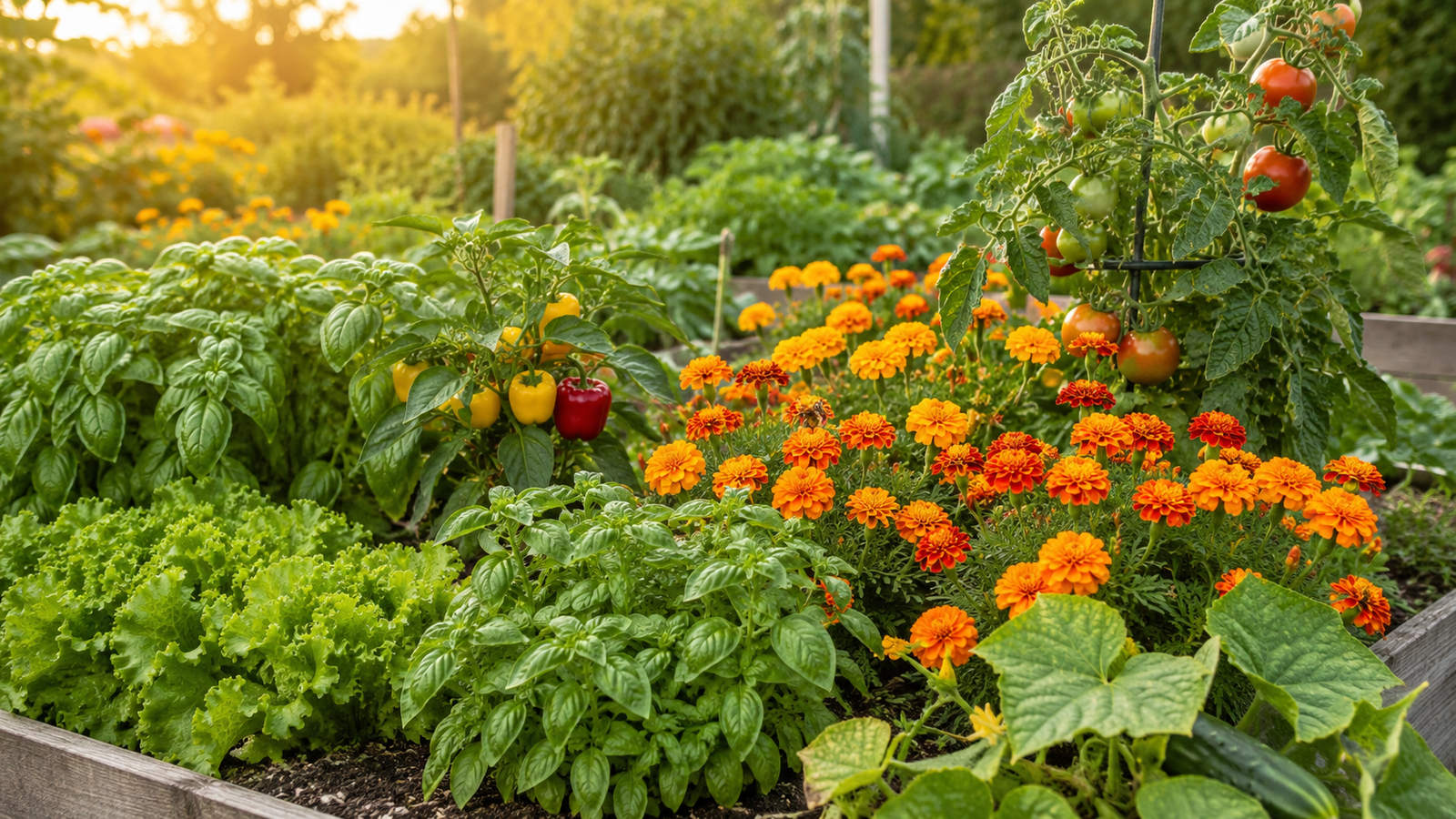
Choosing the right companion plants for Tagetes marigolds makes a real difference in how well your vegetable garden handles pests, pollination, and space. Some pairings help with insects, while others improve fruit set or make better use of limited garden space.

The best pairing depends on your garden goals and growing conditions. This guide groups the 15 best companions by what each plant actually gains from marigolds, so you can plan your layout with a clear purpose behind every choice.

What Marigolds Do Best in Vegetable Gardens
- Repel some garden pests above and below ground
- Attract pollinators and beneficial insects
- Improve biodiversity in mixed vegetable beds
- Help manage root-knot nematodes over a full growing season
- Fill garden borders and edges with low-maintenance color
Best Companion Plants for Tagetes Marigolds at a Glance
| Plant | Main Benefit | Best Marigold Type |
| Tomatoes | Nematode and aphid control | French |
| Peppers | Aphid and thrips deterrence | French |
| Eggplants | Flea beetle deterrence | Signet |
| Brassicas (broccoli, kale, cabbage) | Aphid and whitefly control | French |
| Lettuce | Afternoon shade extension | African |
| Spinach | Heat and aphid protection | African |
| Bush beans | Bean beetle deterrence | French |
| Carrots | Carrot fly deterrence | French |
| Cucumbers | Pollinator attraction | French/Signet |
| Squash and zucchini | Vine borer wasp attraction | French/African |
| Basil | Dual scent pest barrier | Signet |
| Onions | Broad-spectrum pest deterrence | French |
| Garlic | Sulfur-scent pest deterrence | French |
| Strawberries | Slug deterrence and pollination boost | French |
| Nasturtiums | Trap crop for aphids | Any |
Quick List: 15 Best Companion Plants for Tagetes Marigolds
- 1. Tomatoes
- 2. Peppers
- 3. Eggplants
- 4. Cabbage family crops (broccoli, kale, cabbage)
- 5. Lettuce
- 6. Spinach
- 7. Bush beans
- 8. Carrots
- 9. Cucumbers
- 10. Squash and zucchini
- 11. Basil
- 12. Onions
- 13. Garlic
- 14. Strawberries
- 15. Nasturtiums
Pros and Cons of Marigold Companion Planting
Pros:
- Reduces pest activity from aphids, whiteflies, and nematodes
- Attracts beneficial insects and pollinators
- Easy to grow alongside most vegetables and herbs
- Low water needs once established
Cons:
- Not a complete pest-control solution for severe infestations
- Nematode suppression requires an entire growing season
- Needs proper spacing to avoid crowding and fungal problems
- Limited effectiveness in open areas for mosquito deterrence
Why Tagetes Marigolds Are Popular Companion Plants
Natural Pest Control Benefits
Tagetes marigolds produce thiophene compounds in their roots. These chemicals are toxic to root-knot nematodes, one of the most damaging soil pests in vegetable gardens.
French marigolds (Tagetes patula) are particularly effective because their denser, shallower root system interacts directly with the top layers of soil where nematodes are most active.
Above ground, the strong scent of marigold foliage disrupts how aphids, whiteflies, and thrips locate host plants. It reduces infestation rates but does not eliminate pests entirely.
How Marigolds Attract Pollinators and Beneficial Insects
The open, flat flower heads of Tagetes marigolds are easy for hoverflies, parasitic wasps, and bees to access.
These beneficial insects pollinate nearby vegetables while also preying on pest insects. Planting pollinator-friendly flowers like marigolds near cucumbers, squash, and beans improves pollination rates in enclosed or low-traffic garden areas.
Why Gardeners Use Marigolds in Vegetable Beds
Beyond pest control, marigolds act as trap crops for spider mites and thrips, drawing pests away from vegetables.
Their low water needs also make them reliable gap fillers in spots where taller crops create partial shade. As beneficial flowers for vegetable gardens, they are among the easiest to grow and maintain.
When Marigolds Are Not Enough
Marigolds reduce insect pressure in the garden. They do not stop severe infestations on their own.
If nematodes, aphids, or whiteflies are already established in your soil or on your crops, marigolds will slow the spread but will not reverse an active problem. Crop rotation, clean soil management, and adequate plant spacing matter more than flowers alone in those situations.
Some companion planting claims about marigolds are anecdotal. The nematode suppression effect, however, has documented research support from agricultural institutions. It requires dense planting over at least one full growing season, not just a few border plants.
Use marigolds as part of a broader approach, not as a standalone fix.
Best Types of Tagetes Marigolds for Companion Planting
French Marigolds (Tagetes patula)
The most useful variety for companion planting. Compact growth, prolific blooming, and the highest concentration of nematode-fighting root compounds.
French marigolds are the top choice for tomatoes, peppers, and brassicas. They stay low, spread their roots through the active nematode zone, and bloom continuously through the growing season. Varieties like Petite Gold and Lemon Drop work well in tighter spaces.
African Marigolds (Tagetes erecta)
Taller and more vigorous than French marigolds. Better suited as windbreaks or background plants in large vegetable beds.
Their larger flowers are especially attractive to bumblebees. In a direct comparison of French marigolds vs African marigolds for pest control: French types win on nematode and aphid suppression, while African types win on sheer pollinator attraction and height-based wind protection.
Signet Marigolds (Tagetes tenuifolia)
Signet marigolds are less commonly used but work well in containers and herb gardens. They have edible flowers and a citrusy scent that is effective at deterring aphids.
They tolerate heat well and stay compact, making them practical where space is limited. Among the best marigolds for vegetable gardens when container planting is the primary goal.
Common Garden Pests Tagetes Marigolds May Help Deter
Marigolds help reduce pest activity, but they are not a complete pest-control solution. Here is what the evidence actually supports:
- Aphids: The scent disrupts how aphids locate host plants. Most effective when marigolds are densely planted near peppers and roses.
- Whiteflies: Marigolds attract hoverflies, which are natural whitefly predators. The control is indirect but meaningful.
- Root-knot nematodes: Documented reduction after one full growing season of dense French marigold planting. Works best as a cover crop rotation, not just a border.
- Mosquitoes and small flying insects: The foliage has some repellent effect in enclosed spaces like patios. The effect is mild in open areas and should not be the primary reason to plant marigolds.
15 Best Companion Plants for Tagetes Marigolds
The plants below are grouped by the specific benefit marigolds provide to each crop. Onions and garlic are listed separately because they work through different scent mechanisms.
Best Marigold Companion Plants for Pest Control
These crops attract nematodes, hornworms, and aphids. French marigolds planted nearby provide direct, documented protection. These are the strongest pairings for gardeners growing vegetables organically.
1. Tomatoes
Tomatoes are vulnerable to root-knot nematodes, hornworm caterpillars, and aphids. French marigolds planted 12 to 18 inches from tomato stems help suppress nematode populations in the root zone.

The scent also deters aphids and confuses adult hornworm moths looking for egg-laying sites. Space marigolds between tomato cages rather than directly underneath so both plants get adequate air circulation.
For higher yields and healthier plants, these tomato gardening tips and DIY growing techniques cover pruning, spacing, watering, and pollination methods for home gardens.
Planting marigolds alongside tomatoes works best with French varieties specifically, because their shallow, dense root structure targets the same soil depth where tomato nematode damage originates. For beds with 4 to 6 tomato plants, plant one marigold every 18 to 24 inches along the perimeter.
If your container tomatoes are flowering but not producing fruit, these common reasons tomato plants stop fruiting in balcony pots can help identify pollination, heat, and watering problems.
2. Peppers
Peppers share many of the same pest problems as tomatoes, particularly aphids and thrips. A ring of French marigolds around the planting perimeter creates a natural scent buffer.
Marigolds and peppers companion planting also provides partial wind protection in exposed beds, which reduces physical stress on pepper stems during windy periods.
3. Eggplants
Eggplants attract flea beetles and aphids. Signet marigolds interplanted nearby disrupt flea beetle orientation, since the beetles locate host plants largely by scent.
Keep spacing at 12 inches minimum. Eggplants need good air circulation to prevent fungal issues, so avoid crowding.
4. Cabbage Family Crops (Broccoli, Kale, Cabbage)
Brassicas attract cabbage loopers, whiteflies, and aphids. Dense marigold borders around brassica beds attract hoverflies, which are major predators of aphid colonies.

This is one of the cleaner examples of using flowering companion plants in vegetable gardens without relying on sprays.
Vegetables That Benefit From Marigold Shade and Spacing
These low-growing or heat-sensitive crops benefit from the partial microclimate that taller marigold varieties create. The combination makes efficient use of space in beds and raised gardens.
5. Lettuce
Lettuce bolts quickly in direct summer heat. African marigolds planted on the south-facing edge of a lettuce bed provide afternoon shade that can extend the harvest window by one to two weeks in warm climates.
The marigolds also deter aphids, which are a serious problem for lettuce in hot weather. This pairing works well in raised beds where spacing can be controlled precisely.
6. Spinach
Spinach has similar heat sensitivity to lettuce. Plant African marigolds on the western edge to block intense late-afternoon sun.
The combination also keeps aphid numbers lower, which matters because spinach leaves are a common aphid target in spring and early summer.
7. Bush Beans
Bush beans fix nitrogen in the soil, which benefits marigolds growing nearby. In return, the marigolds deter Mexican bean beetles and aphids from the bean foliage.
Both plants benefit from this pairing. It is one of the few truly reciprocal marigold pairings in a vegetable garden.
8. Carrots
Carrot roots grow downward while marigold roots spread shallow and wide, so root competition is minimal. The marigold scent deters carrot flies, which locate host plants by the smell of bruised carrot foliage.
Interplanting every two or three carrot rows with a row of French marigolds gives the best protection without crowding.
Companion Plants That Improve Pollination
These plants combined with marigolds create a pollinator-rich zone in the vegetable bed. The goal is to draw bees and beneficial insects in early and keep them visiting throughout the season.
9. Cucumbers
Cucumbers need active pollination to set fruit and are also susceptible to cucumber beetles. Marigolds planted at the base of trellises attract bees to the area and deter cucumber beetles with their scent.

In enclosed or sheltered gardens where pollinator activity is naturally low, this pairing meaningfully improves fruit set. Companion planting marigolds with vegetables like cucumbers is especially useful in urban or balcony gardens.
10. Squash and Zucchini
Squash vine borers and squash bugs are persistent problems. Marigolds attract parasitic wasps that prey on squash vine borer eggs.
Plant marigolds at the corners of squash beds rather than directly alongside the vines, which can sprawl and cover them.
11. Basil
Basil repels thrips and flies. Marigolds deter aphids and whiteflies. Together, the two scent profiles cover a broader range of pest species than either plant alone.

Both attract pollinators and have compatible sun and water requirements. Flowers that repel pests, like marigolds, work especially well paired with aromatic herbs like basil because the combined scent output is harder for insects to filter out.
12. Onions
Onions emit sulfur compounds that repel a different range of insects than marigolds do. When planted together, the two scent profiles complement each other and cover more pest species.
Onions are low-growing and do not compete with marigolds for light. Plant them along the same bed perimeter for a layered scent barrier.
13. Garlic
Garlic works as a strong companion to marigolds along bed edges. The sulfur-heavy scent of garlic foliage deters aphids, Japanese beetles, and spider mites that the marigold scent alone does not fully address.
Interplanting garlic cloves between marigold border plants creates one of the most effective natural pest barriers available without any spraying.
Best Flower Companion Plants for Marigolds
These beneficial flowers for vegetable gardens work alongside marigolds to extend pest deterrence, improve trap cropping, and bring in a wider range of pollinators.
14. Strawberries
Strawberries benefit from marigold companion planting in two ways. The marigold scent deters slugs to some degree, and the pollinator activity from marigold blooms increases strawberry fruit set during the critical flowering window.
Plant marigolds around the perimeter of strawberry beds rather than between plants, as strawberries spread by runners and benefit from open space between crowns.
15. Nasturtiums
Nasturtiums are trap crops. Aphids strongly prefer nasturtiums over most vegetables, so planting them near marigolds draws aphid colonies away from crops.
The combination of marigold scent deterrence and nasturtium trap cropping gives you both a repellent and a decoy. This is a more complete pest strategy than either plant alone and works well in both raised beds and open garden borders.
Where to Place Tagetes Marigolds in the Garden
Border Planting Around Vegetable Beds

A continuous marigold border around the perimeter creates a scent barrier and a visible pollinator strip. Use French marigolds for nematode-affected beds.
Use African marigolds for taller borders that provide wind protection for crops like peppers and eggplants.
Planting Marigolds Between Rows
Interrow planting works best in beds with tomatoes, peppers, and brassicas. Place one marigold plant every 18 to 24 inches between crop rows.
This distributes the scent throughout the bed rather than concentrating it at the edges, which improves deterrence for aphids and whiteflies.
How Many Marigolds Per Bed
One marigold every 18 to 24 inches is enough for most small vegetable beds. For a standard 4×8-foot raised bed, 6 to 8 French marigolds placed as a perimeter border provides adequate coverage.
For nematode control specifically, fill the entire bed with marigolds for one full season before planting vegetables. Border planting alone is not dense enough for meaningful nematode suppression.
Using Marigolds in Raised Beds and Containers

In raised beds, French marigolds work well in the corners or as edge plants. In containers, Signet marigolds are the best choice because of their compact size. If you are growing marigolds in containers for the first time, this detailed guide explains how to grow marigolds in pots with proper soil, drainage, and sunlight requirements.
Use pots at least 8 inches deep with drainage holes. Plant one Signet marigold per 6-inch pot or three plants per 12-inch container. Roots restricted too tightly produce fewer flowers and less of the pest-deterrent compounds.
When to Plant Tagetes Marigolds for Companion Planting
Spring Planting Timing
Transplant marigold seedlings outdoors after the last frost date in your region. In most temperate zones, that is late April to mid-May.
If starting from seed indoors, sow 4 to 6 weeks before the last frost date. Marigolds germinate in 5 to 7 days with consistent warmth above 65 degrees F.
Frost Considerations
Tagetes marigolds are frost-sensitive. Even a light frost will kill established plants. Do not rush transplanting in spring.
In regions with short growing seasons, start seeds indoors earlier and use row covers after transplanting if a late frost is possible.
Succession Planting and Timing With Vegetables
For nematode control, plant marigolds at the start of the growing season and allow them to grow for at least 60 to 90 days before turning them into the soil.
For companion planting alongside vegetables, transplant marigolds at the same time as your vegetable transplants. Starting marigolds too late reduces their effectiveness during the most pest-vulnerable period of crop growth.
Best Marigold Companion Planting Strategies by Climate
Humid Climates
In humid regions, air circulation matters more than in dry areas. Space marigolds at the upper end of recommended distances to reduce fungal issues like powdery mildew.
Choose French marigolds over African types in high-humidity conditions, as their lower growth profile allows better airflow at soil level.
Tropical Climates
In tropical climates, marigolds grow year-round and can be treated as short-lived perennials. Infestation risk is higher, so dense planting is more important.
Signet marigolds handle tropical heat particularly well. Replace plants every 3 to 4 months as older marigolds produce fewer pest-deterrent compounds.
Dry and Arid Climates
Marigolds are naturally drought-tolerant once established. In very hot climates, water every 5 to 7 days after establishment.
African marigolds handle heat and dry conditions better than French types and can reach full bloom height even in low-rainfall seasons.
Short-Season Regions
In regions with growing seasons under 120 days, start marigolds indoors 6 weeks before last frost. Use French marigolds, which bloom faster than African types.
Prioritize pest protection over nematode control in short seasons, since full nematode suppression requires a longer growing period than most short seasons allow.
How to Plant Tagetes Marigolds With Companion Plants
Best Sunlight Conditions
Marigolds need at least 6 hours of direct sunlight daily. In partial shade, they produce fewer flowers and less of the pest-deterrent foliage compounds.
When pairing with shade-tolerant crops like lettuce, place marigolds on the south or west side so the crop gets filtered light without the marigolds being shaded out.
Proper Plant Spacing
Spacing by variety:
- French marigolds: 6 to 10 inches apart
- African marigolds: 12 to 18 inches apart
- Signet marigolds: 8 to 12 inches apart
Avoid planting closer than 6 inches from the base of vegetable plants to prevent moisture competition and poor air circulation.
Watering and Soil Tips
Marigolds are drought-tolerant once established but need consistent moisture during the first three weeks after transplanting.
They prefer well-draining soil with a pH between 6.0 and 7.0. For stronger flowering and healthier root growth, you can also use homemade fertilizer for marigolds made from simple kitchen and garden ingredients. Soggy soil promotes root rot, especially in compact raised bed environments where drainage can be limited.
Marigold Companion Planting Chart
Use this companion planting tool to quickly check which vegetables, herbs, and flowers grow best with Tagetes marigolds.
| Plant | Benefit Gained | Best Marigold Type | Placement |
| Tomatoes | Nematode + aphid control | French | Between/around plants |
| Peppers | Aphid + thrips deterrence | French | Perimeter ring |
| Eggplants | Flea beetle deterrence | Signet | Interplanted, 12 in. |
| Brassicas | Aphid/whitefly control | French | Dense border |
| Lettuce | Shade + aphid control | African | South/west edge |
| Spinach | Shade + aphid control | African | West edge |
| Bush Beans | Bean beetle deterrence | French | Interrow |
| Carrots | Carrot fly deterrence | French | Every 2 to 3 rows |
| Cucumbers | Pollinator boost + beetle | French/Signet | Trellis base |
| Squash/Zucchini | Vine borer wasp attraction | French/African | Bed corners |
| Basil | Dual scent pest barrier | Signet | Alongside |
| Onions | Broad pest deterrence | French | Bed perimeter |
| Garlic | Sulfur scent complement | French | Bed perimeter |
| Strawberries | Slug deterrence + pollination | French | Bed perimeter |
| Nasturtiums | Trap crop for aphids | Any | Nearby, separate area |

3 Plants to Avoid Growing Near Tagetes Marigolds
Avoid planting marigolds near:
- Aggressive mint varieties
- Invasive spreading ground covers
- Plants that require constantly wet soil

Mint
Mint spreads aggressively by underground runners and will crowd out marigold root zones within a single season.
If you want both in the same garden area, keep mint in its own sunken pot with the bottom removed, buried to the rim.
Aggressive Spreading Ground Covers
Plants like creeping Jenny or similar invasive ground covers compete directly with marigold roots for water and nutrients.
They also reduce air circulation at the base of marigold plants, which promotes fungal issues like powdery mildew.
Moisture-Loving Plants That Cause Marigold Root Rot
Water-loving plants such as bog sage or cardinal flower require irrigation levels that will cause marigold root rot.
Marigolds need soil to dry slightly between waterings. Pairing them with moisture-loving plants creates a watering conflict that harms both.
Common Companion Planting Mistakes With Marigolds
Planting Too Closely Together
Marigolds planted less than 6 inches from vegetable crops create moisture and nutrient competition and block air flow.
Plan marigold placement before transplanting vegetables, not as an afterthought when beds are already full.
Ignoring Air Circulation
Dense marigold plantings without adequate spacing invite powdery mildew and botrytis, which then spread to nearby vegetables.
In humid regions, stay at the upper end of recommended spacing. In dry climates, the lower end is acceptable.
Expecting Too Much Too Soon
If pests are still appearing after you plant marigolds, that does not mean companion planting failed. Marigolds reduce pest activity gradually over weeks, not days.
For nematode control specifically, results take an entire growing season. Do not expect immediate change after transplanting.
Overwatering Marigolds
Marigolds tolerate dry spells far better than wet feet. In beds shared with water-hungry crops like cucumbers or squash, monitor soil moisture separately near marigold roots.
Adjust irrigation so marigolds get less frequent watering than the vegetables around them.
If your marigold foliage starts fading or discoloring, this guide on why marigold leaves turn yellow explains the most common watering, nutrient, and drainage problems.
Reference Sources
University of California IPM: Integrated Pest Management: Natural Enemies and Beneficial Insects
For more on what the research actually supports, see this overview from University of Illinois Extension: Companion Planting, Combining Plants for a Healthy Garden
Frequently Asked Questions About Tagetes Marigold Companion Planting
Do Tagetes Marigolds Really Repel Pests?
Yes, but with realistic expectations. French marigolds reduce root-knot nematode populations with documented research support. Above-ground deterrence for aphids and whiteflies is real but partial. Dense planting significantly improves results compared to sparse border planting.
Can You Grow Marigolds With Tomatoes?
Yes. This is one of the best-supported companion planting pairings. Plant French marigolds 12 to 18 inches from tomato stems, not directly underneath. French varieties work best here because their root zone targets the same soil depth where nematode damage occurs.
Are Tagetes and Calendula the Same Plant?
No. Tagetes and calendula are different plants often confused because both are called marigolds. Tagetes are native to the Americas and have the nematode-fighting root compounds discussed in this article. Calendula is a different genus native to Europe and lacks that chemistry entirely.
Do Marigolds Help Prevent Nematodes?
French marigolds (Tagetes patula) do reduce root-knot nematode populations, but only with dense planting across the full bed for at least 60 to 90 days. Border planting alone provides limited nematode control. For serious nematode problems, use marigolds as a cover crop rotation before planting vegetables.
Do Marigolds Repel Mosquitoes?
Partially. The scent of marigold foliage has a mild repellent effect on mosquitoes in enclosed spaces like patios, balconies, and covered garden areas. In open gardens, the effect is too diffuse to be meaningful. Marigolds should not be the primary strategy for mosquito control, but they do contribute in confined spaces.
Which Marigold Variety Works Best for Companion Planting?
French marigolds (Tagetes patula) are the top choice for pest control, nematode suppression, and pollinator attraction in most vegetable gardens. Signet marigolds work best in containers and small herb gardens. African marigolds are most useful as tall border plants where wind protection and pollinator attraction are the main goals.
Final Thoughts on Tagetes Marigold Companion Planting
Marigolds work best when the pairing is chosen with a specific goal in mind. Tomatoes and peppers need pest protection. Lettuce needs shade. Cucumbers need pollinators. Strawberries need better fruit set.
Choosing the right plant for the right reason, and giving everything enough space to breathe, will consistently produce better results than any generic companion planting list.
Start with one or two pairings, observe what changes over a full growing season, and expand from there.
Plan your marigold companion garden layout using this interactive garden planner tool.

