
[ad_1]

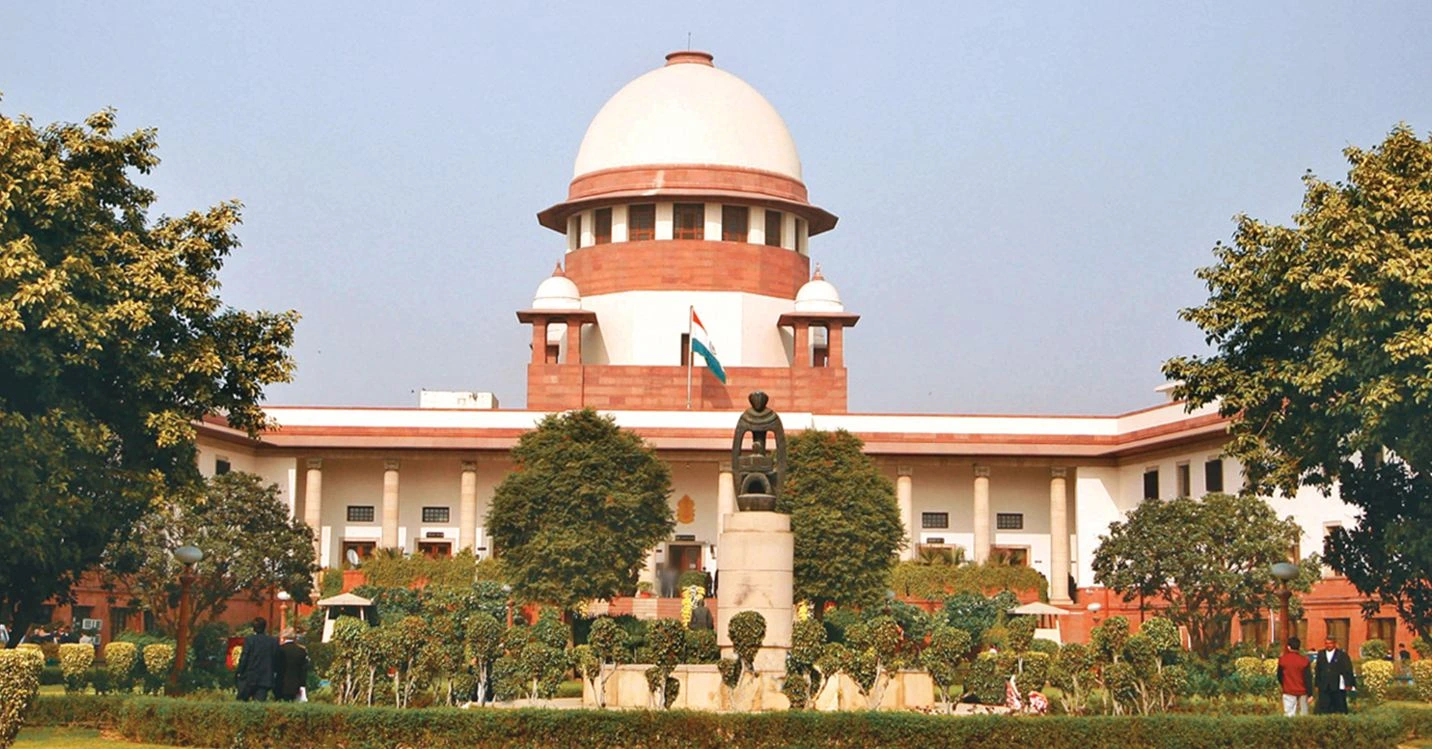
The Supreme Court on Friday questioned the continued extension of reservation benefits to children of families that have already attained significant educational and economic advancement through the reservation system, observing that such progress also leads to social mobility.
The Bench of Justice BV Nagarathna and Justice Ujjal Bhuyan made these observations while hearing a petition challenging a Karnataka High Court judgment that upheld the exclusion of a candidate from Other Backward Classes (OBC) reservation benefits on the ground that he fell within the creamy layer category.
The case concerned a candidate belonging to the Kuruba community, classified under Category II(A) in Karnataka’s backward classes list, who was selected for appointment as Assistant Engineer (Electrical) in the Karnataka Power Transmission Corporation Limited under the reserved category. However, the District Caste and Income Verification Committee denied him a caste validity certificate after concluding that his family income exceeded the prescribed creamy layer limit.
According to records placed before the Court, the candidate’s family income was assessed at approximately Rs 19.48 lakh per annum. The authorities also noted that both his parents were government employees.
During the hearing, Justice Nagarathna expressed concern over the continued extension of reservation benefits to children of families that had already achieved economic stability, educational advancement and upward social mobility through affirmative action policies. The Bench observed that once parents attain secure government employment, stable income and improved social status, the question of extending reservation benefits to the next generation requires reconsideration.
The Court particularly referred to situations where both parents occupy high-ranking positions in government service and questioned whether reservation benefits should continue for such families despite their social and economic advancement.
The observations came after Advocate Shashank Ratnoo, appearing for the petitioner, argued that salary income was not the determining criterion for identifying creamy layer status in the case of government servants. He submitted that under the creamy layer framework, the relevant factor was the status or class of service held by the parents, such as whether they belonged to Group A or Group B services, rather than the quantum of salary earned.
Counsel argued that if salary income alone were treated as the basis for creamy layer exclusion, even lower-ranking government employees such as clerks, drivers, peons and support staff could potentially be excluded from reservation benefits merely on income-based assessment.
It was further contended that, under existing norms, salary income and agricultural income were ordinarily excluded while assessing creamy layer status for government employees, and that only income derived from business, trade, or other independent sources can be considered for determining eligibility.
The petitioner relied on a clarification issued by the Karnataka government stating that the salary and allowances of State government employees should not be included while assessing creamy layer status. It was also argued that if all forms of income were taken into account, the distinction between OBC reservation and Economically Weaker Sections (EWS) reservation would effectively blur, thereby diluting the constitutional framework governing backward class reservations.
The Bench, however, observed that the issue raises broader constitutional and policy considerations relating to the objective of reservation and the principle underlying creamy layer exclusion. Justice Nagarathna noted that a balance must be maintained between protecting socially and educationally backward communities and ensuring that reservation benefits reach genuinely disadvantaged sections.
The petitioner challenged a Division Bench judgment of the Karnataka High Court, which had reversed an earlier order of a single-judge Bench. The single judge had held that the salary income of the petitioner’s parents could not be considered while determining creamy layer status and had directed the issuance of the caste validity certificate.
However, the Division Bench set aside that ruling and held that as per the Central Government Office Memorandum dated September 8, 1993, excluding salary income from creamy layer computation applied only to Union Government reservations and not to reservation policies implemented by the State of Karnataka.
Referring to Karnataka’s creamy layer policy, the High Court concluded that the petitioner’s family income exceeded the prescribed threshold and that he was therefore not entitled to reservation benefits under the OBC category.
The Supreme Court issued notice on the petition and agreed to examine the legal issues arising in the matter.
[ad_2]
Source link

