We have a curated list of the most noteworthy news from all across the globe. With any subscription plan, you get access to exclusive articles that let you stay ahead of the curve.
We have a curated list of the most noteworthy news from all across the globe. With any subscription plan, you get access to exclusive articles that let you stay ahead of the curve.
We have a curated list of the most noteworthy news from all across the globe. With any subscription plan, you get access to exclusive articles that let you stay ahead of the curve.
We have a curated list of the most noteworthy news from all across the globe. With any subscription plan, you get access to exclusive articles that let you stay ahead of the curve.
NOWHERE IN HISTORY has created so much wealth so quickly. San Francisco is home to OpenAI and Anthropic, the two leading artificial-intelligence labs together worth nearly $2trn. It hosts 91 other AI “unicorns”, private companies worth more than $1bn, collectively valued at a further $600bn. A dozen or so billionaires who made their money from AI live in the city. Competition for the cleverest computer-science clogs is fierce. Why, then, is the world’s AI central struggling?
SPONSORED
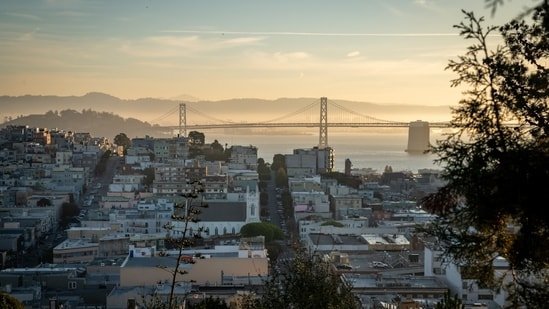
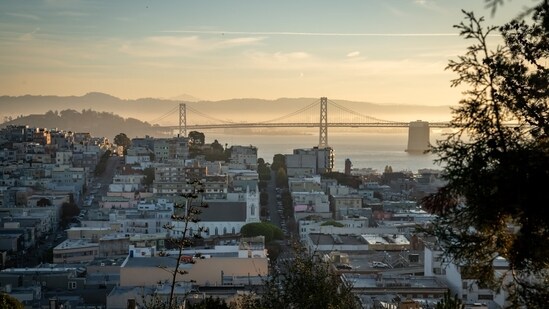
The strongest apparent evidence for San Francisco’s AI windfall is in the city’s priciest residential districts, near the Golden Gate bridge. (UNSPLASH)
The strongest apparent evidence for San Francisco’s AI windfall is in the city’s priciest residential districts, near the Golden Gate bridge. One home in Pacific Heights, listed for just under $6m, recently sold for $8m (and it is “not necessarily the fancy part”, according to Rohin Dhar, a local estate agent). A hilltop house, with views of the sea, recently went for $56m (it is, admittedly, quite nice). The city’s elite complain about a “mansion shortage”. According to data from Zillow, an estate agent, in the past year the average price of a single-family home in the city’s five most expensive postcodes has risen by close to 10%.
AI, however, is unlikely to be responsible for this luxury-housing boom. The market is as strong or stronger in other ultra-fancy parts of America, including parts of the Hamptons and Aspen (see chart 1). This reflects, in part, surging stockmarkets and a strong economy. Many, possibly most, of the plutocrats currently buying in San Francisco are not AI moguls. In 2024 Laurene Powell Jobs, the widow of Steve Jobs, the iPhone pioneer, paid $70m for a spot on Billionaire’s Row. Algeria’s government recently spent slightly under $10m on a large mansion. Some buyers may be drawn by San Francisco’s AI fame. More are probably attracted by a big city with breathtaking views.
In parts of town with worse vistas, meanwhile, San Francisco’s housing market looks soft. Adjusted for inflation, the average home across San Francisco is worth 15% less than at its peak in 2022, compared with a decline of 4% in America as a whole. Real rents are down too. Some parts of town remain in a full-blown correction. In SoMa, near the financial district, people on opioids or other drugs stand, bent double, as dealers zip around on scooters. Real housing prices in SoMa are close to 40% lower than in 2022 and still falling—the kind of change you might expect during a full-blown depression. The area remains dotted with apartment blocks bedecked in banners promising openings that never came.
The housing market hints at a wider problem. Though San Francisco is not the hellscape portrayed on conservative talkshows, its economy is surprisingly weak. The flipside of the AI boom is the huge threat to the much larger, non-AI parts of the city’s tech industry. Software engineers worry that they are about to be out of a job. Even before AI came along, tech firms were letting thousands of people go, having overhired during the pandemic. Other tech firms have moved out of the city to cut costs. Employment in “computer systems design” in the San Francisco area has fallen by 13% from its peak in 2022; eBay has just announced it will shut its San Francisco office.
Other industries have failed to pick up the slack. Nearly 35% of offices in the city remain vacant. Downtown foot traffic is about a third below its level from just before the covid-19 pandemic. Tourism is not bad, but hotel occupancy is no higher this year than last. The newish mayor, Daniel Lurie, is doing his best to make the city welcoming to businesses and plug a $643m budget deficit. In early April he laid off over 100 municipal employees. Yet what you could plausibly call the city’s “deep state”—the inspectors, commissioners and nonprofits which wield enormous power—continue to impose huge costs. People on moderate incomes continue to leave. In the past year the labour force of the San Francisco metropolitan area has shrunk by 1%.
The AI revolution could yet mint many more millionaires, which could give San Francisco a shot in the arm. If, that is, they stick around. In November Californians may vote on a ballot initiative to levy a new tax on the Golden State’s gilded class. If it passes, billionaires would be on the hook for a one-time payment of 5% of their net worth. The measure would probably accelerate the outflow from the state.
This could compound San Francisco’s financial problems, with low foot traffic hitting sales taxes and the iffy housing market depressing property levies. In 2024 Moody’s, a rating agency, stripped the city of its top AAA credit rating. Last October Fitch, another agency, warned the city about its “persistently large budgetary gaps”. The outlook for the world’s AI capital is less like the forecast for its star industry and more like one for its weather: extremely hazy.
Warning: file_get_contents(/home/u863018482/domains/airrnews.com/public_html/wp-content/themes/Newspaper/theme.json): Failed to open stream: No such file or directory in /home/u863018482/domains/airrnews.com/public_html/wp-content/plugins/ultimate-addons-for-gutenberg/spectra-v3/includes/FontManager.php on line 63
Warning: file_get_contents(/home/u863018482/domains/airrnews.com/public_html/wp-content/themes/Newspaper/theme.json): Failed to open stream: No such file or directory in /home/u863018482/domains/airrnews.com/public_html/wp-content/plugins/ultimate-addons-for-gutenberg/spectra-v3/includes/FontManager.php on line 63
Stay updated with the latest breaking news from AIRR News.
Click below to read the latest updates and important stories happening now.