
[ad_1]


Behind the staggering figure of more than 3.7 crore pending criminal cases in India lies a familiar story—relationships gone sour, boundaries contested, and words spoken in anger that refuse to remain just words. Many disputes that begin as personal quarrels eventually enter courtrooms, translated into the language of criminal law.
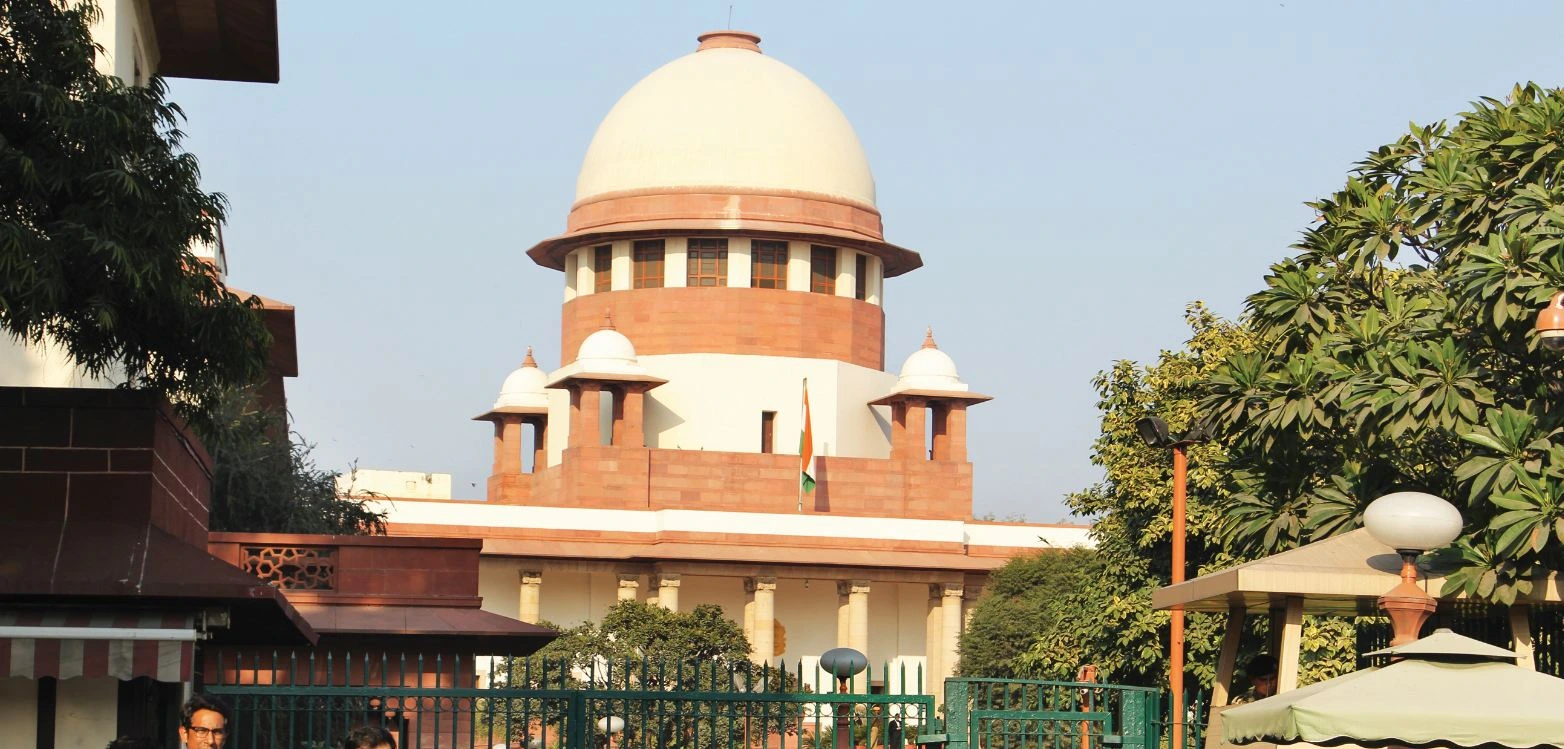
One such dispute recently reached the Supreme Court in Sivakumar vs State (represented by the Inspector of Police), raising an unusual, but important question: when does abuse cross the threshold into criminal obscenity?
The case began in a setting that could easily be mistaken for any neighbourhood quarrel in India. A dispute erupted between family members over a common boundary and an attempt to fence land. Tempers rose in the way they often do when property and proximity collide. In the heat of the moment, a word was hurled—“bastard”.
What followed was a familiar escalation. A complaint was filed. Charges were framed. The accused was eventually convicted under Section 294(b) of the Indian Penal Code for uttering “obscene” words in a public place.
Cases like this are hardly rare. Across magistrates’ courts in India, criminal prosecutions frequently emerge not from calculated criminality, but from fractured relationships and wounded pride. Yet, when this particular case reached the Supreme Court, it posed a far larger question than its modest facts suggested: what exactly does the law mean by “obscenity”?
A bench of Justices PS Narasimha and Manoj Misra approached the issue with careful restraint. The bench observed that while the word used may be offensive—even deeply offensive—offence alone does not amount to obscenity.
Setting aside the conviction, the bench reaffirmed an important principle: for speech to qualify as “obscene” under criminal law, it must carry a sexual or prurient element. Mere abuse, even if crude or distasteful, does not meet that threshold.
At first glance, the distinction may appear technical. But it goes to the heart of how a constitutional democracy regulates speech. If the line between vulgarity and obscenity becomes blurred, the scope of criminal law can expand in unpredictable and potentially dangerous ways.
Anyone who observes trial courts closely will recognise the trajectory of this case. Many prosecutions in India begin not with serious criminal conduct, but with arguments over land, inheritance, access, or pride. Words are exchanged, voices rise, insults follow—and before long the dispute is reframed through provisions such as Sections 294, 504, or 506 of the Indian Penal Code.
This drift reflects both social realities and institutional incentives. For aggrieved parties, criminal complaints offer leverage and immediacy. For the legal system, they provide categories through which conflicts can be processed. But in the process, the boundary between a quarrel and a crime begins to thin. The Supreme Court’s ruling, in many ways, attempts to restore that boundary.
Indian law does not define obscenity in precise statutory terms. Instead, its contours have been shaped gradually through judicial interpretation, always in dialogue with the constitutional guarantee of free speech.
Across decades of jurisprudence, one idea has remained consistent: obscenity is not merely about offensiveness; it is about sexual offensiveness. Speech becomes obscene only when it appeals to prurient interest or carries explicit sexual content.
This understanding reflects the balance built into the Constitution itself—the equilibrium between the freedom of expression and the State’s power to regulate speech in the interests of decency and morality. Expanding the definition of obscenity too broadly risks unsettling that balance, and the Court in Sivakumar consciously resisted that expansion. Yet, legal clarity does not eliminate social complexity.
The word “bastard” is far from neutral. It carries a historical weight—of illegitimacy, stigma, and exclusion. In many cultural contexts, particularly within tightly knit families or communities, it questions lineage and social standing in ways that can cut deeply.
In such settings, the impact of the word can travel far beyond the moment in which it is spoken. It can fracture relationships, provoke violence, and leave behind humiliation that no legal category fully captures.
This is where the law’s neat distinctions begin to feel strained. Because while the apex court is correct in concluding that the word is not legally obscene, it does not follow that it is harmless.
There exists a wide terrain between what is criminally obscene and what is socially injurious. Much of everyday speech occupies precisely this grey area.
Indian criminal law does attempt to address some of these harms through provisions dealing with defamation, intentional insult, and outraging modesty. But these categories are narrower, more context-specific, and often more difficult to establish.
The concept of “modesty,” for instance, has traditionally been linked to sexual propriety. Yet social experience suggests that dignity is also tied to reputation, familial identity, and social standing. Words like “bastard”, though not sexually explicit, may intersect with these notions in societies where honour and legitimacy remain deeply embedded cultural markers.
The Court, however, stopped short of stretching the meaning of obscenity to accommodate these complexities. And perhaps rightly so. Once legal categories begin to absorb every shade of social harm, they risk becoming vague, unpredictable, and overbroad.
The backdrop to this judgment is impossible to ignore. India’s judicial system is already burdened with an enormous caseload, much of it arising from family and property disputes among people who know each other well. Criminalising every offensive utterance risks further congesting an already strained system.
By narrowing the scope of obscenity, the Supreme Court is not trivialising abusive speech. Rather, it is protecting criminal law from overextension.
What stands out in the ruling is its discipline. The Court does not endorse the language used, nor does it attempt to moralise about it. It simply declines to criminalise the speech under a provision that was never meant to cover such conduct.
This is restraint in its most meaningful sense—not inaction, but a conscious refusal to expand the law beyond its principled limits. And yet, the discomfort remains.
Outside the courtroom, the word still does its work. It provokes, humiliates and diminishes. The law may decline to call it obscene, but social experience does not operate in such carefully drawn categories. That gap between legal precision and lived reality is unlikely to disappear.
In the end, Sivakumar is not merely about a single abusive expression. It is about defining the boundaries of criminal law in a society where speech is often raw, immediate and deeply personal.
By insisting that obscenity retain its sexual and prurient core, the Supreme Court has preserved an essential clarity in the law. But it has also reminded us of a deeper truth: the law cannot be the arbiter of every moral injury. In drawing that line, the Court has done what courts do best—define the limits of law, and leave the rest to society.
—The writer is a New Delhi-based journalist, lawyer and trained mediator
[ad_2]
Source link

