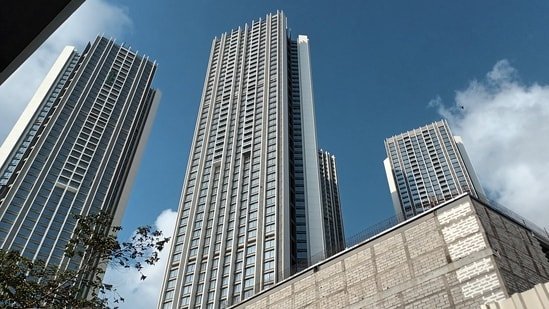

Mumbai real estate market’s redevelopment segment has steadily transformed the city’s ageing housing stock, offering residents larger homes, upgraded amenities and improved infrastructure. While most homeowners eventually return to their redeveloped buildings, often benefiting from bigger apartments, a small but notable section chooses not to move back at all.

Once a building enters redevelopment, residents must vacate their homes, with developers typically paying monthly rent as agreed with the housing society. This gives homeowners the flexibility to rent accommodation based on their budget; some remain in the same neighbourhood, while others move to more affordable peripheral areas. In certain cases, especially among retirees or those not tied to jobs, residents even return to their hometowns.

The redevelopment process usually takes three to five years. During this period, what begins as a temporary relocation can gradually turn into a long-term lifestyle shift. Some homeowners choose to sell their old apartments to developers rather than wait for project completion, while others, after moving out, settle into new routines and locations.
Here’s why some apartment owners may change their minds after redevelopment
According to real estate experts, such decisions are often influenced by life changes during the interim years. For instance, a senior citizen couple who moved to Ahmedabad during the redevelopment of their Borivali home initially viewed the move as temporary. However, they grew accustomed to the area’s slower pace, cleaner environment and lower cost of living. By the time their Mumbai apartment was ready, they had established a new routine and social circle, ultimately choosing to retain the redeveloped flat as an investment while continuing to live in Ahmedabad.
Real estate experts Hindustan Times Real Estate spoke to said that for some families, relocating to emerging suburbs or peripheral areas during redevelopment can bring unexpected advantages. Reduced congestion, a better quality of life and improved schooling options often outweigh the emotional attachment to their original homes over time.
Also Read: Redevelopment or early exit? What Mumbai homeowners can learn from Preity Zinta’s apartment sale
“A section of residents who do not wish to return typically opt out at an early stage of the redevelopment process by selling their flats to the developer. In many projects, around 20–30% of members choose to exit at the agreement stage. However, nearly 90% of the remaining majority move back once the project is completed,” said Ritesh Mehta, Senior Director and Head (North and West), Residential Services and Developer Initiatives, JLL India.
“In a typical redevelopment, out of 10 residents, two to three may opt to exit before the project begins. Of the remaining, most eventually return to their new homes, though there are instances in which an owner changes their mind after completion. Larger developers, particularly in premium and luxury segments, are more likely to offer buyouts, making it easier for some residents to exit upfront,” Mehta added.
While some choose not to return, for many others, redevelopment represents a significant lifestyle upgrade. Borivali resident Ankit Arora, for instance, currently owns a 620 sq ft 2BHK apartment. As the building aged, his family relocated to Delhi, where they now live in an ancestral bungalow.
Once redevelopment is complete, they are set to receive a new 3BHK apartment of approximately 830 sq ft.
“We will have to think about moving back to Mumbai. After living in a bungalow in Delhi, it may be difficult to return to apartment living. However, Mumbai is where we have spent significant time, so we would be happy to come back,” Arora said.
Redevelopment in the Mumbai real estate market
As many as 44,277 apartments worth ₹1.30 lakh crore are expected to enter Mumbai’s real estate market through the redevelopment segment by 2030, according to a report by Knight Frank India. The free-sale component from society redevelopments is projected to generate around ₹7,830 crore in stamp duty and ₹6,525 crore in Goods and Services Tax (GST).
The report said that Borivali, Andheri, and Bandra micro-markets emerge as the top three redevelopment hotspots, together contributing over 139 acres of activity. By contrast, Central and South Mumbai recorded just 43 redevelopment agreements, underscoring the challenges of fragmented ownership, legacy tenancies, and higher entry costs.

