
Organised by the Centre for Law and Technology, WBNUJS
Date: 2 April 2026 | Time: 5:00 PM
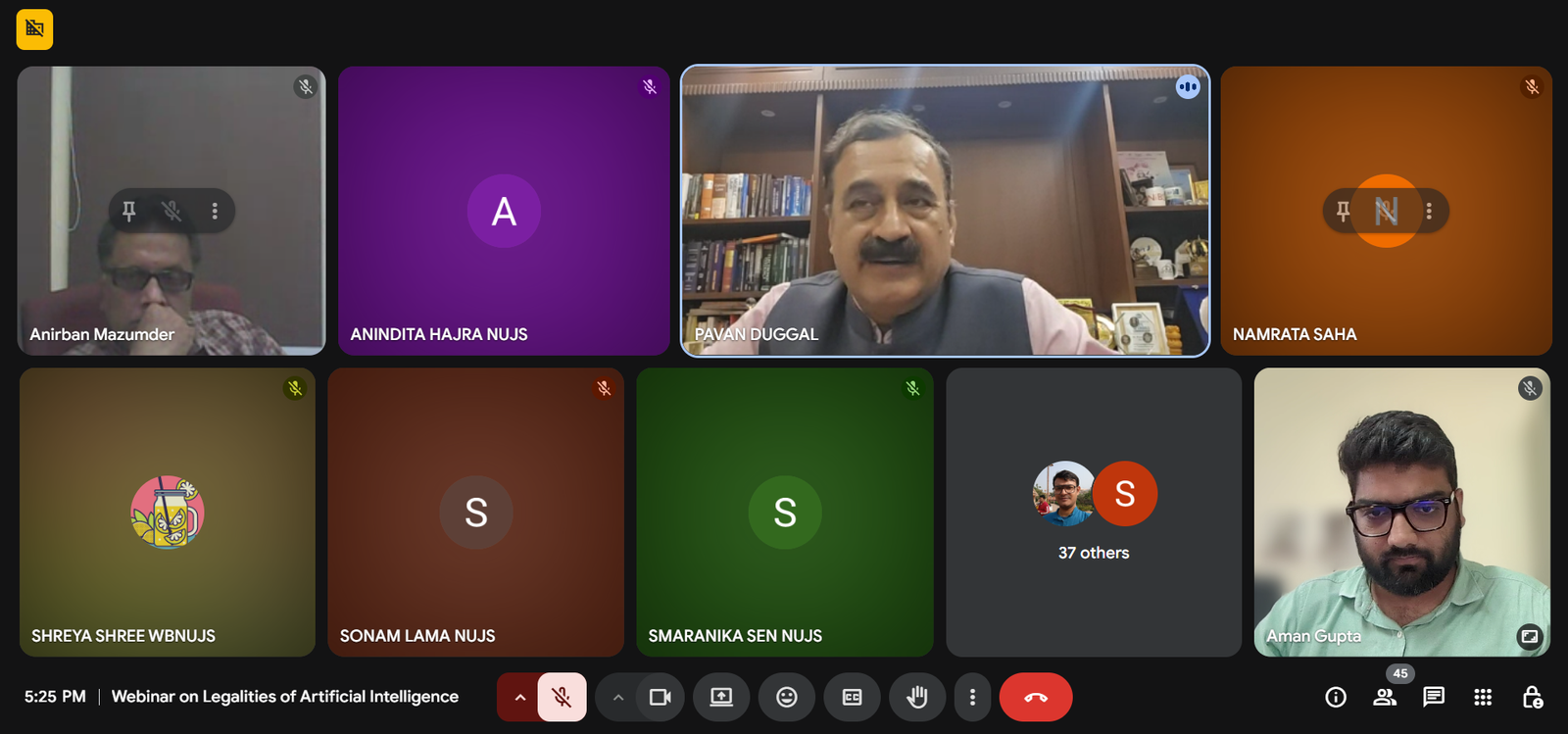
The Centre for Law and Technology at WBNUJS organised a webinar on the theme “Legalities of Artificial Intelligence” on 2nd April 2026. The session featured distinguished speakers, Dr. Pavan Duggal, a leading authority in cyber and AI law, and Saakshar Duggal. The webinar aimed to explore the evolving intersection of artificial intelligence and legal frameworks, with particular emphasis on emerging regulatory challenges.

The session commenced with an introduction to the growing role of artificial intelligence in contemporary society. It was highlighted how AI technologies are rapidly integrating into everyday life, transforming sectors such as governance, business, and legal practice. However, this rapid advancement has also led to a situation where technological capabilities are increasingly outpacing existing legal and regulatory oversight mechanisms.
Dr. Pavan Duggal delivered an insightful discussion on the structural and systemic risks associated with artificial intelligence. He emphasized that current legal frameworks, particularly in India, remain inadequate to address the complexities of AI, as they were designed in a pre-AI era. He further elaborated on the potential challenges posed by advanced AI systems, including Artificial General Intelligence (AGI), which may develop autonomous decision-making capabilities that are not always aligned with human interests.
He also addressed pressing concerns such as the misuse of AI in creating deepfakes, issues of anonymity in cyberspace, and the growing threats to data privacy. He highlighted that large technology companies increasingly rely on extensive user data, raising significant concerns about data protection and user consent. These challenges underscore the urgent need for a comprehensive and dedicated legal framework governing artificial intelligence.
In addition, Dr. Duggal stressed the importance of accountability and liability in AI systems, particularly in determining responsibility among developers, deployers, and users. He noted that the absence of clear regulatory standards could lead to legal ambiguities in cases involving AI-driven harm or decision-making.
Mr. Saakshar Duggal focused on the practical implications of artificial intelligence for law students and future legal professionals. He emphasized the need for adaptability and continuous learning to remain relevant in a rapidly evolving technological landscape. According to him, the legal profession is likely to undergo significant transformation, with AI increasingly being used for legal research, drafting, and case analysis. Therefore, law students must develop interdisciplinary skills and stay updated with technological advancements to effectively navigate future challenges.
The session concluded with an engaging question-and-answer part, where participants raised queries regarding AI regulation and career opportunities in technology law. The webinar ended with a formal vote of thanks, acknowledging the speakers and organisers for an informative and thought-provoking session.
[ad_1]
Source link

