
[ad_1]
INTRODUCTION

THE CURSE OF THE PHARAOHS
The Curse of the Pharaohs is a popular legend associated with ancient Egyptian tombs and mummies.
According to the myth, any person who disturbs the resting place of a pharaoh or removes their treasures
will be cursed and suffer a series of misfortunes or even death.
The origins of the Curse of the Pharaohs can be traced back to the discovery of Tutankhamun’s tomb in
1922 by Howard Carter. Several members of Carter’s team and other individuals involved in the
excavation reportedly died under mysterious circumstances, leading to speculation that a curse had been
unleashed.
However, it’s important to note that the concept of the curse was primarily fueled by media and a desire
for a dramatic narrative. Many of the deaths associated with the curse were either coincidental or due to
natural causes. Nevertheless, the idea captured the public’s imagination and has persisted in popular
culture.
From an archaeological perspective, ancient Egyptian tombs can contain toxic substances like mold
or bacteria, which can cause health issues when disturbed, there is no evidence to support the existence of a supernatural curse.
ROMANY’S QUEST OF AKHENATEN
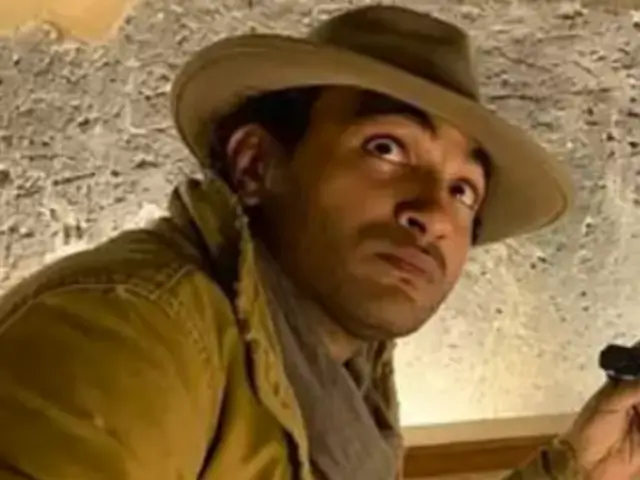
Ramy Romany, an Egyptologist featured on the Discovery Channel’s Mummies Unwrapped, ventured into
an ancient Egyptian tomb during filming to potentially identify a mummy believed to be the biblical
figure Akhenaten.
Speaking on The Jordan Harbinger Show, Romany emphasized the rarity of the tomb’s
visitation, explaining that it had remained unopened for approximately 600 years. Undeterred by its long
history of inaccessibility, Romany delved into the tomb, driven by his quest to unravel the mysteries
surrounding Akhenaten and gain deeper insights into ancient history.
THE CHILLING ENCOUNTER
Romany and the guards were startled by the sound of snakes rattling and emerging after tapping on the
stone. Undeterred, they entered the tomb, documenting their exploration. Romany continued deeper into
the tomb, discovering various items, but the oppressive atmosphere caused him to breathe heavily.
Inside, they encountered bats and an overwhelmingly unpleasant smell, potentially from ammonia-like bat urine.
Exiting the tomb, Romany and the intruders felt unwell, experiencing feverish symptoms and a sense of
impending doom. The combination of noxious smells, the presence of snakes, and the instinctual warning
to stop breathing heightened the hazardous nature of the tomb.
HEALTH COMPLICATIONS AND FEAR
The following morning, Romany found himself in a severe state of illness. Recounting his experience, he
described experiencing high fevers reaching 107 degrees and coughing up blood. With growing concern,
he believed his life was in jeopardy, while his wife feared for his well-being.
Seeking medical assistance, doctors were perplexed by his condition. Romany informed them about his exposure to bats, snakes, and dust within the tomb, prompting the doctors to acknowledge the potential dangers of such a combination.
Prescribing a course of antibiotics, the doctors hoped for a positive outcome. Miraculously, the antibiotics
proved effective, leading to Romany’s recovery and survival from the mysterious affliction.
RECOVERY AND REFLECTION
After his recovery, Romany reflected on the harrowing experience, recalling the intense fever that had
made him feel as though he was on the verge of death. However, with gratitude and a renewed sense of
life, he emphatically declared, “I’m alive, and I’m here today.”
CONCLUSION
Romany’s survival and his conviction that the Curse of the Pharaohs is real, are based on his harrowing
encounter in the tomb. Acknowledge the ongoing debate surrounding the curse, combining elements of
superstition and potential health hazards in ancient tombs. Romany’s story serves as a testament to the
mysteries and potential risks associated with exploring ancient Egyptian sites.
[ad_2]
Source link

