
[ad_1]

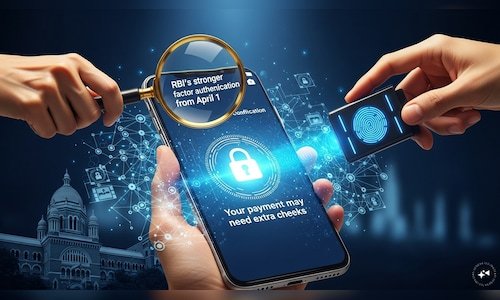
This comes after the Reserve Bank of India directed banks and payment platforms to strengthen authentication across all digital transactions. The move shifts focus beyond SMS-based OTPs – which have been widely used but increasingly targeted in fraud cases.
RBI 2FA rules from April: What changes for users
At the core, every digital payment will now require at least two authentication factors. That part stays familiar. What changes is how those factors are verified.
OTP alone won’t be enough in many cases. Users may see combinations – a PIN plus biometric, or a device-based confirmation layered over an OTP.
Banks may also introduce dynamic authentication, meaning one of the checks will be generated specifically for that transaction and cannot be reused.
There’s another shift. If a transaction turns fraudulent due to weak compliance, the issuer may be held fully liable.
Additional checks may apply depending on behaviour or device patterns. Location, spending history – those factors could trigger extra verification.
For international payments, a separate timeline has been set. By October 1, 2026, card issuers will need to enable stronger authentication for certain cross-border transactions.
New payment authentication methods: OTP, biometrics and more
The RBI has outlined multiple authentication options. These include:
Passwords, PINs.
SMS OTPs (still valid, but not alone).
Device-based tokens.
Fingerprint or biometric checks.
Hardware or software security tokens.
Banks can offer a mix. Users may get a choice, depending on the platform.
What stays the same in digital payments from April onwards
Not all payments will feel different. Some transactions will continue under existing relaxations:
Small-value contactless card payments.
Recurring auto-debits after initial approval.
Certain prepaid instruments, like gift cards.
NETC toll payments.
Offline low-value transactions.
For most users, these will go through without added steps.
There is also a push for interoperability, meaning authentication and tokenisation systems should work across apps within the same ecosystem, not stay locked to one provider.
The change may first appear as an extra step. But behind that, the intent remains the same – reduce fraud, tighten control, and make digital payments harder to misuse.
[ad_2]
Source link

