
[ad_1]

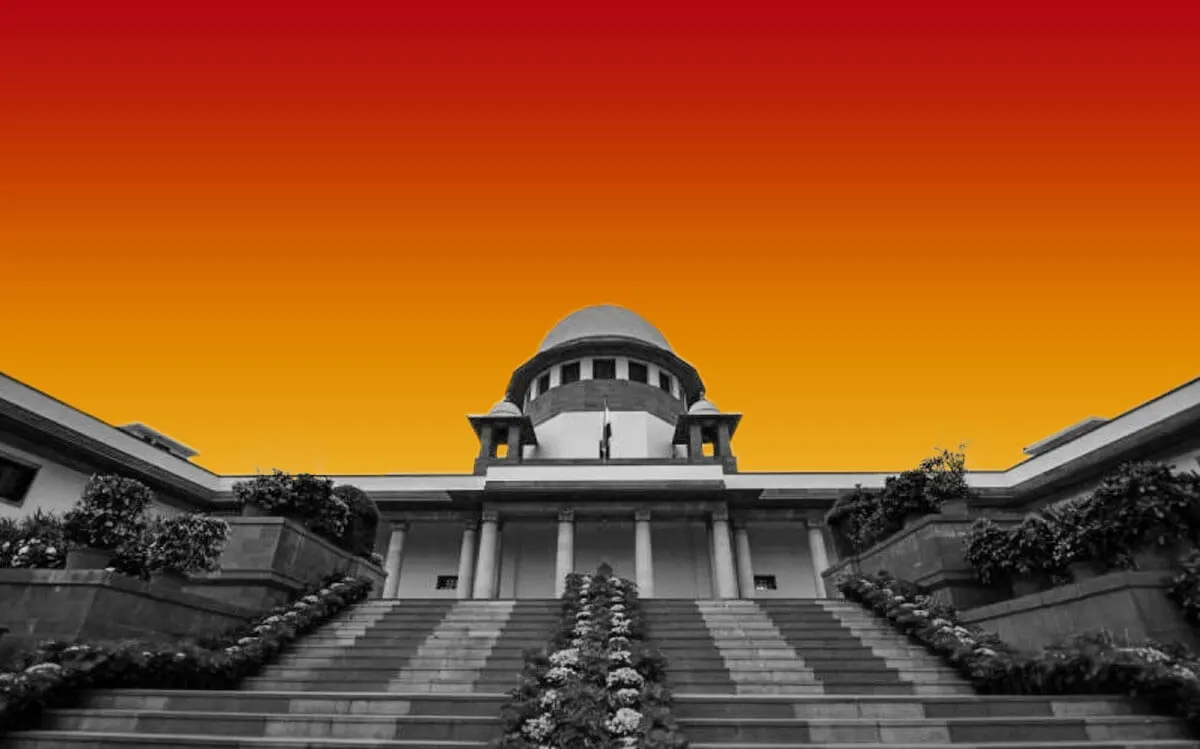
A recent matter before the Supreme Court has drawn attention to the question of whether the National Emblem should be placed atop the Court’s main dome, raising issues that lie at the intersection of constitutional symbolism and institutional procedure. The request was brought before the Court through a writ petition filed by a party appearing in person, who sought directions for the installation of the State Emblem of India on the building of the apex court.
The Bench, comprising Chief Justice of India Surya Kant, Justice Joymalya Bagchi, and Justice Vipul Pancholi, did not enter into the merits of the claim from a judicial standpoint. Instead, it clarified that the issue pertains more appropriately to the administrative functioning of the institution rather than requiring adjudication through writ jurisdiction. The Court therefore indicated that the matter would be considered on the administrative side.
During the course of the hearing, it was observed that the Supreme Court is currently in the process of expanding its infrastructure, including the construction of a new building. In that context, the question of installing the National Emblem whether on the existing structure or as part of future development—could be examined by the competent authorities within the Court’s administrative framework. The Bench reassured the petitioner that the concern would not be ignored but would be evaluated through the proper internal mechanism.
The Court also referred to prior communication issued by the registry, which had noted that the Supreme Court uses its own official emblem. However, it was clarified that such communication would not preclude reconsideration of the issue. The Chief Justice indicated that the matter would be looked into afresh, thereby leaving open the possibility of a decision being taken after due administrative deliberation.
By declining to issue judicial directions and instead routing the matter to the administrative side, the Court reinforced an important institutional distinction. Not all issues raised before constitutional courts require a judicial determination; certain matters, particularly those concerning internal management, design, or symbolic representation, fall within the administrative domain of the institution itself. This approach ensures that the Court’s adjudicatory powers are exercised in appropriate cases, while administrative decisions remain within the purview of designated authorities.
The development also brings into focus the broader significance of national symbols in constitutional spaces. While the use of the National Emblem carries deep symbolic value, it is governed by statutory provisions that regulate its proper usage and prevent misuse. Any decision regarding its installation must therefore align with the applicable legal framework as well as the institutional practices of the Court.
Overall, the Court’s response reflects a balanced approach—acknowledging the concern raised, while directing it to the appropriate forum for consideration. It highlights the importance of procedural clarity and reinforces the principle that the nature of a grievance must determine the forum and method through which it is addressed.
[ad_2]
Source link

