
[ad_1]
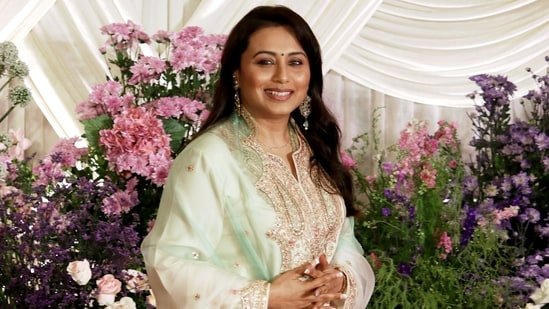
As Bollywood actor Rani Mukerji celebrates her 48th birthday on March 21, a poignant reflection from her past carries more weight today than ever before. In an era where the conversation around gender parity has shifted from boardrooms to the very foundations of the home, Rani’s philosophy on raising her daughter, Adira, serves as a blueprint for modern parenthood. Also read | Rani Mukerji humorously confesses she’s scared of Gen Alpha daughter Adira Chopra: ‘She would slap me back’


The quote, originally shared in December 2019 in an interview with Rediff.com, highlights a mother’s fierce determination to shield her child from the ‘lesser than’ narrative. Rani Mukerji spoke of a ‘collective change’ in the country’s mindset — a change that, in 2026, is no longer just a wish, but a social necessity.
Here’s Rani Mukerji’s quote
Rani said, “I want Adira to grow up in an environment where there’s equal respect for men and women. I don’t want anybody to ever tell her – because I can’t be with her constantly — that she is lesser than any man or less powerful because that’s the training I am giving her. I make her believe that she’s most powerful. I keep talking to her, ‘Darling, you’re the most courageous. You have more muscles than papa (Aditya Chopra) as well! And when you box, oh my God, that’s really powerful!’ So I’m already inculcating that in her. I don’t want her to ever think that boys can do a certain thing and girls cannot. I don’t want that upbringing for Adira and I don’t want anybody around her to say things like that. Because when you’re living in a society, you do face these kinds of things. You might see it in your friends or somewhere. I want a collective change in our country where the mindset and the belief systems change.”
Why Rani Mukerji’s quote matters today
In 2026, the relevance of Rani’s words has only intensified. While legal frameworks for equality have strengthened, the subtle social biases Rani mentioned — the idea that boys can do things girls cannot — remain the final frontier. Her approach focused on internalised empowerment, ensuring a child’s self-worth isn’t dictated by societal whispers.
By telling Adira she has ‘more muscles than papa’, Rani wasn’t just being playful; she was intentionally countering the historical physical inferiority complex forced upon young girls. Rani acknowledged that parenting doesn’t happen in a vacuum. Her plea for a change in ‘belief systems’ reflects the 2026 reality where community and digital environments play as big a role in a child’s development as the home itself. Also read | Parenting tips: Truths to remember while raising secure and resilient children
More about Rani Mukerji
Born on March 21, 1978, into a film family, Rani Mukerji has worked in hits like Saathiya, Hum Tum, and the critically acclaimed Black. In 2014, Rani entered a new chapter of her life by marrying filmmaker Aditya Chopra in a quiet ceremony. A year later, in 2015, they welcomed their daughter, Adira — a name thoughtfully crafted by blending ‘Adi’ and ‘Ra’ from their names.
Since becoming a mother, Rani has been selective with her projects, choosing roles that mirror her own growth and sense of social responsibility. This shift is most evident in her portrayal of the fearless inspector Shivani Shivaji Roy in the Mardaani franchise, where she embodies the very ‘muscle and grit’ she now instills in her daughter.
[ad_2]
Source link

