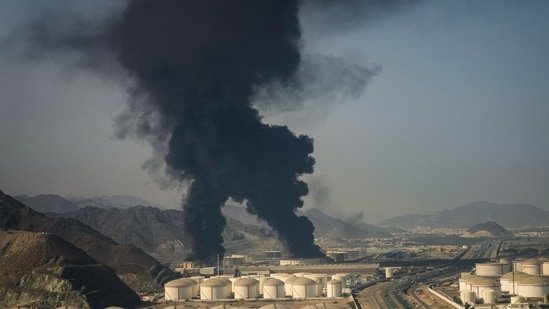

Iran has widened the scope of its offensive to target oil and natural gas infrastructure across the Gulf, sharply escalating a conflict that is already rippling through global energy markets.

The impact is already visible in Qatar, a cornerstone of global LNG supply. Missile strikes caused extensive damage to its Ras Laffan LNG facility, cutting exports by around 17% and resulting in estimated annual losses of about $20 billion, with repairs expected to take up to five years, highlighting the potential for long-term disruption to global energy flows.

Follow here for live updates on Dubai-Abu Dhabi
Oil and natural gas offensive in the US-Israel-Iran war
US Treasury Secretary Scott Bessent said Washington is considering lifting long-standing sanctions on Iranian oil in an effort to ease the surge in energy prices triggered by the conflict. The US may also explore a unilateral release from its own strategic reserves.
Brent crude, the global benchmark, jumped to as high as $119 per barrel, a rise of more than 60% since Israel and the US launched their campaign. Meanwhile, European natural gas prices climbed 17% on Thursday and have doubled over the past month.
Also Read | US Navy giant ‘Tripoli’ set to enter warzone, may break Strait of Hormuz chokehold
How Iran’s attacks on Gulf refineries disrupted global oil supply?
The attacks have hit major energy producers across the region, including Saudi Arabia, the UAE, Qatar, Kuwait, Iran and Israel, targeting refineries, gas processing hubs, export terminals and oil fields.
These facilities form the backbone of global energy supply chains, particularly for crude oil and liquefied natural gas (LNG).
In Saudi Arabia, drone strikes hit the SAMREF refinery, a joint venture between Aramco and ExxonMobil. The Ras Tanura refinery was shut, forcing exports to be rerouted through the Red Sea, while a missile interception over Yanbu briefly halted loadings.
The disruptions have cut Saudi output by around 2 million barrels per day, reducing production to roughly 8 million bpd.
Kuwait reported fires at the Mina al-Ahmadi and Mina Abdullah refineries following drone strikes, with force majeure declared earlier, signalling severe supply constraints.
UAE, Qatar supplies hit
In the UAE, the Habshan gas processing complex was shut after missile debris incidents, and the Bab oil field was targeted. The Ruwais refinery was also shut, and the Fujairah export terminal was hit, reducing oil output in OPEC’s third-largest producer by more than half.
Qatar, a critical supplier of natural gas to global markets, reported extensive damage after Iranian missiles struck the Ras Laffan LNG facility, where production had already been halted due to earlier attacks.
Strikes also damaged QatarEnergy LNG facilities, affecting around 17% of capacity, while Shell halted operations at the Pearl GTL plant in Ras Laffan. A force majeure declared on LNG shipments earlier this month has disrupted about 20% of global LNG trade.
In Iran, parts of the South Pars gas field and the Asaluyeh processing hub were hit, along with the Kharg Island export terminal.
In Israel, multiple waves of Iranian strikes targeting large parts of the country forced millions into shelters. While buildings were damaged, no casualties were reported. Israel’s Haifa refinery was also struck.
Also Read | India orders oil, gas entities to share data amid crisis, invokes Essential Commodities Act
What can happen if the US-Iran war drags on?
With around 80% of Iran’s electricity generation dependent on natural gas, according to the International Energy Agency, the strike poses a direct threat to the country’s power supply.
Even short-term shutdowns of refineries and export terminals can disrupt global markets, tightening supply and driving up prices.
More prolonged damage to major facilities such as LNG plants or large refineries could restrict output for months.
With several key producers affected at once, the concern extends beyond immediate volatility to a deeper, structural supply squeeze. The latest attacks have therefore heightened fears of a sustained shock to global energy markets, with implications for inflation, trade and economic growth worldwide.

