



Why this day matters
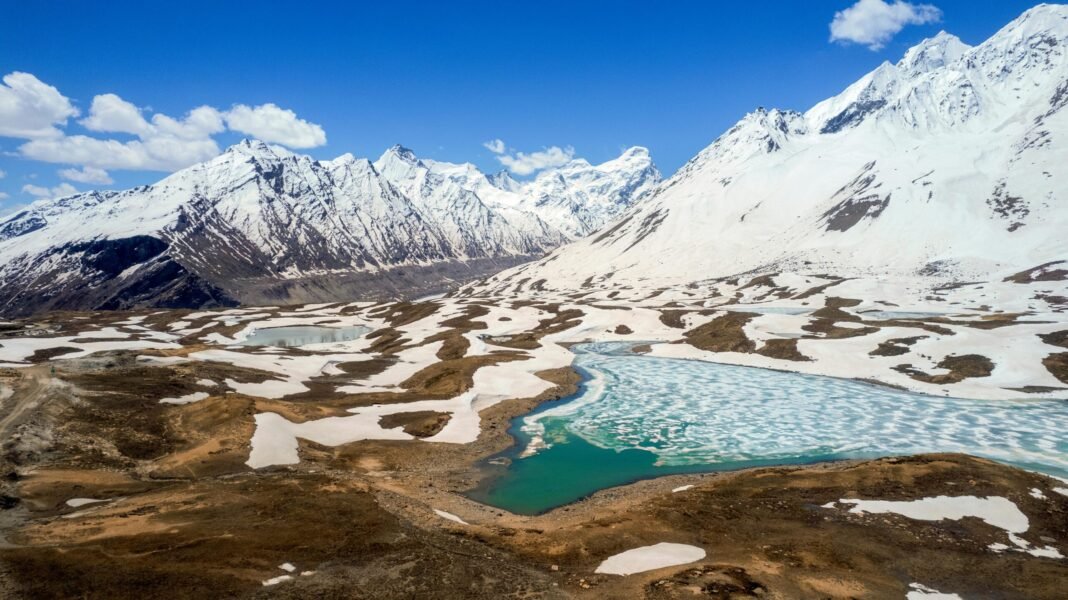
World Day for Glaciers was proclaimed by the United Nations General Assembly proposed by Tajikistan and adopted with the backing from UNESCO and the World Meteorological Organisation (WMO). The observance aims to raise global awareness about the critical role of glaciers, snow, and ice in the climate system.

The Day provides a global platform to communicate the role glaciers play in the Earth’s climate system, freshwater availability, ecosystems, and human livelihoods. Crucially, it also complements two broader frameworks: the International Year of Glaciers’ Preservation (2025) and the Decade of Action for Cryospheric Sciences running from 2025 to 2034.
The timing is urgent. In 2023, glaciers suffered the largest mass loss in five decades of record-keeping. It was the second consecutive year in which all regions in the world with glaciers reported ice loss.
- 273 billion tons of ice lost per year globally (2000–2023)
- 70% of Earth’s freshwater is stored in ice and snow
- 2 billion+people depend on glacial meltwater
- 5% of remaining global glacier ice lost between 2000–2023!
Sources: WMO, GlaMBIE Study (Nature, 2025), UNESCO
The global picture: A planet losing its ice
Numbers alone tell a chilling story. Between 2000 and 2023, global glacier mass loss totalled 6,542 billion tons — or 273 billion tons of ice lost per year. This amounts to what the entire global population currently consumes in 30 years, assuming three litres per person per day.
Furthermore, seven of the ten years with the most significant glacier mass loss have occurred since 2010, highlighting the accelerating pace of glacial retreat. This is not a slow drift. It is an avalanche.
At present melt rates, many glaciers in Western Canada and the USA, Scandinavia, Central Europe, the Caucasus, New Zealand, and the Tropics will not survive the 21st century. Regionally, losses vary — but no corner of the glaciated world is spared.
“Melting ice and glaciers threaten long-term water security for many millions of people. This international year must be a wake-up call to the world.”— WMO Secretary-General Celeste Saulo, January 2025
Arctic sea ice has declined by about 40% since 1979, and the Greenland and Antarctic ice sheets are melting at accelerating rates, with long-term implications for sea level rise. Meanwhile, glacial meltwater now accounts for 21% of total observed global sea-level rise over the past two decades.
What the world has done — and must still do
International action on glaciers has accelerated, but not enough. Following the adoption of a December 2022 resolution proposed by Tajikistan, the UN designated 2025 as the International Year of Glaciers’ Preservation and 2025–2034 as the Decade of Action for Cryospheric Sciences. UNESCO and WMO are jointly leading implementation across more than 200 contributing organisations and 35 countries.
Additionally, the only way to preserve glaciers is for all governments to collectively course correct with Nationally Determined Contributions fully consistent with the 1.5°C Paris Agreement limit. Scientists are blunt: modelling shows that some glacier loss is now irreversible regardless of emissions cuts. Still, every fraction of a degree matters.
Simultaneously, the International Year of Glaciers’ Preservation emphasises the urgent need for immediate, ambitious action to reduce greenhouse gas emissions to stabilise the climate and implement effective adaptation strategies. These adaptation strategies include improving early-warning systems for glacial lake outburst floods, revising hydropower planning, and building water storage to compensate for reduced glacier flow.
On each World Day for Glaciers, scientists, policymakers, and civil society gather to share data and forge commitments. Yet commitments must translate into action. That remains the gap.
The Indian context: 9,575 glaciers at risk
India’s relationship with glaciers is existential. Among all mountainous regions of the world, glaciers of the Himalayas constitute the largest concentration of frozen freshwater reserves outside the Polar Regions. Stretching across nearly 33,000 square kilometres, these glaciers feed the Indus, Ganga, and Brahmaputra — three of Asia’s mightiest rivers.
According to India Science and Technology, almost 30–50% of annual flow of all rivers originating from higher Himalayas comes from glacier melt run-off. Nearly 800 million people living in these river basins depend on this melt during the lean summer months.
The stakes stretch beyond water supply. According to TERI, 33% of India’s thermal capacity and 52% of its hydropower depend on rivers originating in the Himalayas. Glacier retreat, therefore, is an energy security crisis as much as a water crisis.
Yet the glaciers are retreating fast. According to TERI, key Himalayan glaciers are losing ground every year: the Gangotri Glacier retreats at 19.9 metres per year, Dokriani Glacier at 16.6 metres, and the East Ranthong and Samudratapu glaciers at 15.1 metres annually. The mean retreat rate across the Hindu Kush Himalayan region is 14.9 metres per year on average.
Glacier retreat does not stop at water shortages. According to TERI, continuous retreat leads to the formation and expansion of glacial lakes, posing serious risks to downstream communities through glacial lake outburst floods (GLOFs). Recent flash floods in Uttarakhand’s Parichu River basin are grim evidence of this growing danger.
“The alarming retreat and fragmentation of valley glaciers into smaller glaciers may have profound impact on the future sustainability of Himalayan glaciers and water availability.”— ISRO Scientists, on Bhilangna Basin glaciers
ISRO: India’s eyes on ice
India has not been idle. The Indian Space Research Organisation (ISRO) has led the most comprehensive satellite-based monitoring effort of Himalayan glaciers anywhere in the world. According to India Science and Technology, ISRO’s study identified 34,919 glaciers spread over 75,779 square kilometres across the Indus, Ganga, and Brahmaputra basins.
Critically, ISRO’s analysis of satellite imagery revealed “alarming recession” of glaciers in the Bhilangna basin of the Garhwal Himalayas. The main glacier had receded 4,340 metres since 1965 and had fragmented into multiple smaller valley glaciers, resulting in a 10% loss of glacier area.
Furthermore, between 2007 and 2016, the Gangotri glacier lost 0.15 square kilometres, according to ISRO. An earlier ISRO-led study, published in Current Science in April 2014, monitored 2,018 glaciers between 2001 and 2011 and found that 248 had retreated and 18 had advanced. Overall, glaciers had lost about 20.94 square kilometres of total area in just one decade.
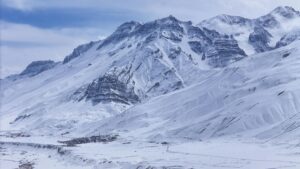
Despite this progress, gaps remain. The Ministry of Science and Technology has confirmed, as cited by India Today, that a majority of Himalayan glaciers are observed melting and retreating at varying rates in different regions. The Dokriani Glacier in the Bhagirathi basin retreats at 15–20 metres per year since 1995; the Chorabari Glacier in Mandakini retreats at 9–11 metres per year. These numbers demand action, not just observation.
On World Day for Glaciers, India must look honestly at these findings. Monitoring is necessary. Action is essential.
What we must do now
The science is clear. Consequently, action must follow at multiple levels — from government policy to individual consciousness.
Build an integrated national cryosphere information system. According to TERI, India urgently needs a long-term, standardised national cryosphere monitoring system linked to global networks. Regular reporting on glacier and snow changes must become institutionalised — not episodic.
Embed glacier preservation into water and energy policy. River basin management must account for projected glacier loss. Hydropower projects must undergo comprehensive climate vulnerability assessments before construction and through their operational life. Indeed, the stakes are too high for business as usual.
Dramatically expand water storage capacity. TERI data is stark: India’s per capita water storage is just 209 cubic metres, compared to 2,193 in the USA and 2,632 in Brazil. As glaciers shrink, India must build alternative storage infrastructure as a strategic priority.
Translate satellite data into community-level warnings. ISRO’s remote sensing images are accessible online — but villagers in remote Himalayan hamlets cannot access or interpret them. India must build the last-mile communication infrastructure to convert satellite intelligence into real-time evacuation alerts for people at risk of GLOFs.
Combat black carbon aggressively. Anil Kulkarni of the Divecha Centre for Climate Change at IISc Bengaluru has noted that black carbon (soot) transported to glacier accumulation zones accelerates melting. India must enforce stricter emission norms for diesel vehicles, brick kilns, and crop-burning — all of which deposit black carbon on Himalayan snow.
Support and fund cryospheric science. The Geological Survey of India, WIHG, NRSC, IISc, and other institutions are doing excellent work. Yet funding must match the scale of the crisis. The Decade of Action for Cryospheric Sciences (2025–2034) offers India a framework to deepen international research partnerships.
A frozen crisis that cannot wait
On World Day for Glaciers, the world pauses to acknowledge what science has long confirmed: the planet’s ice is melting faster than at any point in recorded history. For India, this is not an abstract global problem. It is a domestic emergency unfolding in slow motion across 9,575 glaciers that sustain half a billion lives.
The good news is that World Day for Glaciers arrives not alone. It comes with the momentum of an International Year, a global Decade of Action, and a scientific community united by urgency. India has the institutions, the technology, and the intellectual capital to lead in the region.
What India needs now is the political will to match.
Every World Day for Glaciers is a reminder that frozen water is not permanent. Civilisations built on glacier-fed rivers have flourished for millennia. Whether they continue to flourish depends on choices made today — in legislatures, in corporate boardrooms, and at the individual level.
Ultimately, World Day for Glaciers is not just a date on the UN calendar. It is a mirror held up to every government, every industry, and every citizen. The reflection is uncomfortable. So let it be. Discomfort, after all, is what drives change.
The glaciers are counting on us.
—