
[ad_1]
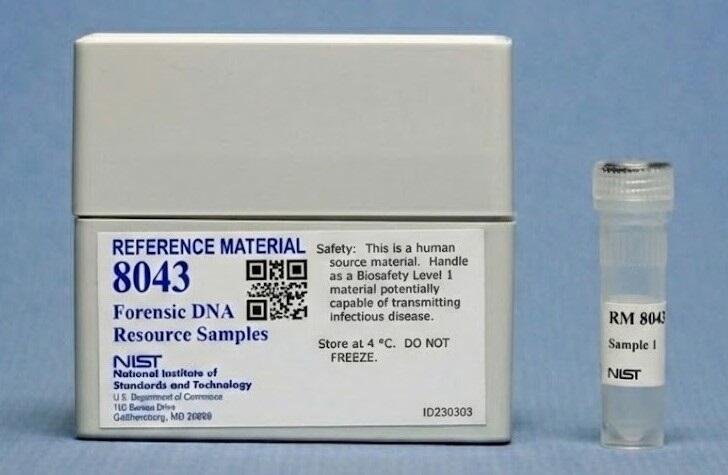
One huge step towards forensic science has been taken with the publication of a new forensic DNA reference material by the National Institute of Standards and Technology (NIST). The new standard, RM 8043, is aimed at assisting forensic laboratories in enhancing the accuracy and reliability of DNA analysis, especially in complex cases with degraded or mixed genetic samples.

Over the decades, forensic scientists have used reference DNA materials that usually had single-source, clean genetic profiles. But the crime scenes in the world are seldom so ideal. Biological evidence that has been gathered at the scene of the crime, including sexual assault cases or violent crimes, usually carries the DNA of more than one person, and it may be damaged by exposure to the environment. This disconnect between laboratory specifications and actual case circumstances has been a significant problem in forensic interpretation.
This problem is solved in the RM 8043 reference material, which provides more realistic simulated forensic evidence. It is represented by a collection of eight DNA samples, each kept in a different vial. They are single-source DNA samples, the mixture of DNA of two or more individuals, and artificially degraded DNA formed under the influence of excited ultraviolet (UV) light. Such a combination enables forensic laboratories to test and validate their analytical procedures under conditions closely related to those in practice.
Among the most important needs of this new reference material are the validation of the method of forensic DNA testing and calibration of laboratory equipment. It is also a training tool because it allows forensic analysts to acquire and perfect their capabilities in the interpretation of intricate DNA profiles. With RM 8043, laboratories can have a ground truth to compare against so that their results are valid and reliable, taking into consideration that their findings are scientifically sound. The material was tested by some 100 forensic laboratories before its official release to test its efficacy and reliability. This joint work illustrates the increased focus on standardization and quality control of forensic science on a global scale.
The implementation of RM 8043 should be used extensively. It will come in most especially where mixed DNA evidence is involved, e.g. sexual assault, and in cold cases where DNA samples have deteriorated with the passage of time. It is also helpful in developing more advanced statistical and probabilistic models that have been applied in the interpretation of DNA.
In general, this development is an important milestone in enhancing the validity and reliability of forensic DNA analysis. The new standard will increase the capacity of forensic scientists to provide the correct result by closing the gap between the testing in the laboratory and the actual situation in the real world, thus empowering the role of scientific evidence in the criminal justice system.
[ad_2]
Source link

