

[ad_1]

Growing okra is usually straightforward, but even experienced gardeners run into trouble. Whether your okra seeds are not germinating, your plants are not producing pods, or leaves are turning yellow out of nowhere, most okra growing problems come down to three things: water, nutrients, and temperature. The good news is that most okra plant problems are fixable once you know what you are looking at.
These fixes are based on common problems observed across home vegetable gardens and standard okra cultivation practices. This okra growing guide focuses on the 15 most common okra problems gardeners face, from slow germination to heat stress, with practical solutions for each. If you are unsure where to start, just check the soil first — it solves more mysteries than fertilizer ever will.
Common Okra Growing Problems at a Glance
| Problem | Likely Cause | Quick Fix |
|---|---|---|
| Seeds not germinating | Cold soil, old seeds | Soak seeds, plant at 65°F+ |
| Seedlings dying | Overwatering, poor airflow | Reduce water, improve drainage |
| Slow growth | Low sunlight, cool temps | 6–8 hrs sun, add compost |
| Stunted plants | Compacted soil, deficiency | Loosen soil, balanced fertilizer |
| Yellow leaves | Overwatering, nitrogen low | Adjust watering, nitrogen feed |
| Leaves curling | Heat/water stress | Mulch, consistent watering |
| Wilting leaves | Underwatering, heat | Deep watering, mulch |
| Not flowering | Too much nitrogen | Reduce nitrogen, add phosphorus |
| Flowers falling off | Heat, water stress | Regular watering, potassium |
| No pods | Pollination failure | Attract pollinators |
| Tough pods | Harvesting too late | Pick every 1–2 days |
| Overwatering signs | Too much water | Improve drainage, raised beds |
| Underwatering signs | Dry soil | Deep water on schedule |
| Nutrient deficiency | Poor soil | Compost + soil test |
| Heat stress | Extreme temps | Mulch, morning watering |
How to Diagnose Okra Problems Early
Most okra problems can be diagnosed by checking three things first: soil moisture, sunlight exposure, and recent temperature changes. Checking these three alone solves nearly half of all okra plant issues before they escalate. Press two fingers into the soil near the base — if it feels soggy, suspect overwatering; if bone dry, suspect drought stress. Then look at the leaves. Yellow leaves usually signal water or nitrogen trouble.
Curling or dropping leaves point to heat. Pale thin stems mean low light. Watching for these signs during basic okra plant maintenance keeps small issues from becoming serious okra yield problems. A healthy okra plant gives clear signals — you just need to know what to look for. In practice, most gardeners who struggle with okra troubleshooting are dealing with one of these three root causes, not something exotic.
These troubleshooting patterns are consistent across most home garden okra varieties, and similar stress responses appear in related warm-season crops like peppers, eggplants, and cucumbers, which react to water and heat imbalances in nearly identical ways.
Overwatering vs Underwatering Okra: How to Tell the Difference
This is one of the most common points of confusion in okra plant care, and getting it wrong means applying the exact opposite fix. Here is how to read the signs correctly:
| Symptom | Overwatering | Underwatering |
|---|---|---|
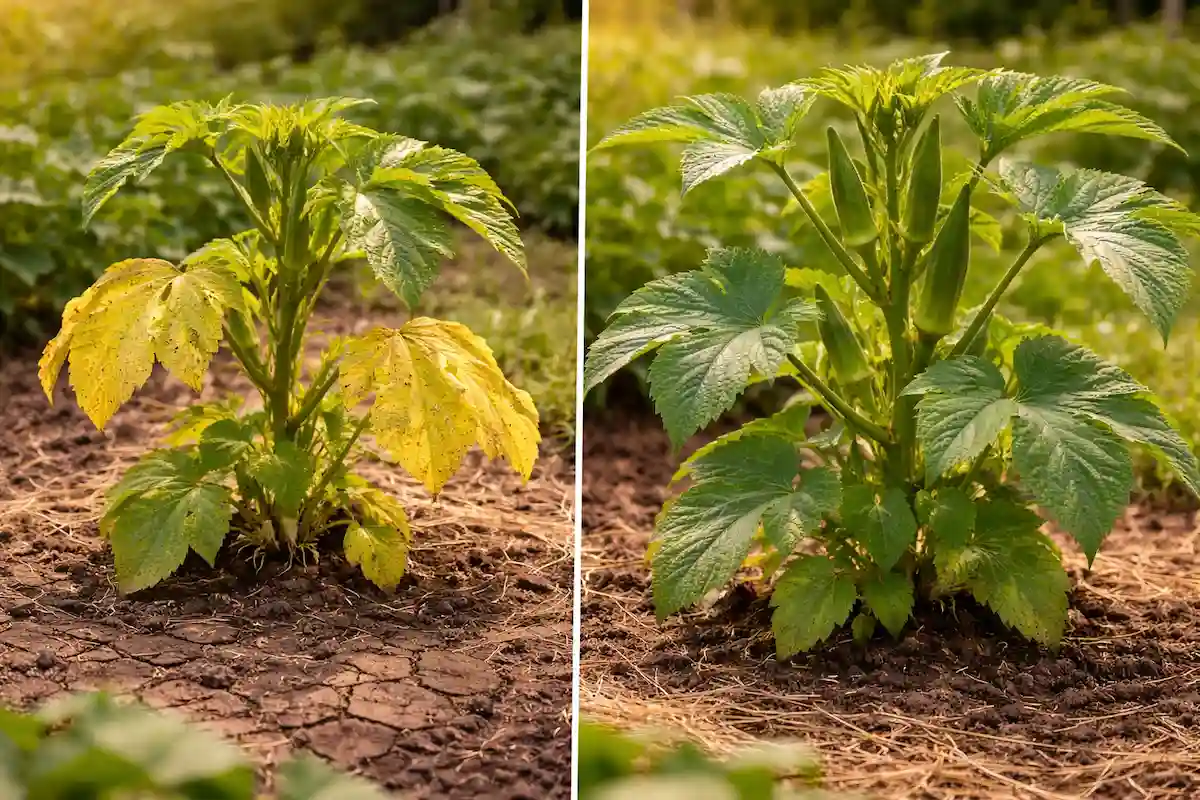
| Leaf color | Yellow on old and new growth | Dull green, then brown edges |
| Leaf texture | Soft, limp | Dry, papery, crispy |
| Wilting pattern | Stays wilted even after watering | Recovers quickly after a deep water |
| Soil condition | Wet for days, sometimes mold on surface | Dry, cracked, pulling from pot edges |
| Root appearance | Brown, mushy, foul smell | Dry, white, intact |
| Growth rate | Stopped or very slow | Slows down before stopping |
| Fix | Stop watering, improve drainage | Deep water immediately, then mulch |

Okra Seeds Not Germinating

Why This Happens
The most common and well known reason okra seeds fail to germinate is cold soil. Okra needs soil temperatures of at least 65°F (18°C) to sprout, with 70–85°F being ideal. Planting too early in spring is a frequent mistake. Old seeds with low viability, overwatering that rots the seed before it sprouts, and a hard seed coat that slows water uptake are also common culprits. After testing this across several spring plantings, the single biggest improvement always came from waiting an extra week for the soil to warm — not from any seed treatment.
How to Fix It
- Soak seeds in warm water for 12–24 hours before planting to soften the coat and speed germination.
- Use a soil thermometer and wait until the ground is reliably above 65°F.
- Check seed age — okra seeds older than 2 years have significantly lower germination rates.
- Water only enough to keep soil moist, not wet. Soggy soil suffocates seeds.
Quick Tip: Okra hates cold soil more than poor soil. The right okra growing conditions at planting saves more seeds than any treatment applied afterward.
Getting germination right starts before the seed goes in the ground — read our full guide on the best time to plant okra to make sure your timing and soil conditions are both on track.
Okra Seedlings Dying After Sprouting
Why This Happens
Seedling death shortly after germination is often damping off, a fungal condition triggered by overwatering and poor airflow. Weak seedlings started indoors under low light are also prone to collapsing. Sudden temperature drops below 55°F can shock and kill young okra plants fast. Poor okra plant care in those first two weeks is usually the deciding factor between seedlings that thrive and those that collapse.
How to Save the Plant
- Water only when the top inch of soil is dry. Okra seedlings need moisture, not saturation.
- Make sure seedlings get full sun — at least 6 hours per day. Leggy seedlings under low light will struggle.
- Use well-draining soil with good grit or compost mixed in to prevent water pooling.
- Harden off indoor-started seedlings gradually before transplanting outside.
Okra Plant Growing Slowly
Why This Happens
Slow okra growth is usually a sunlight or temperature problem. Okra is a warm-season crop that stalls below 60°F. Soil with low organic matter holds back nutrient uptake, and root disturbance from transplanting can set plants back by one to two weeks.
During the early okra growth stages, it is normal for the plant to seem stuck for a couple of weeks while it establishes its root system below the surface. That is not a problem — it is preparation. The issue is when that slowness continues well past week three with no acceleration.
How to Fix It
- Make sure plants receive 6–8 hours of direct sunlight daily. Partial shade will slow growth noticeably.
- Mix in aged compost before planting to improve soil structure and feeding.
- Apply a balanced fertilizer (10-10-10) early in the season to give growth a push.
- Transplant carefully to avoid disturbing roots — direct sowing is often better for okra.
Okra Plants with Stunted Growth
Why This Happens
Stunted okra plants that seem stuck in size despite adequate sun usually have a root problem. Compacted or heavy clay soil restricts root expansion. Nitrogen deficiency shows up as pale, small plants. Inconsistent watering — too dry, then too wet — also stresses roots and slows above-ground growth. Okra plant growth problems like these are among the more frustrating to deal with because the cause is underground and not immediately obvious. Healthy okra plant maintenance means keeping the soil loose, fed, and consistently moist from the start.
What Usually Works
- Loosen compacted soil to at least 12 inches deep before planting.
- Add 2–3 inches of compost to the top of beds and work it in.
- Set up a consistent watering schedule — roughly 1 inch of water per week.
- Do a basic soil test to check pH. Okra does best in soil between 6.0–6.8.
Okra Leaves Turning Yellow
Note: if your yellow leaves also show spots, holes, or sticky residue, the cause may be pest or disease damage rather than a nutrient issue — check our guide to okra pests and diseases to rule those out first.

Why This Happens
Yellow okra leaves is one of the most searched okra plant problems, and it has several causes. Overwatering that saturates roots and cuts off oxygen is the most common. Nitrogen deficiency makes older lower leaves turn pale yellow first. Poor drainage keeps roots wet even when you water correctly. Temperature stress, especially cool nights below 55°F, can also cause temporary yellowing. When diagnosing yellow leaves, always check which leaves are yellow first: bottom leaves first usually means nitrogen, while all leaves yellowing at once usually means overwatering or root damage.
How to Fix It
- Let soil dry out between waterings. Stick a finger 2 inches into the soil — if it feels wet, skip watering.
- Apply a nitrogen-rich fertilizer such as blood meal or fish emulsion if lower leaves are yellowing first.
- Improve drainage by adding perlite or coarse sand to the planting area, or switch to raised beds.
Pro gardener tip: When yellow leaves appear alongside soggy soil, fix drainage before adding any fertilizer — feeding a plant with waterlogged roots makes the problem worse, not better.
Okra Leaves Curling
Why This Happens
Curling okra leaves are the plant’s way of reducing water loss. Heat stress above 95°F during midday is the most frequent cause. Water stress from irregular irrigation and a potassium or calcium imbalance in the soil can also cause leaf curl. In some cases, aphids or spider mites feeding on the undersides of leaves cause the edges to curl inward. From experience growing okra in hot summer climates, leaf curl during a heat wave is normal and temporary — it usually corrects itself by the following morning if watering is consistent.
How to Fix It
- Water consistently and deeply — once or twice a week rather than light daily sprinkles.
- Lay 2–3 inches of mulch around plants to keep soil temperature and moisture steady.
- Check the undersides of curling leaves for pests. Treat with neem oil if insects are present.
- Use a balanced fertilizer to correct any nutrient imbalance. Good okra growing tips always start with stable moisture before adjusting feeding.
In most cases, consistent watering and mulching solve leaf curl within a week or two — though during the peak of summer heat, some curl will always come back on the hottest afternoons regardless.
Okra Leaves Wilting
Why This Happens
Wilting is almost always a water or heat issue. Underwatered okra will wilt during the hottest part of the day and may not recover overnight. Heat stress alone can cause midday wilt even in well-watered plants — this is the plant protecting itself, not a sign of failure. Root rot from overwatering can also cause chronic wilting because damaged roots cannot move water up the stem effectively. The difference matters: heat wilt recovers by evening, root-rot wilt does not.
How to Save the Plant
- Water deeply at the base of the plant in the morning so roots can access moisture all day.
- Mulch the soil surface to slow evaporation during hot weather.
- Check soil moisture before assuming the plant needs more water — soggy soil means root rot, not drought.
Okra Plant Not Flowering
Why This Happens
When an okra plant is not flowering, excess nitrogen is usually the reason. Too much nitrogen pushes lush, dark green leafy growth at the expense of flowers. A lack of direct sunlight and simply being too young are the other common causes — most okra varieties take 50–65 days to reach flowering. This is one of those okra plant issues where impatience leads to the wrong fix: adding more fertilizer when the plant just needs time and sun.
How to Fix It
- Stop or reduce nitrogen feeding once plants reach 18–24 inches tall. Switch to a lower-nitrogen, higher-phosphorus formula to encourage blooming.
- Make sure the plant gets a full 6–8 hours of direct sunlight. Move containers to a sunnier spot if needed.
- Be patient. If plants look healthy and dark green, flowers are likely just around the corner.
Okra Flowers Falling Off

Why This Happens
Flower drop in okra is one of the more frustrating okra growing issues because it directly means lost pods. Temperatures consistently above 95°F or below 55°F cause flowers to abort. Water stress — even a single dry spell — can trigger drop during the flowering window. Low potassium in the soil weakens flower development and retention. In my experience growing okra in hot climates, flower drop usually happens during sudden heat waves rather than steady heat — a sharp spike in temperature is more damaging than a consistently warm day.
How to Save the Plant
- Water regularly and do not let the soil dry out completely during flowering.
- Side-dress with a potassium-rich fertilizer like wood ash or a 0-0-50 potassium sulfate blend.
- Mulch heavily to stabilize soil moisture and root temperature.
- In extreme heat above 100°F, light shade cloth for a few hours in the afternoon can reduce flower drop.
Okra Not Producing Pods
Why This Happens
If okra flowers are opening but pods are not forming, pollination is the most likely issue. Bees and other pollinators are essential for okra fruit set. Heat above 95°F impairs pollen viability.
A soil that is high in nitrogen and low in phosphorus and potassium also pushes plant energy away from pod production. Okra yield problems that appear mid-season — where the plant was producing and then stopped — are almost always heat or water stress related.
How Gardeners Solve This
- Plant pollinator-attracting flowers nearby — marigolds, basil, and zinnias work well.
- Water in the morning, not during the hottest part of the day, to keep flowers viable longer.
- Switch to a balanced or low-nitrogen fertilizer with adequate potassium.
- If bees are absent, hand-pollinate by using a small brush to transfer pollen from one flower to another.
Quick Tip: Okra productivity drops sharply when plants face okra plant stress from two directions at once — such as heat and drought together. Fixing just one of them often brings pods back within a week.
Okra Pods Becoming Hard or Tough

Why This Happens
Okra pods that are woody, tough, or stringy are almost always a harvest timing problem. Pods left on the plant for more than 4–5 days after flowering become fibrous quickly, especially during hot weather. Consistent okra plant maintenance during harvest season means checking plants daily, not every few days. Some heirloom varieties naturally produce tougher pods than modern varieties.
How to Fix It
- Harvest pods every 1–2 days during peak production. Pick pods when they are 2–4 inches long.
- Do not wait for pods to look “big enough” — smaller is always more tender.
- Remove any pods that have become tough. Leaving them signals the plant to stop producing new ones.
Pro gardener tip: Harvest in the morning for the best tenderness. Pods picked before the heat of the day are noticeably less tough than those picked in the afternoon.
Overwatered Okra Plants: Symptoms and Fix
How to Recognize It
Overwatered okra shows yellow leaves on both older and newer growth, a drooping appearance that does not improve after watering, slow or stopped growth, and sometimes mold or algae on the soil surface. The key difference between overwatering and drought wilt is that overwatered plants feel soft and the soil stays wet for days. Good okra plant care means checking the soil first before reaching for the watering can.
How to Fix It
- Stop watering immediately and let the soil dry out.
- Improve drainage by adding organic matter or switching to raised beds.
- Check that pots have drainage holes if growing in containers.
- In severe cases, gently expose the roots and check for root rot — healthy roots are white, rotted roots are brown and mushy.
Underwatered Okra Plants: Signs and Solutions
How to Recognize It
Underwatered okra wilts during the heat of the day, and unlike heat wilt, it often does not recover fully overnight. Leaves feel dry and papery rather than soft. Soil pulls away from the edges of containers or cracks at the surface. Flower and pod drop follow if drought stress continues. This is one of the easier okra troubleshooting situations to confirm — dry cracked soil makes the cause obvious.
How to Fix It
- Water deeply once or twice per week to reach the full root zone rather than light surface watering.
- Apply a thick mulch layer to dramatically reduce soil moisture loss.
- Set a consistent watering schedule based on local weather rather than a fixed calendar.
Nutrient Deficiency in Okra Plants
Common Deficiencies
Three nutrient shortfalls cause most okra plant issues. Nitrogen deficiency shows as pale green or yellow leaves starting from the bottom of the plant. Potassium deficiency shows as brown leaf edges and weak stems. Magnesium deficiency causes yellowing between the veins of leaves while the veins stay green — a pattern called interveinal chlorosis.
Understanding these patterns is a core part of any okra troubleshooting guide because feeding the wrong nutrient wastes time and can make imbalances worse. Maintaining good okra plant health starts with knowing what your soil already has.
How to Fix It
- Add compost each season to build a naturally balanced soil food web.
- Use a balanced slow-release fertilizer (10-10-10) at planting, and side-dress with a more specific product if symptoms appear.
- Get a soil test done before the season. It removes the guesswork and prevents over-fertilizing.
If your soil test shows deficiencies, our detailed breakdown of the best organic fertilizers for okra covers which products work best for nitrogen, potassium, and magnesium correction without over-feeding.
Sentence to place: For exact soil pH ranges, phosphorus, potassium, and nitrogen application rates based on actual field research, the Oklahoma State University Extension okra production guide breaks it all down clearly with tables you can reference before buying any fertilizer.
Okra Heat Stress Symptoms

How to Recognize It
Okra is a heat-tolerant vegetable, but it still struggles above 95–100°F, especially at night. Okra plant stress from heat shows up as flower drop, leaf curl, sudden slow growth, and poor pod set. If night temperatures stay above 80°F, even well-watered plants may stop producing pods temporarily. Understanding the difference between normal summer heat and damaging heat stress is one of the most useful okra growing tips for gardeners in warmer regions.
How to Help the Plant
- Mulch heavily to keep root zone temperatures down.
- Water early in the morning so plants are fully hydrated before peak heat.
- Use shade cloth (30–40% shade) during the hottest weeks of summer in climates regularly above 100°F.
- Do not panic — okra usually resumes flowering when temperatures drop back below 95°F at night.
When Okra Problems Are Normal (Not a Problem)
Not everything that looks wrong with an okra plant is actually a problem. Some of the most common okra problems people search for are just normal plant behavior — and knowing the difference prevents unnecessary interventions that can stress plants further and hurt okra plant health over time.
- Midday wilt in summer heat. Okra leaves drooping slightly between noon and 3 pm on hot days is normal self-protection. If the plant perks back up by evening, it is fine. No action needed.
- Slow growth in the first 2–3 weeks. Young okra plants spend the first couple of weeks pushing roots downward, not growing upward. Visible above-ground growth stalling early in the season is expected, not a sign of poor soil or disease.
- Delayed flowering. Most okra varieties do not flower until 50–65 days after planting. A lush green plant with no flowers at week four or five is on schedule. Adding fertilizer at this stage often makes flowering take longer, not shorter.
- Lower leaf drop. Older bottom leaves yellowing and dropping as the plant matures and puts energy into pod production is a natural part of the okra growth cycle. It becomes a problem only when yellowing moves up to newer growth.
Quick Prevention Tips for Healthy Okra

Preventing okra growing problems is easier than fixing them once they take hold. These okra growing tips apply whether you are a first-time grower or have been at it for years. Consistent okra plant care from day one is what separates a plant with average output from one with strong okra productivity through the whole season:
- Plant only after soil reaches 65°F minimum
- Choose a full-sun location with at least 6–8 hours of direct light
- Use well-draining soil enriched with compost
- Water consistently — 1 inch per week is a reliable baseline
- Mulch around plants after they establish to maintain stable okra growing conditions
- Harvest pods every 1–2 days to keep plants productive
- Avoid excess nitrogen fertilizer once plants start flowering
- Do a soil test every 1–2 years to stay ahead of deficiencies
Growing in a small space or container? Most of these prevention tips apply equally well — our guide to growing okra on a balcony covers the adjustments needed for pots, drainage, and limited sunlight situations.
Frequently Asked Questions About Okra Growing Problems
Why are my okra leaves turning yellow?
Yellow okra leaves are most often caused by overwatering or nitrogen deficiency. Check if the soil is staying wet for days at a time — if so, reduce watering and improve drainage. If the yellowing starts on the oldest lower leaves first, apply a nitrogen fertilizer. Temperature stress and poor drainage are secondary causes.
Why is my okra not producing pods?
Okra that flowers but does not set pods usually has a pollination problem or is under heat stress. Make sure pollinators can reach the flowers, and check that daytime temperatures are not consistently above 95°F. Too much nitrogen in the soil can also push growth instead of production.
Once pollination and stress issues are sorted, there is a lot more you can do to push production higher — see our practical guide on how to boost okra yield for methods that work across the whole growing season.
How often should okra be watered?
Okra needs about 1 inch of water per week. In hot weather above 90°F, increase to 1.5 inches. Water deeply once or twice a week rather than a little every day. Let the top 2 inches of soil dry slightly between waterings to avoid root rot.
Why are my okra flowers falling off?
Flower drop in okra is triggered by heat stress above 95°F, inconsistent watering, or a potassium deficiency. Stabilize soil moisture with mulch and consistent watering. Side-dress with a potassium-rich fertilizer if leaves show browning edges. Shade cloth during extreme heat can also reduce drop.
How long does okra take to produce pods?
Okra typically produces its first pods 50–65 days after planting, depending on the variety and growing conditions. Warmer soil and full sun speed this up. Plants often start slowly for the first few weeks, then accelerate as they mature.
Why is my okra growing slowly?
Slow okra growth almost always points to cool temperatures, inadequate sunlight, or poor soil. Okra stalls below 60°F and will not thrive in partial shade. Mix compost into the planting area and apply a balanced fertilizer to jumpstart growth if soil quality is the issue.
Why are my okra leaves curling?
Curling leaves on an okra plant usually indicate heat stress or inconsistent watering. The plant curls its leaves to reduce the surface area exposed to sun and slow moisture loss. Mulching and deep watering typically resolve it within a few days. Check for aphids or spider mites as well, since pest feeding can also cause curling.
Can you overwater okra?
Yes, overwatering is one of the most common okra plant problems. Okra roots need oxygen as much as they need water, and waterlogged soil suffocates them. Signs include yellowing leaves, slow growth, drooping even in cool weather, and mushy stems near the soil line. Improve drainage and scale back watering immediately if you see these signs.
Final Thoughts
Most okra growing issues trace back to water, nutrients, or temperature. When something looks wrong, start with the simplest explanation: check your soil moisture before adjusting anything else, then look at sunlight and feeding. Okra is resilient — most stressed plants recover within 7–14 days once the main cause is corrected.
Pick pods regularly, keep the soil consistently moist but not saturated, and you will have productive plants from midsummer into fall. When problems do show up, this guide gives you the diagnosis and the fix in one place.
[ad_2]
Source link

