

[ad_1]
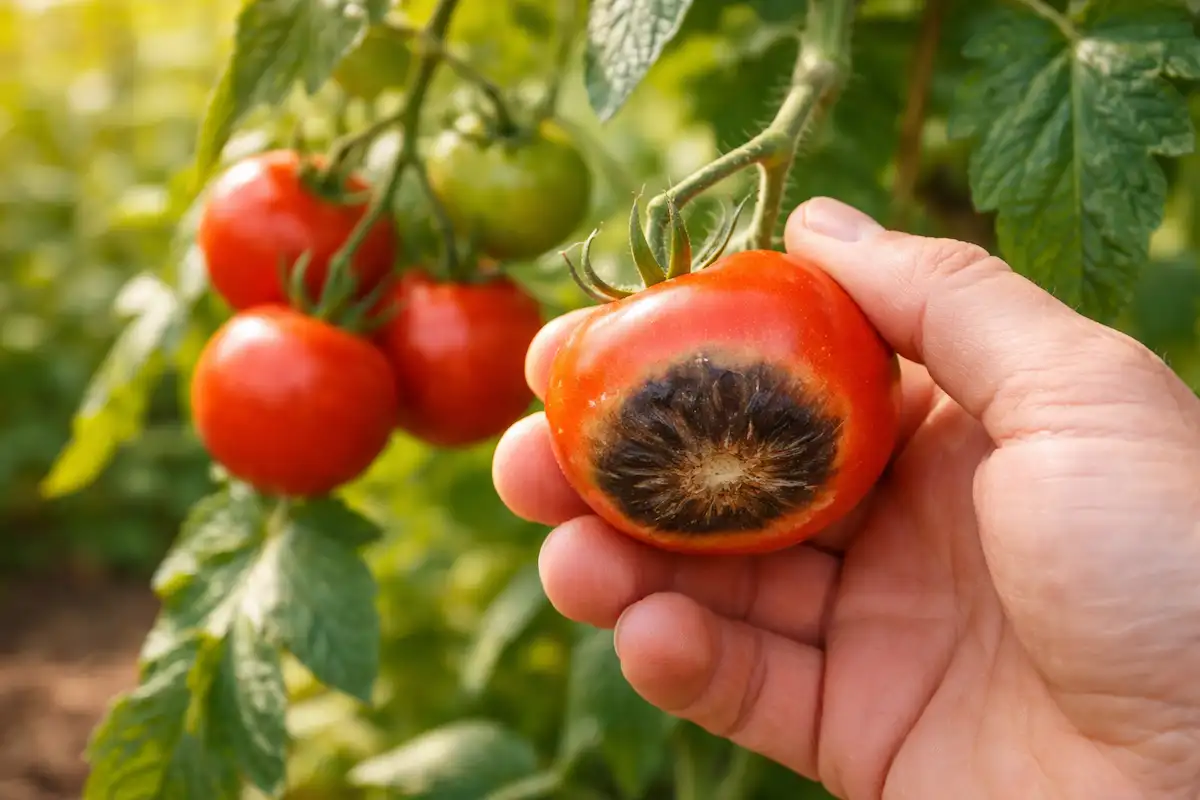
If you have noticed tomatoes rotting on the bottom before they even ripen, you are not alone. This is one of the most frustrating problems home gardeners face. The condition is called blossom end rot, and it shows up as tomato bottom rot: a dark, sunken, leathery patch right where the flower once was. Tomatoes turning black on the bottom, soft spots on otherwise healthy fruit, or tomato fruit rot at the base with no obvious cause are all signs of the same underlying issue.
The good news is that this is not a disease, it cannot spread to other plants, and it is completely fixable. According to horticulture extension programs and tomato physiology research, the root cause is almost always a calcium delivery failure inside the plant, triggered by watering inconsistency, not a soil problem. Extension programs from agricultural universities consistently identify irregular moisture as the primary trigger, not calcium-poor soil.

Whether you are growing in the ground or in containers, in a cool climate or dealing with tomato bottom rot in extreme summer heat, this guide covers every cause and every proven fix.
What Does Blossom End Rot Actually Look Like?

How to Identify Tomatoes Rotting on the Bottom
The first sign is a small, water-soaked spot at the blossom end of the fruit. Within a few days that spot darkens, sinks inward, and turns leathery. In humid conditions, secondary mold grows over the dark area, but that mold is not the cause. The damage is already done inside the cells.
Early signs of tomatoes rotting on the bottom often appear when the fruit is still small and green. Most gardeners only notice it once the tomato starts to size up or color turns. Check the bottom of every developing fruit every few days during the growing season.
Early Signs of Tomatoes Turning Black on the Bottom
Before the dark patch appears, the skin at the blossom end may look slightly paler or more translucent than the rest of the fruit. Press the area gently. A soft, slightly sunken feel is a reliable early warning, even before any discoloration shows. Catching it at this stage and fixing the watering immediately can stop the rot from expanding.
Blossom End Rot vs. Fungal Rot: Key Differences
Blossom end rot starts only at the tip of the tomato and creates a dry, firm, sunken area. Fungal rot can appear anywhere on the fruit, is usually soft and mushy, and often spreads. If the dark area is located only on the bottom and feels firm and leathery, it is blossom end rot, not a disease.
Can You Eat Tomatoes with Bottom Rot?
Yes, in most cases. Cut away the affected area generously and the rest of the tomato is safe and edible. The flesh is not diseased or toxic. If secondary mold has spread deeply into the fruit, discard it entirely.
The Real Cause of Tomatoes Rotting on the Bottom
Here is something many gardeners do not realize: most gardening guides oversimplify this: they say add calcium and the problem goes away. That is not accurate. In most home gardens, the soil already contains enough calcium. The real problem is that the tomato plant cannot transport calcium fast enough to the developing fruit at the blossom end.
Calcium moves inside a plant only through water uptake. It travels slowly and ends up at the blossom end last, because that tip is the furthest point from the roots. When water delivery to the roots becomes erratic, calcium transport stalls, and the cells at the tip collapse and die. That dead tissue is what you see as tomato bottom rot.
Why Calcium Deficiency Happens Even When Soil Has Calcium
Irregular watering is the primary trigger. If the soil cycles between dry and saturated, calcium movement inside the plant stalls. This is why blossom end rot often appears after a dry spell followed by heavy rain, or after a few days of missed watering.
Soil pH also controls how available calcium is. Between 6.2 and 6.8, calcium is highly accessible to plant roots. Outside that range, calcium binds to other soil compounds and becomes locked out, even when it is present in abundance.
Overfertilizing with nitrogen or potassium creates another problem. High nitrogen drives rapid leafy growth, and the plant cannot supply all its developing fruit with calcium at the same rate as it is growing.
How Irregular Watering Causes Tomato Bottom Rot
Each time the soil dries out, calcium transport inside the plant pauses. When water returns, the plant resumes growth rapidly, but calcium cannot catch up fast enough to the fastest-growing cells at the blossom end. Those cells die before they receive the calcium they need to maintain their structure. This cycle, repeated even two or three times, is enough to trigger blossom end rot in multiple fruits simultaneously.
How Fast Blossom End Rot Develops
The internal cell damage that leads to blossom end rot happens within 24 to 48 hours of a significant disruption in water and calcium supply. The visible dark patch appears on the outside two to four days later. By the time you see it, the damage to that particular fruit is already done. This is why prevention and consistent watering are more powerful than any reactive treatment.
This calcium transport failure is well documented in plant physiology research — the University of Wisconsin Horticulture Extension breaks down the internal mechanism in detail for gardeners who want to understand the full science behind blossom end rot.
7 Causes of Tomatoes Rotting on the Bottom
| Cause | Why It Triggers Blossom End Rot | How Common |
| Inconsistent watering | Disrupts calcium transport inside the plant | Very common |
| Low soil calcium | Calcium unavailable at the root level | Less common than assumed |
| High nitrogen fertilizer | Pushes growth faster than calcium can follow | Common |
| Poor root development | Damaged roots cannot absorb water or nutrients | Moderate |
| Soil pH problems | Locks calcium out of root uptake zone | Common |
| Heat stress and temperature fluctuations | Plants close stomata, reducing water and calcium flow | Very common in hot climates |
| Container growing mistakes | Small pots dry out fast, creating constant moisture swings | Very common in pots |
Inconsistent Watering Causing Blossom End Rot
This is the number one cause. Plants that receive uneven moisture cannot move calcium reliably to developing fruit. Even one or two days of dry soil during rapid fruit development can trigger the problem. The solution is not more water, it is more consistent water.
Calcium Deficiency in Soil
Actual soil calcium deficiency is less common than people assume. Before adding calcium amendments, test your soil. Many gardeners add calcium when the real issue is pH or watering. A soil test gives you a clear picture and prevents over-amending.
Overfertilizing with Nitrogen
High-nitrogen fertilizers push fast vegetative growth. During the fruiting stage, this means the plant is building leaves and stems rapidly while struggling to supply calcium to all the fruit at once. Reduce nitrogen fertilization once plants start flowering and setting fruit.
Poor Root Development
Roots that are damaged by over-tilling, overly compacted soil, or excessive root pruning during transplanting cannot absorb water or nutrients effectively. Healthy roots are the foundation of consistent calcium delivery. Handle transplants gently and avoid disturbing the root zone once plants are established.
Soil pH Problems Affecting Calcium Absorption
Test soil pH before planting every season. If pH is below 6.0, calcium becomes chemically unavailable even in well-amended soil. Agricultural lime corrects acidic soil and adds calcium at the same time. If pH is already correct, gypsum adds calcium without affecting pH.
Heat Stress and Temperature Fluctuations
Above 35 degrees Celsius, tomato plants close their stomata to conserve water. This dramatically slows the entire flow of water and nutrients including calcium. Fruit developing during prolonged heat spikes is at high risk. Consistent watering, mulching, and afternoon shade all reduce heat stress significantly.
Container Growing Mistakes
Pots dry out far faster than garden beds, especially in warm weather. A container that holds enough moisture in the morning can be bone dry by midday. Using pots that are too small, forgetting to water daily, or using garden soil instead of a proper potting mix all accelerate blossom end rot in container tomatoes.
How to Fix Tomatoes Rotting on the Bottom Naturally
Step-by-Step Treatment Plan
This step-by-step blossom end rot treatment focuses on correcting watering first, because that is the cause in the majority of cases. Fix water, then address soil. In that order.
Step 1: Remove all fruit that is more than 30 percent affected. They will not recover, and leaving them on the vine wastes plant energy.
Step 2: Water deeply and immediately. Bring the soil to consistent, even moisture throughout the root zone.
Step 3: Apply a thick layer (8 to 10 cm) of organic mulch around the plant base to hold that moisture.
Step 4: Check soil pH. If it is below 6.0 or above 7.0, amend before the next planting season.
Step 5: Reduce nitrogen fertilizer if you have been using a high-N formula. Switch to a low-nitrogen or balanced fertilizer.
Step 6: Monitor new fruit as it develops. New fruit setting after you fix watering will usually develop normally.
Fix Inconsistent Watering Problems Fast
Tomatoes need deep, consistent moisture. The goal is to keep the root zone evenly moist at all times, not to water on a fixed schedule without checking actual soil conditions.
- Water deeply and less often: aim for 2.5 to 5 cm of water per week delivered slowly
- Check soil moisture 5 to 8 cm below the surface before every watering
- Use drip irrigation or soaker hoses to deliver water slowly to the root zone
- Mulch around the plant base immediately after planting and refresh as needed
Removing Affected Tomatoes: Should You Prune Them?
Yes. Remove tomatoes where more than a third of the blossom end is affected. Smaller patches of damage on an otherwise healthy fruit may stop progressing once watering and nutrition are stabilized. Fruit that developed after you fixed the underlying problem will typically grow normally with no defect.
How Watering Mistakes Cause Tomatoes Rotting on the Bottom

How Much Water Tomato Plants Actually Need
Most tomatoes need the equivalent of 2.5 to 5 cm of water per week, delivered slowly and deeply to the root zone. In hot weather above 35 degrees Celsius, this can increase to daily watering. The exact amount matters less than the consistency. A plant that receives uneven water, even in large amounts, is more prone to blossom end rot than one receiving steady smaller amounts.
Signs of Underwatering Tomatoes
- Leaves curl inward during the day and do not fully recover by morning
- Soil surface is dry and cracked
- Lower leaves yellow and drop
- Fruit develops slowly and may show blossom end rot on the first cluster
Signs of Overwatering Tomatoes
This is where many people get confused: overwatering can also trigger blossom end rot, just through a different path than underwatering.
- Leaves yellow uniformly across the plant
- Soil stays wet and does not dry between waterings
- Root rot smell from the soil
- Plant wilts despite moist soil (roots cannot absorb water properly)
Best Watering Time for Tomatoes
Water early in the morning, before temperatures rise. This gives the soil time to absorb moisture before the heat of the day increases evaporation. Evening watering leaves foliage wet overnight, which encourages fungal diseases. Morning watering also means the plant has maximum water available during the hottest hours when stomata tend to close.
How Mulch Prevents Blossom End Rot
A 8 to 10 cm layer of organic mulch (straw, wood chips, dried leaves) around the base of each tomato plant does several things at once: it slows soil evaporation, moderates soil temperature swings, and prevents the kind of rapid wet-dry cycling that stops calcium transport. Mulch is one of the single most effective tools against tomato bottom rot and should be applied immediately after transplanting.
How to Add Calcium to Tomato Plants

Agricultural Lime for Tomatoes
Agricultural lime (calcium carbonate) is the best option when your soil is acidic and low in calcium. It raises pH and adds calcium at the same time. Work it into the top 20 to 30 cm of soil before planting. It takes several weeks to fully change soil pH, so apply it the season before if possible. Do not apply lime mid-season to fix an active blossom end rot problem; it will not work fast enough.
Gypsum for Calcium Deficiency
Gypsum (calcium sulfate) adds calcium to soil without changing pH. This makes it ideal for soils that already have a correct pH of 6.2 to 6.8 but genuinely lack calcium. Apply about 1 kilogram per 10 square meters of bed, worked into the top 15 cm. Gypsum also improves soil structure in clay-heavy soils.
Compost as a Long-Term Calcium Solution
Well-made compost adds trace calcium and, more importantly, improves soil structure and water retention. A soil that holds moisture consistently is a soil that delivers calcium consistently. Adding 5 to 8 cm of compost to beds before each planting season addresses both nutrition and water management at once.
Compost also improves drainage and root health over time, both of which directly reduce the risk of blossom end rot — see our guide on the best compost for tomato plants to choose the right type for your soil.
Do Eggshells Work for Blossom End Rot?
Eggshells do contain calcium carbonate but break down extremely slowly in soil, taking months to years to become plant-available. Sprinkling them around plants mid-season will not fix an active blossom end rot problem. They are better used as a long-term soil amendment added months before planting, or composted first to speed their breakdown.
Calcium Spray Myths Gardeners Believe
A practical detail most guides skip: calcium sprays marketed for blossom end rot are widely available, but the research supporting them is weak. Calcium does not move freely through leaf tissue into the plant’s vascular system in useful amounts. Sprays may provide marginal benefit in cases of genuine deficiency, but they do not fix the underlying problem of inconsistent water uptake. Any spray regimen must be paired with stable watering practices or results will be minimal.
Tomatoes Rotting on the Bottom in Containers (Why Potted Tomatoes Get Blossom End Rot Faster)

Why Potted Tomatoes Get Blossom End Rot Faster
Container soil has far less volume than garden beds, which means it dries out dramatically faster. A pot that feels moist in the morning can be completely dry by afternoon in hot weather. This rapid wet-dry cycling is the ideal condition for triggering blossom end rot.
Small containers make this worse. Tomatoes need at minimum a 20-liter pot, and 30 to 40 liters is better for larger varieties. Smaller pots dry out in hours rather than days.
Best Soil Mix to Prevent Bottom Rot in Containers
Use a high-quality potting mix that holds moisture but drains freely. Add perlite for aeration. In hot climates, mix in water-retaining granules. Never use garden soil in containers as it compacts, drains poorly, and can introduce disease.
Correct Pot Size for Tomato Plants
Minimum 20 liters for compact or patio varieties. Standard indeterminate tomato plants need 30 to 40 liters. Large beefsteak types do best in 50 liters or more. A bigger pot is not just about root space; it is about maintaining consistent soil moisture throughout the day.
Drainage Mistakes That Cause Rot
Containers must have adequate drainage holes. Standing water at the base causes root rot, which then prevents the plant from absorbing calcium even when it is available. Elevate pots slightly off the ground to ensure drainage holes remain unblocked.
Container Watering Schedule
In warm weather, check container moisture daily by pressing a finger 5 cm into the soil. Water slowly and deeply until it drains from the bottom. In peak summer heat, checking twice daily is necessary for smaller containers.
If you are new to container growing, getting the basics right from the start makes a significant difference — our complete guide to growing tomatoes in pots covers soil mix, pot size, and watering in detail.
If your container tomatoes are also producing less fruit than expected alongside the rot, the problem may go deeper than watering — read our article on tomato plants not fruiting in balcony pots for the full picture.
Climate Factors That Cause Tomatoes Rotting on the Bottom (Hot and Tropical Regions)

Tomatoes Rotting on Bottom in Hot Weather
At temperatures above 35 degrees Celsius, tomato plants close their leaf pores to reduce water loss. This also dramatically reduces calcium movement inside the plant. Fruit actively developing during heat spikes is the most vulnerable. In hot climates, blossom end rot can appear on an otherwise well-managed plant simply because heat stress disrupts internal calcium flow faster than consistent watering can compensate.
Managing Blossom End Rot During Indian Summer (35 to 45 Degrees Celsius)
In Hyderabad, Telangana, and across South India, temperatures from March through May regularly exceed 40 degrees Celsius. Blossom end rot is extremely common during this window, and it is not a sign of gardening failure. It is a predictable physiological response to heat stress. These steps help:
- Water in the early morning so soil stays moist through the hottest part of the day
- Apply 8 to 10 cm of organic mulch to reduce soil temperature and slow evaporation
- Use shade cloth (30 to 40 percent shade) during peak afternoon hours
- Increase watering frequency but reduce each individual watering volume slightly
- Choose compact or heat-tolerant tomato varieties suited to tropical conditions
Monsoon Watering Problems Affecting Tomatoes
During the Indian monsoon season, the opposite problem can occur: excessive rainfall waterlogged soil damages roots, which then reduces calcium uptake. Raised beds with good drainage are particularly valuable in monsoon-heavy regions. If your soil stays saturated for more than 24 hours after rain, the roots are likely being harmed.
Hard Water and Calcium Imbalance in Soil

In areas with very hard water, high concentrations of magnesium or sodium in the water can compete with calcium at the root uptake sites. If you grow with municipal or borewell water in hard-water regions, consider supplementing with rainwater or testing your water for mineral content.
Growing Tomatoes Successfully in Hyderabad and Telangana Conditions
The best strategy for tropical tomato growing is to plant in the cooler months (October through February), use mulch aggressively, water before 8 AM, grow in raised beds with good drainage, and choose varieties bred for heat tolerance. Varieties like Arka Rakshak, Arka Samrat, or small-fruited types consistently outperform large beefsteak varieties in extreme heat.
Best Tomato Care Practices for Tropical Climates
Regular calcium amendments before planting, consistent early-morning watering, heavy mulching, and choosing appropriate varieties address the main drivers of tomato fruit disorders in hot climates. Prevention is far more effective than trying to correct blossom end rot once it has appeared on developing fruit.
How to Prevent Tomatoes Rotting on the Bottom
Soil Preparation Before Planting Tomatoes
- Test soil pH and adjust to 6.2 to 6.8 before planting
- Add 5 to 8 cm of compost to beds and work in well
- Apply agricultural lime if soil is acidic and calcium-deficient
- Use raised beds or well-drained plots to prevent waterlogging
Maintaining Consistent Moisture
- Set up drip irrigation or soaker hoses before planting
- Apply mulch immediately after transplanting
- Check soil moisture with a finger test or moisture meter daily
- Never let the top 5 cm of soil dry completely during fruit development
Choosing Resistant Tomato Varieties
Cherry and grape tomato varieties are significantly less prone to blossom end rot than large-fruited types. Roma and paste tomatoes fall in the middle. Beefsteak and very large heirloom varieties are most susceptible. If blossom end rot is a recurring issue in your growing conditions, downsizing to a medium or small variety dramatically reduces the problem.
Proper Fertilizing Schedule
Use a balanced fertilizer (equal or near-equal N-P-K ratios) rather than a high-nitrogen formula during the fruiting stage. Phosphorus and potassium support root health and fruit development. Switch to a tomato-specific fertilizer once plants begin flowering. Avoid over-fertilizing at any stage; excessive nutrients of any kind can interfere with calcium uptake.
Monitoring Plant Stress Signals
Walk through your garden every two to three days and look at the bottom of developing fruit. Check for wilting at midday (normal if it recovers by evening; concerning if it does not). Note any yellowing of lower leaves, curling of upper leaves, or changes in fruit color or size. Early detection lets you correct problems before they affect multiple fruit clusters.
Why Only Some Tomatoes Get Blossom End Rot
This is one of the most common questions gardeners ask, and the answer reveals something important about how the condition works.
The first fruit cluster on a tomato plant is almost always the most affected. These fruits develop during the period of fastest plant growth, when calcium demand across the entire plant is at its peak. The plant is simultaneously building roots, stems, leaves, and fruit, and it cannot deliver calcium everywhere at once.
Later fruit clusters benefit from a more established root system, reduced growth rate, and often more stable watering habits that the gardener has settled into. They tend to show far less blossom end rot, sometimes none at all.
Individual fruit within a single cluster can also vary. Larger fruit requires more calcium than smaller fruit on the same plant. If calcium supply is marginal, the largest fruit show symptoms first. Fruits lower on the truss receive slightly less water pressure than those higher up, making them more vulnerable during dry spells.
Does Blossom End Rot Affect Future Harvests?
No, not directly. Blossom end rot affects only the individual fruit that was developing when the calcium shortage occurred. It does not carry forward to later fruit, does not damage the plant’s root system, and does not infect the soil.
However, if the conditions that caused blossom end rot, mainly inconsistent watering and poor soil preparation, are not addressed, future fruit clusters will continue to be affected. The condition will keep appearing as long as those underlying problems exist.
Once watering is stabilized and soil issues are corrected, new fruit that sets typically develops completely normally. Many gardeners notice that the first two clusters show blossom end rot, they fix watering, and all subsequent harvests are clean and healthy.
Tomato Varieties Most Prone to Blossom End Rot
Not all tomatoes are equally susceptible. Understanding which types carry higher risk helps you make better variety choices for your growing conditions.
| Variety Type | Risk Level | Reason |
| Beefsteak / Large heirloom | High | Large fruit requires more calcium; heavy demand on plant |
| Roma / Paste tomatoes | Medium-High | Elongated shape concentrates growth at blossom end |
| Standard slicing tomatoes | Medium | Variable depending on specific variety and conditions |
| Cherry / Grape tomatoes | Low | Small fruit with lower calcium demand per fruit |
| Patio / Compact varieties | Low-Medium | Smaller plant, lower overall demand, easier to water consistently |
Roma-type tomatoes are a particular case worth noting. They are extremely popular for sauce-making but consistently show higher rates of blossom end rot than cherry varieties. If you grow Romas, extra attention to watering consistency pays off significantly.
Common Mistakes That Make Tomatoes Rotting on the Bottom Worse
Adding Too Much Fertilizer
Excess nitrogen, potassium, or ammonium-based fertilizers all interfere with calcium uptake. More fertilizer does not mean healthier plants during the fruiting stage. Once flowers appear, reduce nitrogen and switch to a balanced or phosphorus-forward formula.
Watering Randomly
Watering whenever you happen to remember it, or only after the plants look stressed, is the single most common cause of blossom end rot. By the time a plant looks wilted, calcium delivery has already been disrupted for hours or days. Build a daily soil-check habit rather than a fixed watering schedule.
Ignoring Soil Testing
Applying calcium amendments without knowing your actual soil pH or calcium levels is guesswork. A basic soil test costs very little and tells you exactly what your soil needs. Many gardeners spend money on lime, gypsum, and sprays when their soil already has adequate calcium and the only real fix needed was better watering.
Using Small Containers
Undersized containers are one of the most reliable ways to cause blossom end rot in potted tomatoes. A pot that dries out in four hours on a hot day cannot maintain the moisture consistency that calcium transport requires. Always size up.
Letting Soil Dry Completely Between Waterings
Complete drying of the root zone even once during active fruit development is enough to disrupt calcium transport and trigger blossom end rot in developing fruit. Consistent moisture does not mean constantly wet; it means the soil never gets to the point where it is bone dry.
When Blossom End Rot Is NOT Actually a Problem
Not every dark spot on the bottom of a tomato means something is wrong with your garden management. There are situations where blossom end rot appears, affects a small number of early fruits, and then stops completely on its own as the season progresses.
First Fruit on a Healthy Plant
The very first one or two tomatoes on a plant often show minor blossom end rot during periods of rapid early growth, even when watering and soil conditions are good. The plant is simultaneously developing roots, stems, leaves, and fruit for the first time that season, and calcium demand briefly outpaces supply. If later fruit clusters develop normally with no rot, this early occurrence is not a management failure. It is a normal physiological adjustment, and no intervention beyond maintaining consistent watering is needed.
End-of-Season Stress
As temperatures drop and the plant nears the end of its productive life, late fruit can show minor blossom end rot even on plants that produced cleanly all season. Roots slow down, water uptake drops, and calcium delivery becomes marginal. This is normal end-of-season decline, not a problem to correct. Focus on harvesting healthy fruit already on the vine rather than trying to fix the last few.
One Cluster, Then Nothing
If blossom end rot appears on only one cluster in the middle of the season and all other fruit before and after is healthy, the most likely cause is a single short disruption, a missed watering day, a brief heat spike, or a few days of heavy rain after dry conditions. The plant corrected itself. No structural fix is needed, though reviewing your watering consistency is always worthwhile.
How to Quickly Diagnose Why Your Tomatoes Are Rotting on the Bottom
Not all blossom end rot has the same cause. Here is a fast diagnostic to identify what is actually driving the problem in your garden:
| What You Observe | Most Likely Cause | First Fix |
| Soil dries out fast, needs daily watering | Inconsistent moisture, calcium transport disrupted | Water deeply, mulch immediately |
| Only the first fruit cluster affected | Normal early-season calcium competition | Stabilize watering, remove affected fruit |
| Multiple clusters all affected at once | Soil pH problem or genuine deficiency | Test soil pH, amend if below 6.0 |
| Container-grown plant, hot climate | Pot too small or dries out too fast | Upsize pot, water twice daily in heat |
| Heavy fertilizer use recently | Nitrogen or potassium blocking calcium uptake | Stop high-N fertilizer, switch to balanced |
| Soggy soil, waterlogged roots | Root damage preventing absorption | Improve drainage, reduce watering frequency |
Common Questions About Tomatoes Rotting on the Bottom
1. How to Stop Tomatoes Rotting on the Bottom Fast
The fastest fix is: remove all heavily affected fruit from the vine, water deeply and immediately, apply mulch to lock in moisture, and maintain consistent watering from that point forward. New fruit setting after this correction will typically develop without blossom end rot.
2. Is Blossom End Rot Caused by Disease?
No. Blossom end rot is a physiological disorder caused by insufficient calcium reaching the developing fruit, not by any fungus, bacterium, or virus. It cannot spread from plant to plant or from one fruit to another. No fungicide or pesticide will fix or prevent it.
3. Can Overwatering Cause Tomato Bottom Rot?
Yes, indirectly. Consistent overwatering damages roots and reduces the plant’s ability to absorb anything, including calcium. The bigger driver is usually the swing between overwatering and underwatering rather than steady overwatering alone. Root health is critical, and waterlogged roots die.
4. Does Epsom Salt Fix Blossom End Rot?
No. Epsom salt is magnesium sulfate, not calcium. It will not address a calcium deficiency. Worse, high magnesium in the soil competes directly with calcium at root uptake sites and can make blossom end rot worse. This is one of the most persistent and damaging myths in home vegetable gardening.
5. Should I Remove Tomatoes with Blossom End Rot?
Remove fruit where more than one-third of the blossom end is affected. They will not recover. Leaving them on the vine wastes the plant’s energy. Smaller affected patches on otherwise healthy fruit may stop progressing once you fix the watering and nutrition issues.
6. Will New Tomatoes Grow Normally After I Fix the Problem?
Yes. Blossom end rot affects only the fruit that was developing during the calcium shortage. Once watering is stabilized and soil nutrition is corrected, fruit that sets afterward develops normally. Many gardeners lose their first one or two clusters and then have clean, healthy fruit for the rest of the season.
7. Can Blossom End Rot Spread to Other Tomatoes?
No. It is not infectious. One affected fruit cannot cause others to develop blossom end rot. Each fruit is affected individually based on whether it received adequate calcium during its own development. There is no need to isolate affected plants or discard healthy-looking fruit from the same vine.
Quick Summary: How to Stop Tomatoes Rotting on the Bottom Fast

5 Quick Fixes Gardeners Can Start Today
- Water deeply and consistently: keep soil evenly moist, not wet and dry
- Apply 8 to 10 cm of organic mulch around the base of each plant
- Remove all heavily affected fruit from the vine immediately
- Stop high-nitrogen fertilizer application during the fruiting stage
- For containers: check moisture daily and switch to a larger pot if needed
Prevention Checklist
- Test soil pH before planting and adjust to 6.2 to 6.8
- Add compost to improve moisture retention and soil structure
- Install drip irrigation or soaker hoses for even delivery
- Choose cherry or compact varieties if blossom end rot recurs season after season
- Monitor developing fruit every two to three days for early signs
- Never let the soil dry completely during active fruit development
Key Takeaways
Tomatoes rotting on the bottom (blossom end rot) is almost always caused by inconsistent watering that disrupts calcium delivery inside the plant, not by a disease and not always by a lack of calcium in your soil. Fix the water first. Then check soil pH. Then consider calcium amendments if a soil test confirms deficiency. Mulch is your best ongoing tool. New fruit developing after you correct the problem will grow normally, and with good watering habits in place, blossom end rot on tomatoes is entirely preventable from the start of the next season.
[ad_2]
Source link

