

[ad_1]
Name
Wamil Goyal
Name of the College
OP Jindal Global University, Jindal Global Law School, Sonipat, Haryana
Name of the Organisation
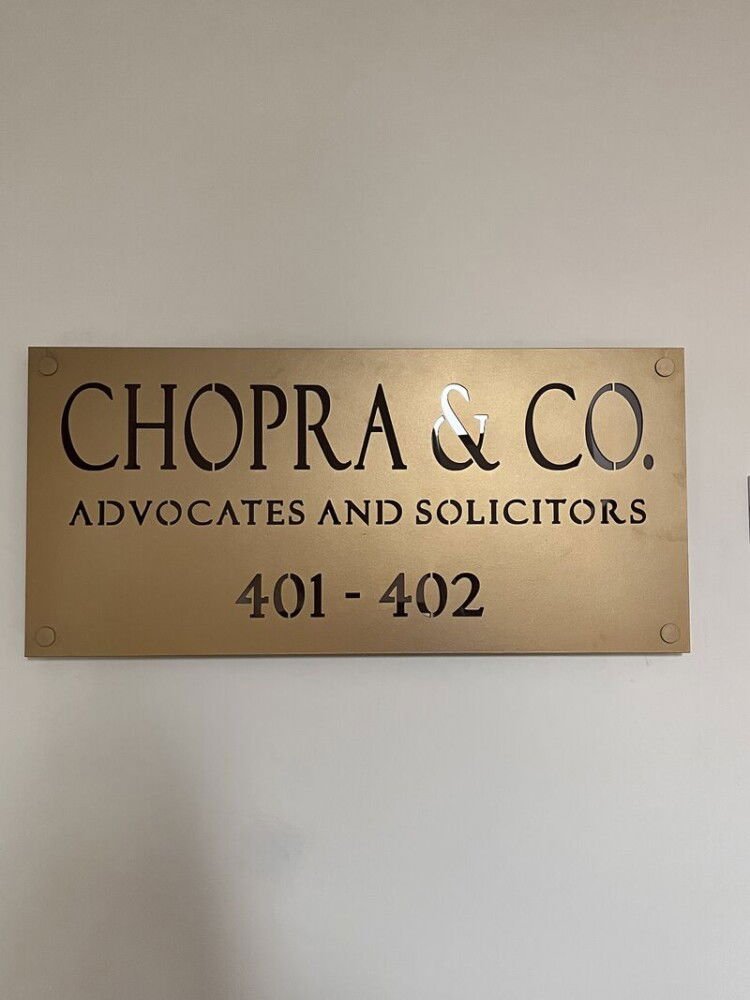
Chopra & Co. (Advocates and Solicitors), Legal Services in Jaipur, Rajasthan; Address: 4th Floor, Arnav Complex, 401-402, above HDFC Bank, 72 Hawa Sadak, Keshav Nagar, Civil Lines, Jaipur, Rajasthan 302006
Duration of Internship
December 1, 2025 – January 1, 2026 – One month (Full-time)
How did you apply?
I applied for the internship by approaching the office with my CV and expressing my interest in litigation and court-based work.
First-Day Formalities, Infrastructure, and First Impression
As a second-year law student, stepping into a litigation chamber was both exciting and slightly intimidating. My initial impression of the office was that of a practice deeply rooted in court work, with a strong emphasis on procedure, preparation, and clarity of legal reasoning.
The transition into work was smooth, and I was encouraged from the beginning to observe court proceedings closely and engage with the legal issues involved.
Main Tasks
During the internship, I was exposed to a wide range of matters across civil, commercial, real estate, arbitration, and criminal law, with substantial learning under proceedings before the Rajasthan High Court.
A major part of my learning involved developing a substantive understanding of the Real Estate (Regulation and Development) Act, 2016, and the Rajasthan Real Estate Regulation and Development Rules, 2017. I researched proceedings before RERA and REAT, particularly focusing on matters relating to the execution of sale deeds.
This required close and critical reading of judgments, which helped me understand how statutory provisions operate in practice.
I regularly assisted in researching and compiling judgments relevant to ongoing matters and arguments advanced before courts and tribunals. Observing how judgments were used during arguments helped me understand the importance of precedents and how they shape litigation strategy.
I also observed proceedings under the Commercial Courts Act, including matters arising under Section 34 of the Arbitration and Conciliation Act, 1996. This exposure gave me practical insight into arbitration law and the limited scope of judicial interference in arbitral awards.
Through observation of court proceedings and discussions with my seniors, I developed an in-depth understanding of civil procedure. Additionally, I studied criminal jurisprudence through case law analysis relating to Section 319 of the Code of Criminal Procedure, 1973.
The internship also helped me gain conceptual clarity on the appellate system, particularly the distinction between first appeals under Section 96 CPC and second appeals under Section 100 CPC, and how questions of fact and law are dealt with at different stages.
I attended client meetings relating to matters before RIICO, which offered valuable exposure to advisory work and regulatory aspects. I also observed arbitration proceedings and assisted in preparing arbitration-related documents such as affidavits of admission and denial, along with attending arbitration meetings.
In terms of court exposure, I attended proceedings before Civil Courts, Commercial Courts, the Rajasthan High Court (both physical and virtual hearings), and also observed Supreme Court proceedings through virtual mode.
Post-hearing, I often conducted research based on arguments advanced in court, which helped me better understand judicial reasoning and courtroom dynamics.
One of the most important takeaways from the internship was understanding the distinction between substantive justice and procedural justice, and observing how courts balance both in real cases.
Work Environment
The work culture was professional, disciplined, and supportive of learning. Seniors were approachable and encouraged curiosity and clarity of thought. They would discuss my major takeaways at the end of each day and further assist and guide me to conduct an in-depth research on the same.
Good Things about the Internship
The most positive and defining aspect of my internship was the mentorship and the learning-oriented approach adopted by my supervising advocate. Despite being a second-year law student, I was encouraged to actively engage with the matters I observed rather than remain a passive observer.
After court proceedings, my lawyer often asked for my feedback on the arguments advanced, the structure of submissions, and possible alternative approaches.
What stood out to me was that the feedback I provided was taken seriously and, on occasion, reflected in the subsequent style of arguments presented before the court.
This level of trust and openness gave me a great deal of confidence and made me feel genuinely involved in the litigation process.
Another extremely positive aspect was the emphasis placed on strong legal research. I was consistently encouraged to go beyond surface-level reading and to understand judgments in depth, focusing on reasoning rather than just conclusions.
This helped me develop the habit of reading judgments critically and appreciating how legal principles are built through judicial reasoning. The internship reinforced the idea that effective courtroom advocacy is rooted in preparation and research.
At the end of most working days, my advocate made it a point to set aside time for discussion and clarification of doubts. These end-of-day conversations were particularly valuable, as they helped me consolidate what I had observed in court and connect it with doctrinal concepts studied in law school.
No question was dismissed as trivial, which made the learning environment comfortable and encouraging. For me, as a second-year student, this approach significantly bridged the gap between theoretical learning and practical application.
The encouragement to think independently, question arguments, and back opinions with research not only strengthened my understanding of law but also instilled confidence in my ability to contribute meaningfully.
Overall, the mentorship, openness to feedback, and emphasis on research made the internship an exceptionally positive and motivating experience.
The internship taught me not only how to read the law, but also how to read between the lines, which is crucial for anyone aspiring to litigation.
Bad Things about the Internship
The learning curve was steep at the beginning, especially due to the procedural nature of litigation, but this challenge ultimately contributed positively to my understanding of the law.
It was challenging to find judgments to support arguments made by my senior, but that challenge turned out to be a learning experience as I gained insights into legal research.
Adapting to and understanding the procedure of the court was difficult for me at the start because of a lack of knowledge regarding various laws, rules, acts, regulations, etc., but gradually, with the guidance of my seniors, I was able to formulate a way that worked best for me.
Monthly Stipend
No stipend was provided.
Details about the Accommodation, Commuting to the Office
Since the internship was based in Jaipur, commuting and accommodation were manageable.
Anything else you want to share?
Overall, my internship at Chopra & Co. Associates was a highly valuable experience that strengthened my foundational understanding of litigation, procedural law, and court functioning.
For a second-year student, it provided clarity, confidence, and a realistic understanding of how law is practised in courts. The guidance and mentorship played a significant role in making the internship both intellectually and professionally rewarding.
I would like to extend my gratitude to Pranjul Sir, Ankur Sir, Dheeraj Sir, and Komal Ma’am for helping me gain such a valuable experience.
Are you interested in sharing your internship experience with the community? Click here to submit your internship experience today on Lawctopus.

Disclaimer: Internship Experiences are opinions shared by individual law students are personal and subjective. Internship Experiences are NOT Lawctopus’ official views on the internship. We also do not edit internship experiences (except to enhance readability) to ensure that the intern’s voice remains intact.
Disclaimer: Organisations should not influence interns to write internship experiences on Lawctopus or make writing one mandatory for an internship certificate. These practices can lead to the organization getting blacklisted. In case of such instances, interns are requested to inform at contact@lawctopus.com
[ad_2]
Source link

