

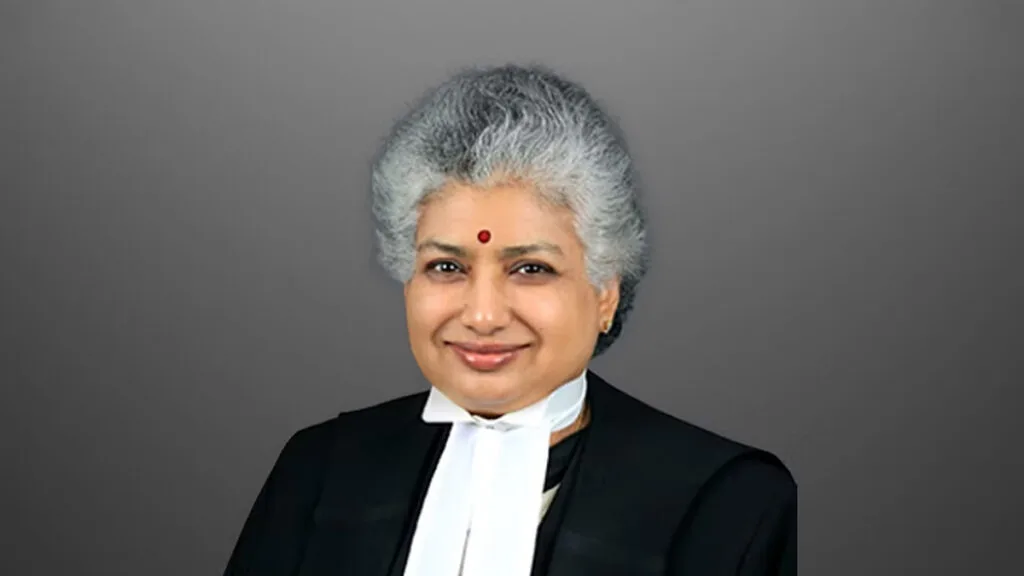
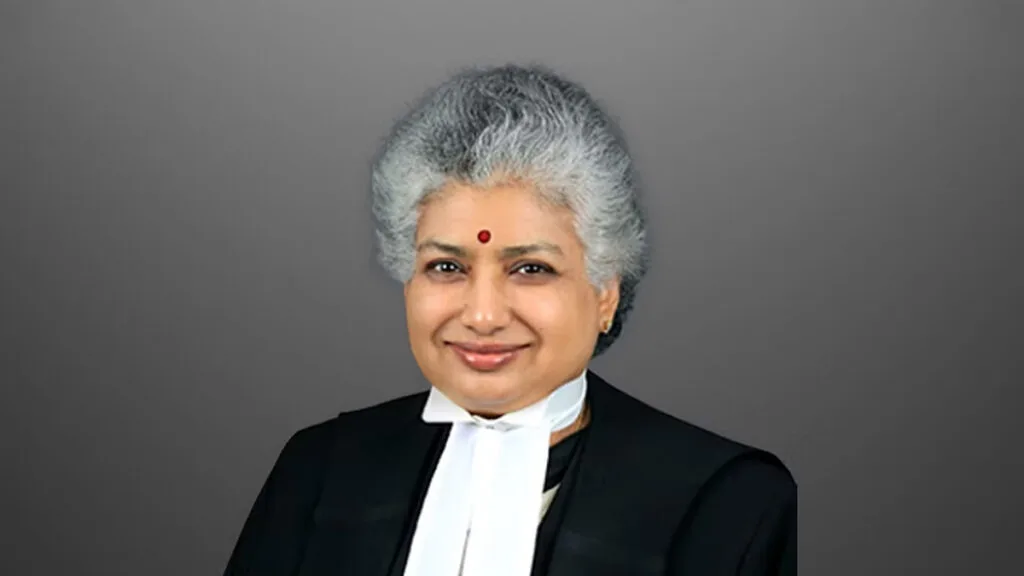
B. V. Nagarathna, judge of the Supreme Court of India, recently emphasised that the independence of the judiciary ultimately rests on the personal integrity and moral courage of judges. She observed that members of the Bench often encounter various pressures and temptations that could compromise their impartiality, but stressed that judges must firmly refuse such influences.
Speaking at a memorial lecture organised by the Kerala High Court Advocates’ Association in honour of T. S. Krishnamoorthy Iyer, Justice Nagarathna noted that judicial independence is not merely an institutional safeguard but also an individual responsibility. According to her, the ability of judges to say “no” to external pressures is fundamental to preserving the rule of law.
She also reflected on key constitutional principles, including Transformative Constitutionalism and the Basic Structure Doctrine. Justice Nagarathna explained that transformative constitutionalism enables the Constitution to act as a catalyst for progressive social change, grounded in values such as liberty, equality and fraternity.
The Basic Structure Doctrine, she added, serves as a constitutional safeguard by ensuring that Parliament cannot amend the Constitution in a manner that alters its fundamental identity.
Highlighting the role of courts in upholding these principles, Justice Nagarathna underlined the importance of judicial review and the doctrine of separation of powers. She concluded that public confidence in the justice system can only be sustained when judges remain independent, impartial and committed to their constitutional duties.