inkinccorporation@gmail.com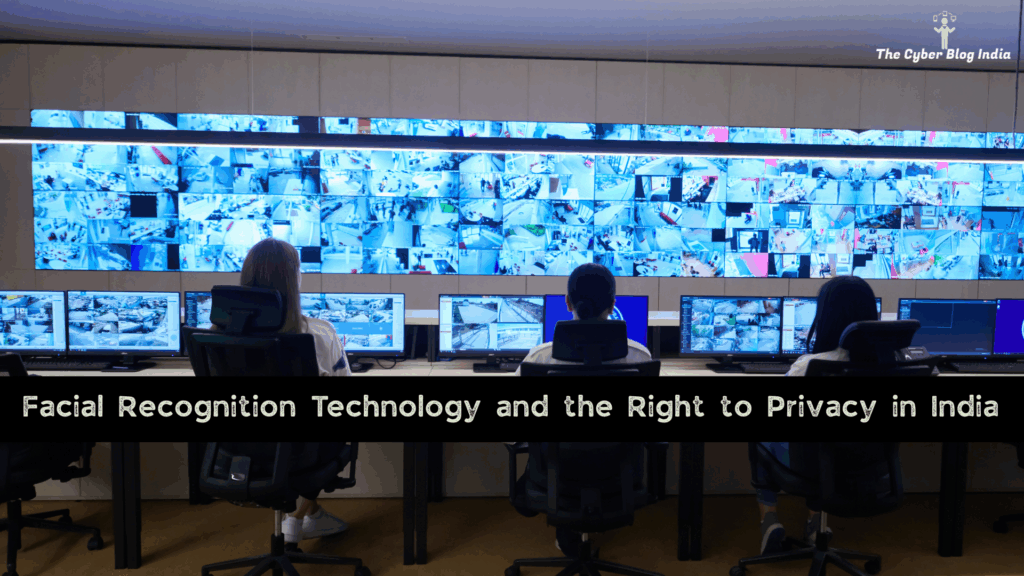
With rapid advances in technology, governments and private companies worldwide are increasingly relying on digital tools to enhance security and governance. One such tool is facial recognition technology (FRT). FRT enables authorities to identify the person by analysing their facial features. In India, FRT is used by law enforcement agencies, public authorities, and surveillance systems for various purposes, such as crime detection, crowd control, and national security. However, the widespread use of FRT also raises serious concerns about privacy, personal liberty, equality and constitutional safeguards. The absence of a legal framework regulating its use has made this technology controversial. This has become more important since the Supreme Court recognised privacy as a fundamental right in Justice K.S. Puttaswamy v. Union of India. This article examines FRT in India through the lens of right to privacy and other constitutional principles, and also highlights the need for regulation and safeguards.
Facial Recognition Technology (FRT)
FRT is a biometric tool that identifies or verifies any individual by analysing their facial features. It basically works by capturing an image or video of a person’s face and analysing unique facial characteristics, such as the shape of the eyes, nose, and jawline. These features are then converted into digital data, such as numerical codes, and compared with images stored in a database to determine the match. Since facial images can be collected from CCTV cameras and other public surveillance systems, this technology enables identification without direct interaction or consent. This makes facial recognition more difficult than other forms of biometric identification in detecting any wrongful conduct.
Use of FRT
In India, law enforcement agencies and public authorities have started using FRT. The police rely on FRT to identify suspects, trace missing persons, and analyse CCTV footage. Facial recognition systems are also being used in airports, such as through DigiYatra, railway stations, and large public gatherings for security purposes. The government has proposed creating a nationwide FRT to assist policing across states. While these measures can be justified on the grounds of public safety and national security, they involve continuous monitoring of citizens, including those who are not suspected of any crime or wrongdoing.
There are no clear statutory rules governing the collection, sharing or deletion of facial data. The use of this technology is often based on executive decisions or administrative guidelines rather than legislative authority. In the absence of legal clarity, this issue raises concerns about unchecked state power, misuse of biometric data, and the lack of accountability. In the absence of a specific and dedicated law regulating FRT, citizens have only limited remedies against wrongful surveillance or incorrect identification.
Right to Privacy in India
The right to privacy has evolved through judicial interpretation in India. Although the constitution does not directly mention “privacy”, it has been recognised as an essential element of personal liberty. This reached a turning point with the Supreme Court’s decision in Justice K.S Puttaswamy v. Union of India (2017) 10 SCC 1. In this landmark judgement, the court held that the right to privacy is a fundamental right protected under Article 21 of the Constitution. The judgment recognised privacy as crucial to human dignity, autonomy and freedom.
The Supreme Court stated that privacy means that individuals have the right to control how their personal information is used. The court held that any infringement of privacy must satisfy 3 conditions:
- it must be backed by law;
- it must pursue a legitimate state objective; and
- it must be proportionate to the aim sought to be achieved.
The Puttaswamy judgement made it clear that technological advancement cannot come at the cost of an individual’s fundamental rights.
Constitutional Issues
As discussed, there are no specific laws regulating or authorising the use of FRT. Hence, the first requirement of the Puttaswamy judgment is not fulfilled here. The large-scale collection of facial data of ordinary citizens for general surveillance to stop crime is excessive and unfair, as it monitors many innocent citizens unnecessarily.
The use of FRT affects many fundamental rights. Under Article 21, constant surveillance interfaces with a person’s personal liberty, autonomy, and dignity. Individuals may feel that their movements and activities are being monitored. Under Article 19, surveillance can discourage people from exercising their freedom of speech, expression and peaceful assembly. For example, fear of being identified and tracked may prevent citizens from participating in any protest or expressing dissenting views. Under Article 14, facial recognition systems may result in arbitrary or unequal treatment due to errors or biases in the technology, leading to unfair targeting of certain groups.
Unregulated use of FRT gives the state the power to continuously monitor citizens. Such surveillance systems harm and demean the democratic principles that individuals should be free from constant state scrutiny. The fear of being watched can create chilling effects, leading individuals to modify their behaviour to avoid attracting attention. This weakens democratic principles and participation, and reduces public trust in the state’s institutions.
Need for Regulation
India’s current data protection framework is insufficient to address the challenges posed by FRT. While the DPDP Act, 2023, provides a legal framework for data protection, it does not specifically talk about or regulate biometric surveillance or FRT. The law also allows broad exemptions for government agencies, which limits its effectiveness in protecting citizens from state surveillance. As a result, facial data remains vulnerable to misuse and unauthorised access by any agencies.
A thorough legal framework is desperately needed to control FRT in India. Such legislation must impose stringent restrictions on data collection and retention, and it should clearly define the uses of facial recognition. To monitor how this technology is used and prevent abuse, independent oversight procedures should be established. To protect people’s rights, the government must be transparent and accountable, and should provide easy ways to complain and seek remedies.
The state may act to ensure security and public order, but it must also respect individual privacy. Any limit on privacy must be lawful, reasonable and proportionate. FRT should be used only in specific situations with proper safeguards, as security cannot justify unlimited surveillance of citizens.
Conclusion
Facial recognition technology can help in security and policing. But it can also harm privacy and freedom if misused. In India, there is no proper law to control its use. The Supreme Court, in Puttaswamy, recognised privacy as a fundamental right. So, India needs strict rules and safeguards to prevent unfair and unlimited surveillance. Without regulation, this technology may lead to the misuse of biometric data and the wrongful tracking of innocent people. It can also create fear among citizens and reduce free participation in democracy. Therefore, a balanced approach is necessary that meets security needs without violating constitutional rights.