


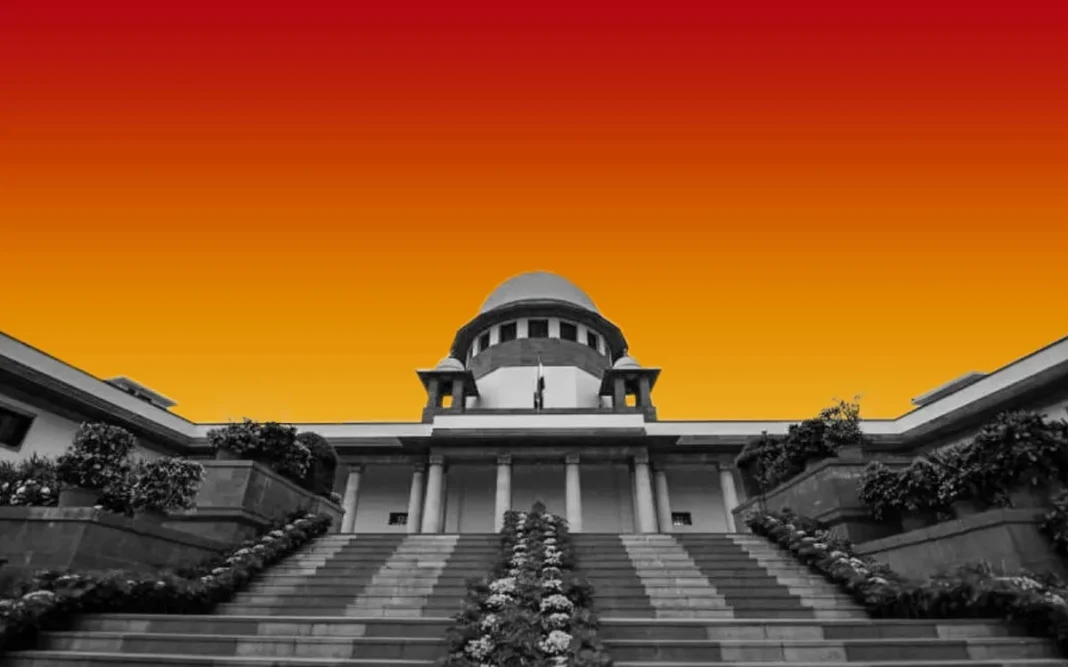
A Public Interest Litigation has been filed before the Supreme Court of India challenging the constitutional validity of the Sustainable Harnessing and Advancement of Nuclear Energy for Transforming India (SHANTI) Act, 2025. The petitioners — including former civil servants and experts — argue that the new law dilutes crucial safeguards relating to nuclear liability and public safety.
The plea has been moved under Article 32 of the Constitution, alleging violations of fundamental rights, particularly Articles 14 and 21. According to the petitioners, the SHANTI Act substantially weakens the liability framework that previously existed under the Civil Liability for Nuclear Damage Act, 2010.
When the matter was briefly mentioned, a bench comprising Chief Justice Surya Kant and Justice Joymalya Bagchi took note of the submissions and indicated that the case would require detailed consideration. Senior advocate Prashant Bhushan, appearing for the petitioners, pointed out that earlier challenges to the 2010 nuclear liability framework are still pending before the Court.
A central concern raised in the petition relates to the cap on compensation for nuclear damage. The Act reportedly limits operator liability to a specified financial ceiling, which the petitioners contend is grossly inadequate when compared to the catastrophic consequences witnessed in global nuclear disasters such as Chernobyl disaster and Fukushima Daiichi nuclear disaster. They argue that in the event of a serious accident, the financial burden could far exceed the statutory limit, leaving victims without adequate remedy.
Another contentious issue is the removal of the operator’s right to seek compensation from suppliers in certain situations. The plea asserts that this shift undermines accountability within the nuclear supply chain and may weaken safety incentives. It further contends that the structure of regulatory oversight under the new law could compromise institutional independence, potentially conflicting with India’s commitments under the Convention on Nuclear Safety.
The petition also raises transparency concerns, arguing that certain provisions may shield nuclear installations from scrutiny under the Right to Information Act, 2005. According to the petitioners, limiting public access to safety-related information undermines democratic accountability and informed public participation.
Additionally, the plea highlights the absence of a fully operational long-term nuclear waste disposal solution, stressing that without a functional deep geological repository, questions surrounding environmental safety remain unresolved.
Through the petition, the challengers seek judicial intervention to strike down the contested provisions of the SHANTI Act, contending that they violate established constitutional principles and environmental doctrines such as the precautionary principle and the polluter pays principle.


