



By Professor Upendra Baxi
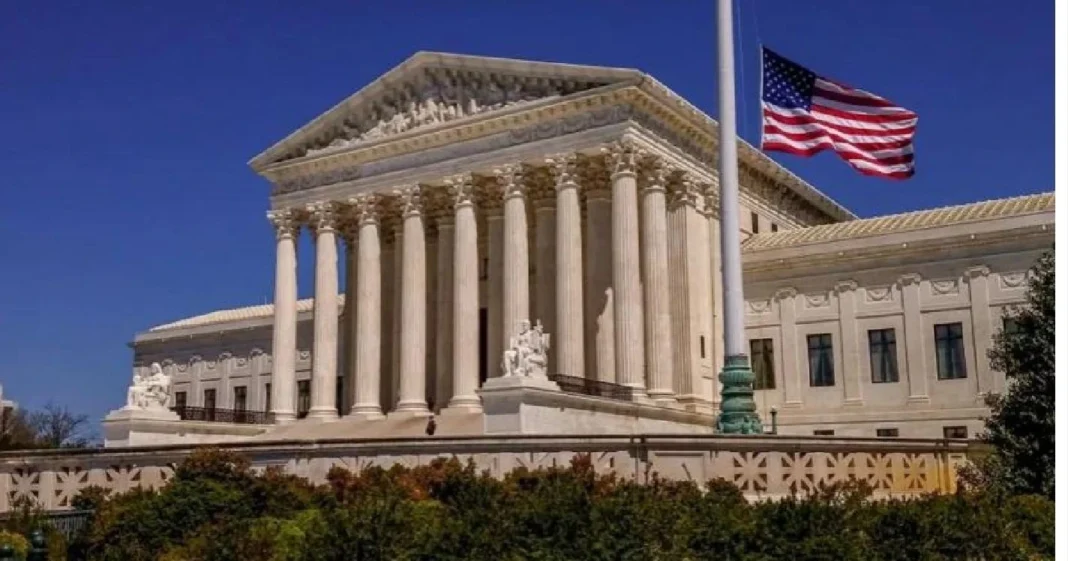
No matter how the incumbent POTUS (the president of the United States) may claim ascendancy over all other organs of government, the SCOTUS (the Supreme Court of USA) has finally invalidated the sweeping tariffs that were imposed by a series of unprecedented 2025 executive orders.
Of course, invalidation is a step forward to arrest a world economic disorder thus imposed, but the reiteration of limited powers of all constitutional authorities is no less crucial in a global era of democratic decline.
We know that the doctrine of separation of powers has hoary roots and was most clearly enunciated by Charles-Louis de Secondat, Baron de Montesquieu, in his The Spirit of Laws (1748), who had a great impact on the United States Constitution (1787). It was his central idea to create three separate branches of government; the tariff decision is a most recent global reaffirmation of that doctrine.
The SCOTUS in a 6-3 decision, invoked Article I, Section 8, of the USA Constitution that specifies: “The Congress shall have Power To lay and collect Taxes, Duties, Imposts and Excises.” The framers recognized the unique importance of this taxing power—a power which “very clearly” includes the power to impose tariffs; it reiterated James Madison [The Federalist No 48] to say that Congress “alone [has]… access to the pockets of the people”.
No doubt, the International Emergency Economic Powers Act, 1977 (IEEPA) invested the POTUS with a power to declare a national emergency when “the national security, foreign policy, or economy of the United States” was imperilled; the POTUS issued in 2025 a series of executive orders imposing the tariffs. One set of tariffs, known as the “trafficking tariffs”, targeted products from China, Canada and Mexico—which, according to POTUS, had not done “enough to stop the flow of fentanyl into the United States”. Additionally, the “reciprocal” tariffs, imposed an “initial tariff of 10 percent on imports from almost all countries and even higher tariffs on dozens of countries. The latter were justified by citing “large trade deficits”
The SCOTUS cleary said that choices about which policies to adopt are always for the executive and the legislature; these are “not for the Federal Judiciary to resolve. Rather, the Judiciary’s more limited role is to neutrally interpret and apply the law.”
In Justice Kavanaugh’s view, the POTUS had IEEPA authority to impose the tariffs because they “are a traditional and common tool to regulate importation”.
He also maintained that the “major questions” doctrine did not bar POTUS from imposing the tariffs, but held rather that “… this should be a straightforward case” favouring a pro-POTUS perspective which takes full account of the text of IEEPA, alongside the “longstanding historical practice, and relevant… precedents”; further, in foreign affairs, “courts read the statute as written” and should not employ the major questions doctrine as “a thumb on the scale against the President.”
In any event, he reinforced his conclusion by saying that “numerous other federal statutes authorize the President to impose tariffs and might justify most (if not all) of the tariffs at issue in this case—albeit perhaps with a few additional procedural steps that IEEPA, as an emergency statute, does not require.” But the issue at hand was not about other laws that may justify the extraordinary tariffs, but whether this imposition was justified by the IEEPA.
I do not here consider Justice Neil Gorsuch’s (46-pages, twice as long as the majority opinion) separate concurring opinion. It contests the doctrine of “major questions“ as a “recent creation”. Serving “much the same principle” has “long applied to those who claim extraordinary, delegated authority, whether in private or public law.”
This contestation on whether it is “recent” or well-established rule of interpretation remains largely of interest only to scholars of what I have elsewhere called “COCOS” [comparative constitutional studies].
PROSPECTIVE OVERRULING
The Court did not explore the question of refunds to the importers who have paid the tariffs, estimated in 2025 at more than $200 billion. In his dissenting opinion, Justice Brett Kavanaugh suggested that the federal government “may be required to refund billions of dollars to importers who paid the IEEPA tariffs, even though some importers may have already passed on costs to consumers or others.” Moreover, he added, “[b]ecause IEEPA tariffs have helped facilitate trade deals worth trillions of dollars—including with foreign nations from China to the United Kingdom to Japan, the Court’s decision could generate uncertainty regarding various trade agreements. That process, too, could be difficult”.
True though this is, issues of unjust enrichment need further exploration, and just redress may invite considerable litigation as importers may file protective actions in the Court of International Trade (CIT), as well as protests with US Customs and Border Protection (CBP) within the legislatively ordained time limits. Quite a surge in litigation is expected.
Further, one may also expect complex class-action litigation by consumers against importers for refunds of the IEEPA tariffs which constitute a” windfall” for importers at their expense. Perhaps, the recent executive order instructing the administration as soon as practicable to terminate the collection of the additional ad valorem duties” previously imposed under IEEPA may somewhat assist the mediation of just claims.
A RECALCITRANT RESPONSE
After SCOTUS released its decision, the POTUS announced that the administration will impose an additional 10 percent tariff on all imported goods, pursuant to Section 122 of the Trade Act of 1974, which can remain in effect for 150 days; further, it was also said that, during that time, it will resort to Section 301 investigations, targeting certain countries and specified products.
The strict adherence to the separation of powers ideal remains valuable, of course, but how far it will place limits on the long run arbitrary imposition of tariffs, over other counties, especially the American allies, remains an open question.
One may only dare hope that multilateralism in trade and commerce will emerge as the preferred path over the solitary whims of POTUS and ways would be found, more consistent with global economic order, where more middle powers will also have an economic and political voice. No longer should it be possible to say, as did Mark Carney, the prime minister of Canada recently at Davos Conference 2026, that “either you are at the table or on the menu.”
—The writer is Emeritus Professor of Law, Warwick and Delhi University