


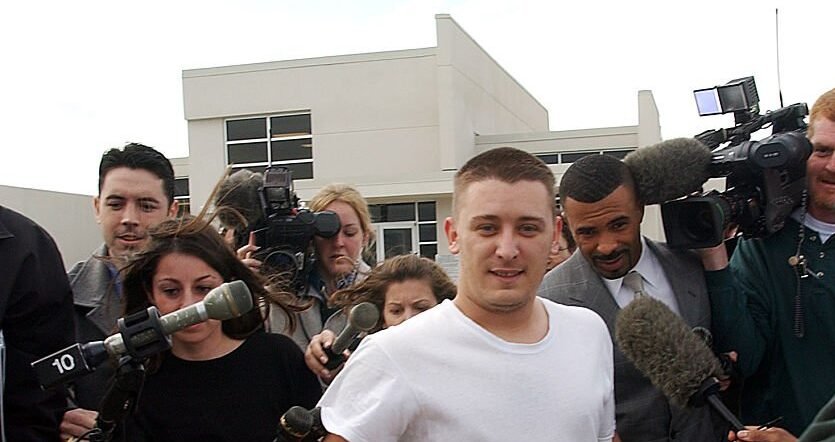
Over 34 years following a crime that shocked Texas and attracted the attention of the whole nation, a Travis County court has officially ruled the four formerly suspected men innocent of the murders in the 1991 Austin Yogurt Shop Murders. The decision is a historic legal redressing in a case that has been notorious in terms of controversial interrogations, overturned convictions, and shifting forensic science.
The order of Judge Dayna Blazey exonerates Maurice Pierce, Robert Springsteen, Michael Scott, and Forrest Welborn of the murderous acts of four teenage girls (Amy Ayers, Eliza Thomas, and sisters Jennifer and Sarah Harbison) who were killed in an Austin frozen yogurt shop in December 1991. The victims were shot, and the shop was deliberately burned, a fact that investigators have always thought was to cover up.
These four men were teenagers or young adults during the time when they were suspects, many years after the killings. Long interrogation, therefore, produced custodial confessions on the basis of which investigators ultimately constructed their cases. Springsteen and Scott were found guilty in 1999, with Springsteen getting a death sentence, and Scott was condemned to life imprisonment. Pierce and Welborn were also accused, but their cases did not lead to convictions that were sustained. The confessions were later raised with serious constitutional issues in appeals, and in 2006, the Texas Court of Criminal Appeals reversed the convictions of Springsteen and Scott.
The situation changed dramatically after the development of DNA analysis technologies that enabled police officials to revisit biological evidence gathered at the scene of the crime in 1991. In the year 1999, the evidence was connected to the death of Robert Eugene Brashers with modern forensic testing. Based on the results of the scientific examination, investigators decided to exclude the four men who were accused and found Brashers to be the only offender. The prosecutors admitted that the forensic evidence was in basic conflict with the previous confession prosecutions.
District Attorney Jose Garza of Travis County filed a motion to officially clear the records of the men based on the new scientific findings, as well as the failure of the cases against the men on appeal. At the court, Michael Scott also talked about the years of lost life in jail and stigma, whereas Robert Springsteen talked about the permanent psychological effects of being a shadow on a death sentence. Maurice Pierce never lived to witness the decision; he died in 2010 after a mental health episode during a police interaction.
The exonerations highlight institutional lessons on how dangerous it is to rely on confession-based prosecutions in the absence of supporting forensic evidence. Although there is no legal ambiguity regarding the four men, the incident is still a long-term reminder of how investigative tunnel vision and erroneous processes can transform lives, and how scientific innovations can decades later transform the historical narrative.


