



By Kenneth Tiven
This is no ordinary presidential speech. Allies and adversaries alike are acutely aware that this combative and age-challenged leader seeks to redefine American conduct at home and abroad. And in the Trump era, actions often speak louder than words.
In recent months, the administration has been accused of orchestrating the abduction of a Venezuelan political figure, striking Iranian nuclear facilities, deploying naval combat fleets off Iran’s coast, and engaging in opaque peace overtures with Russian President Vladimir Putin over Ukraine. International law, critics argue, has struggled to contain a presidency driven by spectacle and dominance.
At home, turbulence mirrors the global stage. Immigration enforcement operations led by ICE in Minneapolis, Minnesota, reportedly resulted in violent confrontations, civilian deaths and mass detentions before a rapid federal pullback. Trump’s broader reshaping of American governance—political norms, federal authority and historical narrative—signals a sharp departure from two-and-a-half centuries of democratic tradition.
The State of the Union itself will be political theatre. The 435 members of the House and 100 Senators will sit divided by party. Republicans are expected to rise in loud approval; Democrats will likely remain seated, some perhaps brandishing protest placards as in previous addresses. The nine justices of the Supreme Court, seated solemnly in the front row, will maintain the ritual posture of non-partisanship—however uneasy the moment.
Trump’s past addresses painted a dark portrait of an America only he could rescue. He may reprise that theme, blaming Democrats and what he calls a hostile federal judiciary for obstructing progress. Known for abandoning teleprompters mid-speech, he could pivot within minutes to campaign-style improvisation where facts blur and applause lines dominate.
Foreign policy may overshadow domestic discord. As Ramadan begins, Trump is expected to reiterate warnings to Iran’s ruling clerics: repression of freedom demonstrations must cease. The recent strategic bombing of deeply buried Iranian nuclear sites suggests what “or else” might mean in practice. Historically, Americans often rally behind displays of presidential force—at least initially.
Such strength narratives could help deflect attention from sagging approval ratings, stubborn inflation and rising consumer prices. The president insists global tariffs are not to blame, though many economists disagree. He will likely tout a buoyant stock market fuelled by massive corporate investment in artificial intelligence. Independent analysts caution that equity gains can mask broader economic distress.
Another shadow looms: the long-running controversy over the Epstein files. Trump’s name reportedly appears repeatedly in redacted investigative documents dating back to 2006. The Justice Department, under Attorney General Pam Bondi, has refused to release millions of additional pages despite bipartisan congressional pressure. Bondi’s combative testimony before a House committee intensified scrutiny, raising questions about transparency and political loyalty.
Meanwhile, peace efforts between the United States, Ukraine and Russia remain stalled. Ukraine’s defensive campaign grows more desperate, with drone strikes extending deeper into Russian territory. Trump’s frequent verbal attacks on the European Union appear, paradoxically, to have strengthened intra-EU solidarity.
In Washington, the president has launched what he calls a “Board of Peace” to oversee Gaza’s reconstruction—an initiative critics describe as an attempt to bypass the United Nations. Western allies are wary; several Middle Eastern nations have joined, reportedly contributing $1 million each. Trump calls it “the most consequential international body in history.” Detractors see an imperial impulse—and perhaps a family business opportunity.
Contrast this with Illinois Governor JB Pritzker, a potential 2028 presidential contender, who in his state address framed the national debate in moral terms. “We are not fighting over policy or political party,” Pritzker said. “We are fighting over whether we are going to be a civilization rooted in empathy and kindness—or one rooted in cruelty and rage.”
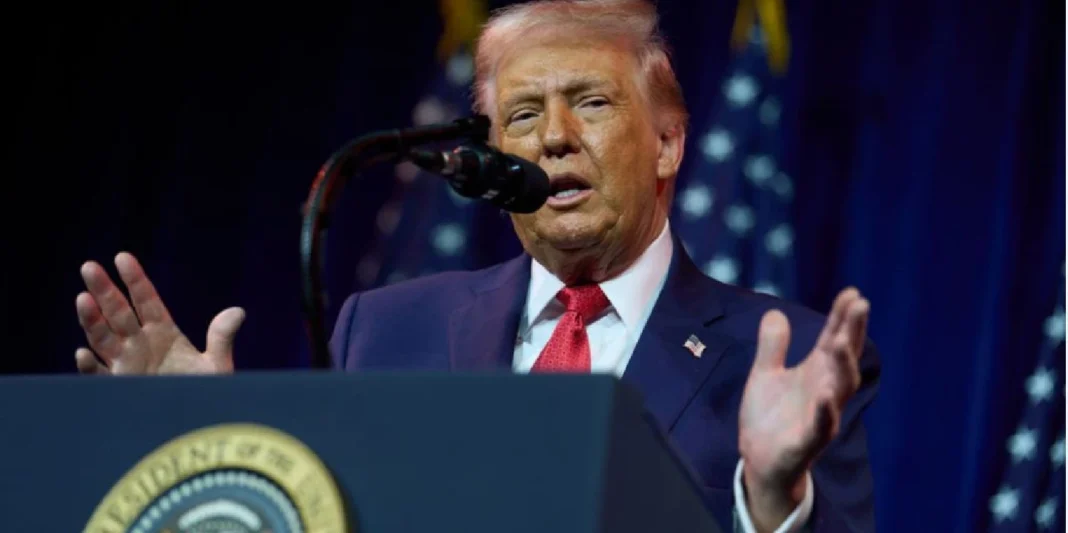
As Trump steps to the podium later this week, the world will listen for more than applause lines. It will listen for clues—about war and peace, law and power, and the trajectory of American democracy itself.
—The writer has worked in senior positions at The Washington Post, NBC, ABC and CNN and also consults for several Indian channels


