
By Pawan Kumar
In a multipolar world, no single state commands unquestioned authority. Established and rising powers compete for influence, resources, and strategic advantage. In that contest, legal norms are often strained—and sometimes shattered.
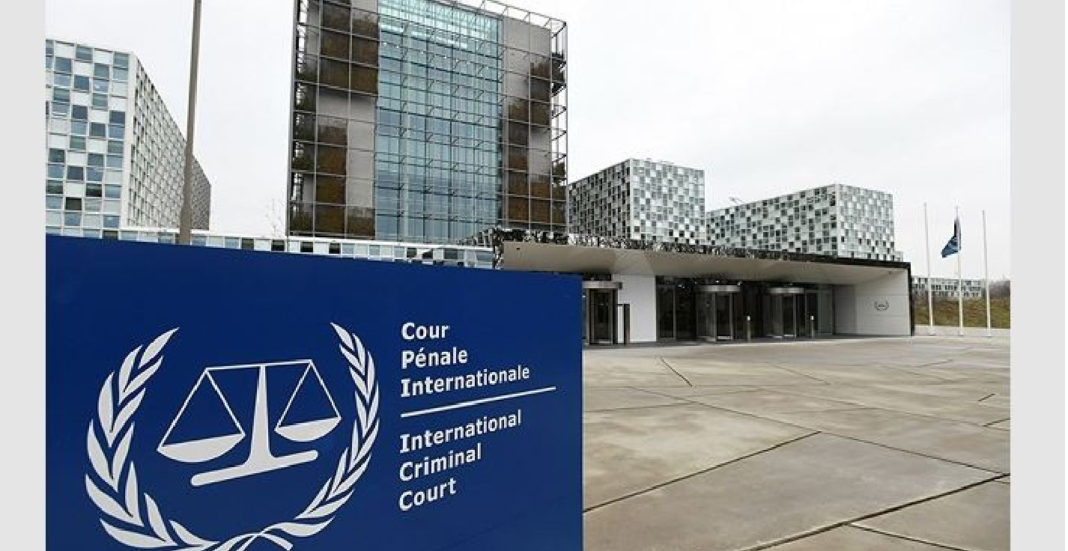
It was precisely to address such moments that the International Criminal Court (ICC) was created. Established by the Rome Statute after more than half a century of negotiations, the Court embodies a simple but revolutionary principle: accountability for the gravest crimes—genocide, war crimes, crimes against humanity, and aggression—must not depend on political convenience.
Article 27 of the Rome Statute makes this explicit. Before the ICC, official capacity offers no shield. Diplomatic or consular immunity cannot be invoked to avoid prosecution. In theory, no one is above the law.
THE CURIOUS CASE OF UKRAINE
On January 1, 2025, Ukraine became the 125th state party to the Rome Statute, formalizing a process that began years earlier. Through two declarations under Article 12(3), Ukraine had already accepted ICC jurisdiction over alleged crimes committed on its territory from November 2013 onwards—covering events from the annexation of territory to the ongoing war.
These declarations enabled the Court to investigate the situation well before formal accession. Today, the ICC is in the investigative stage, examining allegations linked to the Russia-Ukraine conflict. Unprecedentedly, dozens of states have formally referred the situation to the Court—a signal of broad international concern.
In March 2023, the ICC issued arrest warrants, including one for Russian President Vladimir Putin, over the alleged unlawful deportation of Ukrainian children. The warrants underscored the Court’s willingness to act—even against leaders of powerful states. Yet, they also exposed its greatest vulnerability: enforcement.
The ICC has no police force. It depends entirely on state cooperation to execute arrests. Where political alliances or strategic interests intervene, warrants can remain symbolic.
THE LIMITS OF GLOBAL JUSTICE
Despite its ambition, the ICC’s reach is incomplete. Major powers—including the United States, Russia, China, and India—are not parties to the Rome Statute. Of the five permanent members of the UN Security Council, only two have ratified it.
This absence weakens the Court’s universality and complicates its jurisdiction. While the ICC can prosecute genocide, war crimes, and crimes against humanity, its authority over the crime of aggression remains constrained. Amendments activating aggression jurisdiction will not fully take effect until 2029, and even then, prosecutions face strict limitations—particularly where non-member states are involved. Any referral by the UN Security Council could be vetoed by a permanent member.
The war in Ukraine has reignited calls for a dedicated tribunal to prosecute the crime of aggression—a mechanism separate from the ICC, modelled on precedents such as the tribunals for the former Yugoslavia and Rwanda. Proponents argue that only a specialized court can close the accountability gap left by geopolitical realities.
THE ENFORCEMENT GAP
The ICC’s greatest challenge is not legal doctrine, but political will. Arrest warrants require cooperation. Non-compliance carries limited consequences. Without coordinated enforcement mechanisms—potentially including sanctions or multilateral task forces—the credibility of international justice is at risk.
Ukraine’s accession offers an opportunity to revisit unresolved questions of immunity and enforcement. Political office must not become a sanctuary from responsibility for grave crimes. Strengthening collaboration between the ICC and its member-states—through intelligence sharing, resource pooling, and unified diplomatic pressure—will be essential.
Recent warnings from UN Secretary-General António Guterres about the erosion of international cooperation reflect a broader anxiety: if global institutions falter, the rule of law may give way to the rule of force.
A MOMENT OF CHOICE
Ukraine’s decision to join the ICC during wartime is a powerful symbolic act. It signals faith in law over vengeance, institutions over unilateralism. But international criminal justice cannot function on symbolism alone.
Universal ratification of the Rome Statute, meaningful enforcement mechanisms, and—if necessary—a special aggression tribunal are essential steps towards restoring faith in accountability. The ICC must evolve to meet systemic challenges, and states must treat it not as a political instrument, but as a partner in upholding the rule of law.
In a fractured world, global solidarity remains the backbone of justice. Without it, impunity thrives. With it, even the most powerful can be called to account.
—The writer teaches at Amity Law School, Amity University, Noida