


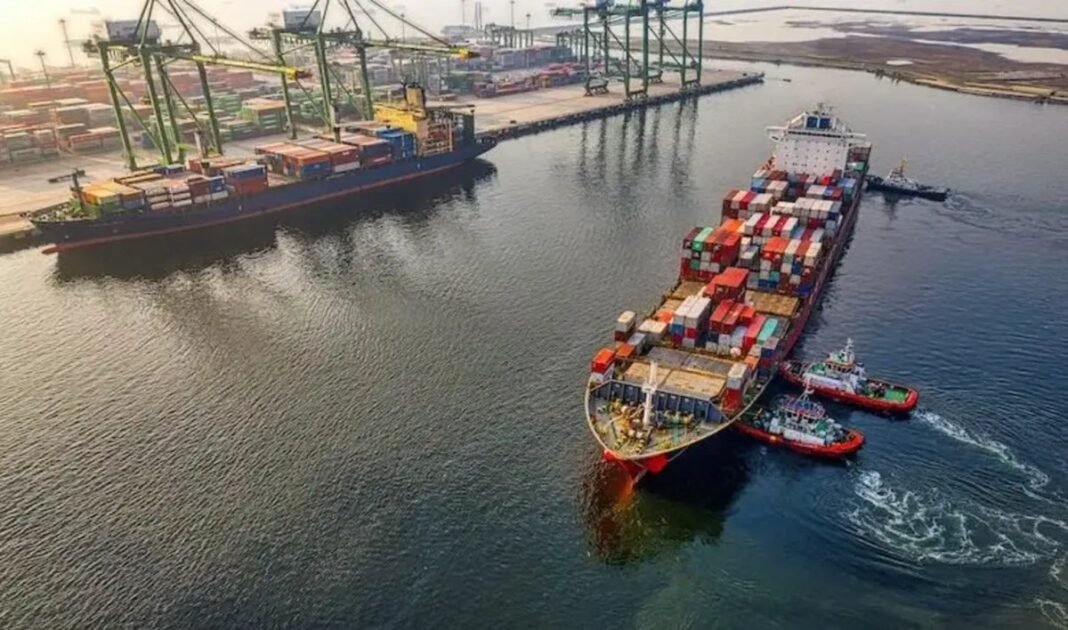
The Russo-Ukrainian armed conflict has brought maritime warfare back to the centre of international legal debate, particularly in the context of the Black Sea. Unlike classical naval conflicts, which primarily involved state-owned warships and direct naval engagements, the contemporary conflict has transformed civilian maritime commerce into a site of strategic contestation. Third-state merchant vessels, routinely employed in the carriage of grain, fuel, and other forms of commercial cargo, have come to be portrayed as potential military objectives. This shift generates profound legal uncertainty surrounding the definition of military objectives, the erosion of neutrality protections, and the legitimacy of incorporating civilian economic activity into the framework of warfare.
At the heart of this debate lies a growing tendency to treat economic sustenance as being equivalent to military contribution. Belligerents have increasingly invoked the idea that civilian commerce which supports the economic endurance of an enemy state may be targeted as part of a broader war strategy. In the maritime context, this reasoning has particular salience. Shipping routes are arteries of global trade, and interference with them produces effects that extend far beyond the immediate theatre of hostilities. The question of whether third-state merchant ships can legitimately be regarded as military targets in the conflict between Russia and Ukraine is examined in this article. It assesses the disputed theory of war-sustaining objects, critically examines the idea of military objectives under international humanitarian law, and considers the ramifications of extending targeting regulations to include neutral civilian trade. Further, it contends that such growth runs the risk of undermining fundamental tenets of humanitarian law and resurrecting a type of economic warfare that international law has purposefully attempted to restrain.
Merchant Vessels, Neutrality, and the Traditional Law of Armed Conflict at Sea
Under the law of armed conflict at sea, merchant vessels are presumptively civilian objects. This presumption is particularly strong when such vessels fly the flag of a neutral state. Customary international law, reflected in instruments such as the San Remo Manual (paras. 146–147), permits interference with neutral shipping only in narrowly defined circumstances. These include carriage of contraband, direct participation in hostilities, or integration into enemy military operations. Absent such conduct, neutral merchant vessels enjoy protection from attack.
The rationale underlying this framework is both legal and humanitarian. Neutral commerce is not merely an economic activity but a stabilizing force in international relations. International law aims to reduce the geographical and humanitarian spillover of war by shielding neutral vessels from the consequences of armed conflict. In maritime situations, where civilian vessels frequently transport necessities like food, medicine, and energy resources, this insulation is very important.
However, this conventional paradigm has been undermined by the Russo-Ukrainian conflict.
Russia’s declarations of maritime danger zones, combined with Ukraine’s asymmetric naval responses, have created an environment in which merchant vessels are exposed to heightened risk even in the absence of clear military use. What was once regarded as routine commercial interaction with a belligerent state is now frequently cast as legally questionable. This reorientation departs from long-standing doctrine and warrants renewed scrutiny of how the category of military objectives is being stretched.
Military Objectives at Sea and the Problem of Economic Contribution
Military objectives are defined by international humanitarian law as items whose destruction provides a clear military advantage and which, by their nature, position, purpose, or usage, effectively contribute to military action. Both land and naval warfare are covered by this term, which is outlined in Article 49 of the Additional Protocol I. Importantly, the contribution must be direct and effective rather than merely hypothetical or indirect.
In classical naval warfare, merchant vessels became lawful targets only when their use crossed a clear threshold. Transporting troops, weapons, or military fuel would suffice. Transporting civilian goods, even if economically valuable to the enemy, would not. The distinction rests on a functional assessment of the object’s role in hostilities, not on its macroeconomic significance.
The contemporary tendency to treat economic contribution as military contribution threatens to dilute this distinction. Grain exports, energy shipments, and other commercial activities undoubtedly bolster a state’s economic resilience. However, equating such resilience with military effectiveness stretches the concept of military objectives beyond its legal limits. Economic activity sustains societies as a whole, not merely their armed forces. To classify such activity as a military objective risks collapsing the civilian-military distinction that lies at the core of humanitarian law. In the Black Sea context, merchant vessels carrying Ukrainian agricultural exports have been framed as indirectly supporting Ukraine’s war effort by generating revenue. This concern is not merely theoretical: following Russia’s withdrawal from the Black Sea Grain Initiative in July 2023, missile and drone attacks on port infrastructure in Odessa and Chornomorsk disrupted the export of civilian grain shipments destined for third states, notwithstanding the absence of any direct military use of the cargo itself. Yet this reasoning fails to satisfy the legal requirement of effective contribution to military action. Revenue generation is several causal steps removed from battlefield operations. Accepting such attenuation would permit virtually all civilian economic infrastructure to be targeted, undermining the protective purpose of the law.
War-Sustaining Objects and the Expansion of Targetability
The notion of war-sustaining objects represents one of the most contested developments in modern targeting doctrine. Emerging primarily from certain strands of United States military practice, the concept suggests that objects sustaining the enemy’s war effort, even if not directly used in military operations, may be lawfully targeted. Oil infrastructure has often been cited as a paradigmatic example.
This doctrine, however, has never crystallized into a rule of customary international law. Many states and scholars have rejected it precisely because of its expansive implications. Applying this doctrine to third-state merchant vessels represents a further escalation. It signifies a qualitative broadening of target selection criteria, extending beyond immediate military advantage to encompass diffuse economic support functions. This interpretive expansion risks eroding the principle of distinction and unsettling the settled balance between military necessity and civilian immunity in naval warfare.
Unlike domestic infrastructure, neutral merchant vessels implicate the rights and obligations of states not party to the conflict. Targeting such vessels on the basis that their cargo sustains the enemy economy would not only undermine civilian protection but also destabilize the law of neutrality. Neutrality would become contingent rather than absolute, vulnerable to strategic reinterpretation by belligerents. In the Russo-Ukrainian conflict, the invocation of economic warfare at sea risks normalizing this expansion. Such normalization would represent a regression to pre-Charter practices that modern humanitarian law sought to overcome.
Proportionality, Civilian Harm, and Global Consequences
Even where an object qualifies as a military objective, the principle of proportionality imposes a critical constraint. Attacks are prohibited if the expected incidental civilian harm would be excessive in relation to the anticipated military advantage. In maritime warfare, this assessment is particularly complex.
Civilians of various ethnicities usually work on merchant ships. In addition to the immediate crew, insurers, port employees, and civilian populations downstream who depend on the cargo are also impacted by their destruction. For example, the disruption of Ukrainian grain shipments following attacks on Black Sea port infrastructure in 2022 and 2023, which prompted warnings from the United Nations and the World Food Programme about rising food insecurity in Africa and West Asia, illustrates how maritime targeting can generate severe and foreseeable humanitarian consequences far removed from the immediate zone of hostilities.
A narrow, battlefield-centric conception of military advantage fails to capture these realities. The wider humanitarian effects of marine targeting must be taken into consideration in proportionality analysis. If this isn’t done, the principle runs the risk of becoming meaningless and reduced to a formalistic exercise unrelated to actual harm to civilians.
Conclusion: Preserving Legal Limits in Contemporary Naval Conflict
The targeting of third-state merchant vessels in the Russo-Ukrainian armed conflict exposes a fundamental tension within international humanitarian law. On one hand lies the strategic impulse to weaken an adversary through economic pressure. On the other lies the legal imperative to preserve civilian protection, neutrality, and the distinction between war-fighting and economic life.
International humanitarian law distinguishes clearly between direct military contribution and indirect economic advantage, although it does not forbid all forms of economic disruption. By adopting broad definitions of war-sustaining objects, one runs the risk of turning the law of armed conflict into a framework that encourages total war. A rigorous interpretation of military aims is essential to the durability of humanitarian law in the disputed Black Sea waters.
Merchant vessels of third states must not become collateral victims of strategic overreach. To preserve the legitimacy of international humanitarian law, economic activity must not be mistaken for military action, and civilian commerce must not be recast as a lawful target merely because it sustains life beyond the battlefield.
Ananta Chopra is a a fourth-year law student at the University School of Law and Legal Studies, Guru Gobind Singh Indraprastha University, New Delhi.
Picture Credit: Unsplash


