





By Kumkum Chadha
When Chief Adviser Muhammad Yunus termed the elections in Bangladesh as “the birthday of a new Bangladesh” and “an unprecedented journey” for the country, he put to rest all speculation about the elections being a non-starter.
As against this, ousted Prime Minister Sheikh Hasina dubbed the elections as a “well planned farce” and said it was a “voter less” and an “unconstitutional exercise” without the participation of her party, the Awami League. Earlier, she had given a call to the voters not to participate in the elections.
For record, the Awami League was unable to take part in the elections because, following Hasina’s ouster, her party was banned from contesting elections. It was for the first time in 30 years that Awami League’s symbol, the boat, did not figure in the ballot paper.
Quite contrary to the past when Awami League had boycotted parliamentary elections twice. This time the party could not participate because its registration was suspended.
It was in August 2024 that students took to the streets on a controversial quota system, in government jobs. This took an ugly turn and Hasina had to flee the country.
She has been in India since then, amid much criticism from Yunus-headed interim government in Bangladesh.
Therefore, just before the elections when she chose to reach out to the electorate back home asking them to boycott the elections, it led to Dhaka questioning India on letting Hasina address the press: in other words, allowing her to pursue a political agenda: “We are surprised and shocked that India allowed a fugitive Prime Minister to make a public address in New Delhi and letting a mass murderer openly deliver her hate speech,” Dhaka said in a statement.
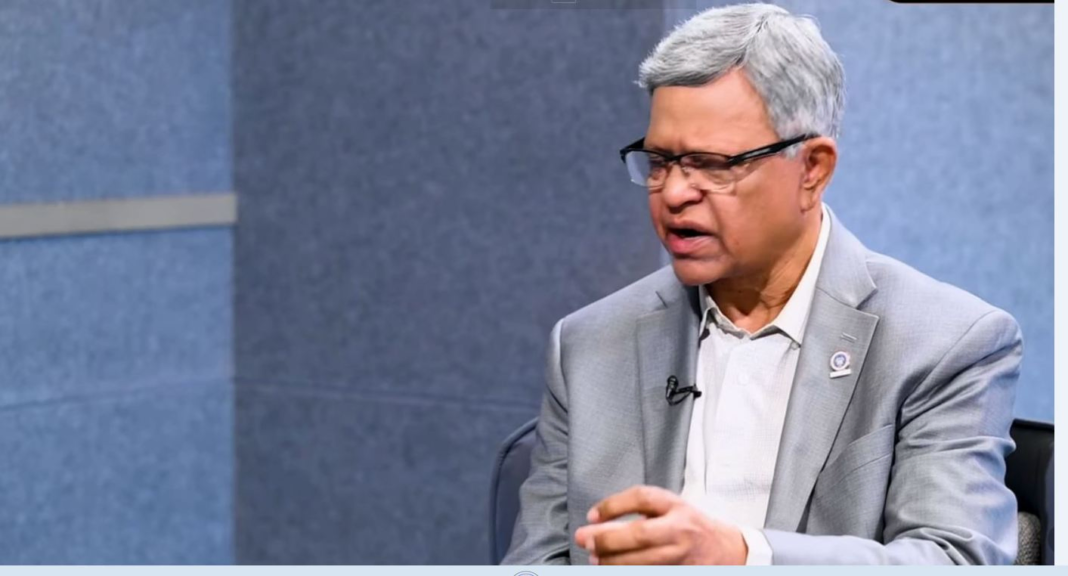
Quick to jump in was Mohammad Ali Siddiqui, general secretary, Bangladesh Human Rights Watch, who said that Hasina committed no wrong by speaking to her supporters or addressing the media. “She spoke to the peace-loving world about what is happening in Bangladesh and what will happen after the elections”, said Siddiqui in a candid interview recently to a prominent national daily.
Siddiqui was clear that Hasina did not cross the line. “She did not violate any norms. To speak and say what she wants is her democratic right”. India, he added, has put no restrictions on her speaking out. “She only asked her people not to go and vote,” Siddiqui said.
When it came to Yunus, Siddiqui did not mince words. “Yunus is a usurper, a mass murderer, he committed genocide and has destroyed the democratic institutions. He has no right to raise such issues,” he said dismissing the foreign ministry protests as “a usual practice”.
Commenting on the state of affairs in Bangladesh, Siddiqui said that rape, lootings, murders, vandalism and mob violence are increasing every day. “Bangladesh has turned into a banana republic”.
On Bangladesh slamming India and the bilateral relationship being at an all-time low, Siddiqui said: “If anyone would like to blame Hasina for the setback in the bilateral relationship because of India granting asylum to Hasina then it is an untruth. The relationship has reached rock bottom… spreading hatred is a political tool which is currently being used liberally and freely,” Siddiqui said, adding that Hasina is not in India by choice: “She does not want to remain here. She has been saying that she would like to return to Bangladesh”.
On the issue of Hasina using Indian soil to push her political and electoral agenda, he said: “Nothing in her speech was provocative. Nor was it aimed at creating violence or unrest. All that she did was to ask her supporters not to go to vote”.
However much Siddiqui may wish to downplay Awami League’s gameplan, the fact remains that Hasina did what it takes to provoke and incite the electorate.
Turning the tables on Yunus, Siddiqui said: “When Yunus landed in Bangladesh, he gave a provocative statement asking the people to occupy the ‘Seven Sisters’ if India plays any role. This was his first statement and a threat against India”.
On Hindu repression and minorities being attacked in Bangladesh, Siddiqui said that this is nothing new. “It is not a new practice to kick out minorities and grab their land except that things are getting worse every day. Yunus, who portrays himself as a peace laureate, is working and doing just the opposite. Under him, things have gone from bad to worse. What he is doing is ethnic cleansing,” Siddiqui said.
Conceding that atrocities did happen during Hasina’s rule, he said: “I don’t want to disagree and it has happened during the reign of all rulers, including Awami League, but there were openings for the persecuted to express and tell the world what was happening to them. They were able to speak up and seek justice. Hasina government took measures and immediately arrested the perpetrators”.
On whether it was enough, he agreed that it wasn’t and the answer was either prevention or need for special laws to be enacted. “Crime is crime but the way things are at present, the existence of the minorities could be in danger.”
Siddiqui’s last word of caution: “Some foreign powers are trying to take over the South Asian region and Bangladesh is a hot spot”.
He says that “the deep state” is behind the recent upheaval and responsible for the ouster of Sheikh Hasina from her home, and more importantly, the land and the people she has ruled for 15 long years.
—The writer is an author, journalist and political commentator