



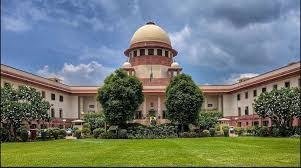

Citation – Civil Appeal No. 2382 of 2025, Supreme Court of India (Apr. 21, 2025)
FACTS:-
- A dispute arose between Electrosteel Steel Limited (ESL) (“Appellant”) and Ispat Carrier Private Limited (ICPL) (“Respondent”) regarding the supply of cranes and equipment.
- Ispat Carrier, acting as an operational creditor, raised a claim of ₹1.59 crore against ESL before the Facilitation Council under the Micro, Small and Medium Enterprises Development Act, 2006 (“MSME Act”) for uncleared dues. Conciliation proceedings were initiated under the MSME Act but failed, leading the matter to arbitration.
- While the arbitration was in progress, ESL was admitted to a Corporate Insolvency Resolution Process (CIRP) under the Insolvency and Bankruptcy Code (IBC) in April 2018, and a moratorium was imposed, which stayed all ongoing and pending proceedings, including the arbitration before the Facilitation Council.
- Subsequently, Vedanta Ltd. submitted a resolution plan for ESL, which was approved by both the Committee of Creditors and the National Company Law Tribunal (NCLT), West Bengal. The approved resolution plan settled all operational creditors’ claims, including Ispat Carrier’s, at nil.
- After the moratorium ended, the pending arbitration proceedings resumed, and the MSME Facilitation Council proceeded to pass an award in favor of Ispat Carrier on 6 July 2018.
- ESL did not challenge this award under Section 34 of the Arbitration and Conciliation Act but raised an objection at the stage of execution, contending that all claims had been extinguished under the approved resolution plan and that the arbitration forum lacked jurisdiction.
- The executing court dismissed ESL’s objection, holding that a plea of nullity under Section 47 of the CPC could not be raised if the award had not been previously challenged under Section 34 of the Arbitration and Conciliation Act. ESL then filed a petition before the Jharkhand High Court, arguing that the arbitral award was null and unenforceable as the claims had been wiped out by the IBC resolution plan.
- The High Court rejected this contention, stating that the Facilitation Council retained jurisdiction to pronounce the award even after the resolution plan’s approval and that the plea of nullity could only be raised if the award had been challenged under Section 34.
- Consequently, the High Court allowed the enforcement of the award. Aggrieved, ESL filed an appeal before the Supreme Court, contending that the arbitral award was null and unenforceable due to the extinguishment of claims under the approved IBC resolution plan.
- Whether a party, without having contested an arbitral award under Section 34 of the Arbitration Act, invokes Section 47 of the CPC to resist execution on the basis that the award is a nullity and thus unenforceable?
- Whether it is legally permissible to challenge an arbitral award as a nullity and non-executable, provided the grounds fall within the legally recognized parameters for raising such a plea?
- Whether the Facilitation Council lost jurisdiction to adjudicate and render the arbitral award once the petitioner’s insolvency resolution plan was duly approved under Section 31 of the Insolvency and Bankruptcy Code, 2016, regardless of the maintainability of an objection under Section 47 of the Civil Procedure Code, 1908?[1][2]
APPELLANT’S CONTENTIONS (ELECTROSTEEL STEEL LTD.)
The Appellant contended that the High Court erred in holding that the claim of Ispat Carrier had not been settled. In reality, the claim was fully addressed under the NCLT-approved resolution plan under the Insolvency and Bankruptcy Code (IBC), wherein all operational creditors’ claims, including that of Ispat Carrier, were fixed at nil. The Appellant emphasized that, as per Section 31(1) of the IBC, once a resolution plan is approved by the NCLT, it becomes binding on all stakeholders, including operational creditors like Ispat Carrier. Consequently, after the approval of the resolution plan, no further proceedings, including arbitration or any other legal action, can be initiated or continued in respect of claims that have already been settled under the plan.
To support this contention, the Appellant relied on judicial precedents. Firstly, in the Committee of Creditors of Essar Steel India Ltd. v. Satish Kumar Gupta, the Supreme Court held that once a resolution plan is approved, all claims not included in the plan are extinguished, and the company cannot be burdened with any obligations arising from such excluded claims. Secondly, in Ghanashyam Mishra & Sons (P) Ltd. v. Edelweiss Asset Reconstruction Co. Ltd., the Court reiterated that approved resolution plans are binding on all parties, including government authorities, thereby emphasizing the finality and enforceability of the plan. Finally, in Ruchi Soya Industries Ltd. v. Union of India, the Court observed that a resolution applicant cannot be saddled with any past claims once the resolution plan has been approved. These precedents collectively underscore the principle that an approved IBC resolution plan creates a binding and conclusive settlement, effectively extinguishing claims that are not part of the plan and preventing any further proceedings on those claims.
Respondent’s Contentions (Ispat Carrier Pvt. Ltd.)
Ispat Carrier, in its submissions before the court, argued that Electrosteel Steel Limited was fully aware of the arbitral award in their favor and had, in fact, relied on it in other collateral or related proceedings before the National Company Law Tribunal (NCLT) concerning its debts. Given this knowledge and reliance, Ispat Carrier contended that Electrosteel cannot now turn around and deny the validity or existence of the arbitral award. Further, Ispat Carrier pointed out that the arbitration proceedings had been temporarily stayed due to the moratorium imposed under the Insolvency and Bankruptcy Code (IBC) when Electrosteel was admitted into the Corporate Insolvency Resolution Process (CIRP). Once the moratorium period concluded, the arbitration proceedings lawfully resumed, and the Facilitation Council was competent to adjudicate and pronounce the award.
Ispat Carrier also argued that the resolution plan approved by the NCLT did not include their claim, and therefore, their claim remained alive and enforceable. They emphasized that the moratorium under the IBC does not extinguish or kill pending proceedings; it merely suspends them temporarily for the duration of the moratorium. The pending claims, once the moratorium ends, are fully capable of being pursued through the appropriate legal forums. According to Ispat Carrier, this principle made it clear that the arbitration proceedings could resume after the moratorium, and the award passed in their favor was valid and enforceable.
RATIONAL OF THE CASE [3]
The Supreme Court emphasized that the resolution once passed the NCLT is legally binding on all corporate debtors, its members , employees, creditors( including operational creditors)and all other parties under 31 of IBC. The Supreme Court also cited that at the time of inconsistency IBC precedence will take over other law. These clauses lead Supreme Court to the conclusion that if arbitration is permitted to claim the finality or efficacy of CIRP( Corporate Insolvency Resolution process) will the compromised that were and could have been addressed under the resolution plan along with this Apex court stated that the arbitration can be used as parallel remedy following the resolution of insolvency. The supreme court ruling was major based on the cases Committee of Creditors of Essar Steel India Ltd. v. Satish Kumar Gupta , Ghanashyam Mishra & Sons (P) Ltd. v. Edelweiss Asset Reconstruction Co. Ltd and Ruchi Soya Industries Ltd. v. Union of India, (2022).
In other words, The court ruling is about supremacy of IBC and the “Clean slate”approach to insolvency, that all the claims are extinguished after approval of the resolution plan and not even a statutory privilege MSME award can revive them.
DEFECT OF LAW
While the Electrosteel judgment strengthens the supremacy of IBC, several defects in law have been pointed out. First, the Court extended the “nullity” doctrine (any arbitral award or claim that contradicts an approved resolution plan under IBC is void and unenforceable)under Section 47 CPC, traditionally applied to decrees, to arbitral awards. Critics argue that arbitral awards have their own statutory scheme under the Arbitration and Conciliation Act (ACA), where challenges are confined to Section 34, and allowing nullity objections at the execution stage undermines the finality and exclusivity intended by the ACA. Second, the decision creates a tension between jurisdiction and extinguishment: extinguishment of a claim under IBC is a substantive bar, but the Court treated it as a jurisdictional defect, blurring doctrinal lines. Third, the ruling applies a rigid “clean slate” doctrine(Once a resolution plan is approved, it extinguishes all pre-existing claims, giving the corporate debtor a fresh start) without considering fairness concerns, such as cases where operational creditors like MSMEs were excluded due to lack of notice or procedural errors during CIRP. This may result in injustice despite their good faith pursuit of arbitration . Finally, by permitting nullity pleas at the execution stage, the decision opens scope for prolonged enforcement battles, allowing award-debtors to delay payment by raising fresh objections even years later (IRC Commentary. Thus, while the ruling clarifies the supremacy of IBC, it leaves unresolved doctrinal and procedural tensions, and its rigidity may work unfairly against small operational creditors.[4]
INFERENCE
The Electrosteel ruling of the Supreme Court firmly reinforces the supremacy of the Insolvency and Bankruptcy Code (IBC) over arbitration law, ensuring that once a resolution plan is approved, all unaddressed claims are permanently extinguished. This promotes certainty, finality, and investor confidence by giving resolution applicants a true “clean slate.”
However, the judgment also reveals certain defects in law. By permitting objections to arbitral awards at the execution stage through Section 47 CPC, the Court blurred the distinction between extinguishment of claims and jurisdiction of arbitral tribunals. This approach may undermine the Arbitration Act’s carefully designed challenge mechanism (Section 34) and risks opening the door to delays in enforcement. Furthermore, the rigid application of the clean slate doctrine may cause injustice to operational creditors, particularly MSMEs, who may lose legitimate claims due to procedural lapses in the insolvency process.
Thus, while the decision strengthens the IBC framework and harmonizes it with arbitration law, it also creates doctrinal tension and highlights the need for legislative or judicial clarification to balance finality with fairness.
NAME – SHRESHTH SAHU
COLLEGE – SHAMBHUNATH INSTITUTE OF LAW
[1] JSA Prism, Supreme Court: Arbitral Claims Extinguished Upon Approval of Resolution Plan (May 2025), https://www.jsalaw.com/wp-content/uploads/2025/05/JSA-Prism-Insolvency-May-2025-Electrosteel.Final_.pdf jsalaw.com
[2]Cyril Amarchand Mangaldas, Supreme Court Reiterates Finality of Approved Resolution Plans: No Scope for Reviving Arbitration Claims Post-CIRP, DISPUTE RESOLUTION BLOG (June 2025), https://disputeresolution.cyrilamarchandblogs.com/2025/06/supreme-court-reiterates-finality-of-approved-resolution-plans-no-scope-for-reviving-arbitration-claims-post-cirp/. Rahul Sundaram, SC Upholds IBC Principle: Claims Outside Plan Are Extinct, INDIALAW (Apr. 28, 2025), https://www.indialaw.in/blog/civil/sc-ibc-principle-claims-outside-plan/.
[3] IndiaLaw LLP, SC Reiterates IBC Principle: Claims Outside Plan Stand Extinguished, INDIAN LAW BLOG (Sept. 18, 2025), https://www.indialaw.in/blog/civil/sc-ibc-principle-claims-outside-plan/.
[4] Abhinav Kumar, New Grounds, Old Problems: Challenging Arbitral Awards on the Ground of Nullity at the Stage of Execution, IRCCL (May 30, 2025), https://www.irccl.in/post/new-grounds-old-problems-challenging-arbitral-awards-on-the-ground-of-nullity-at-the-stage-of-exec.