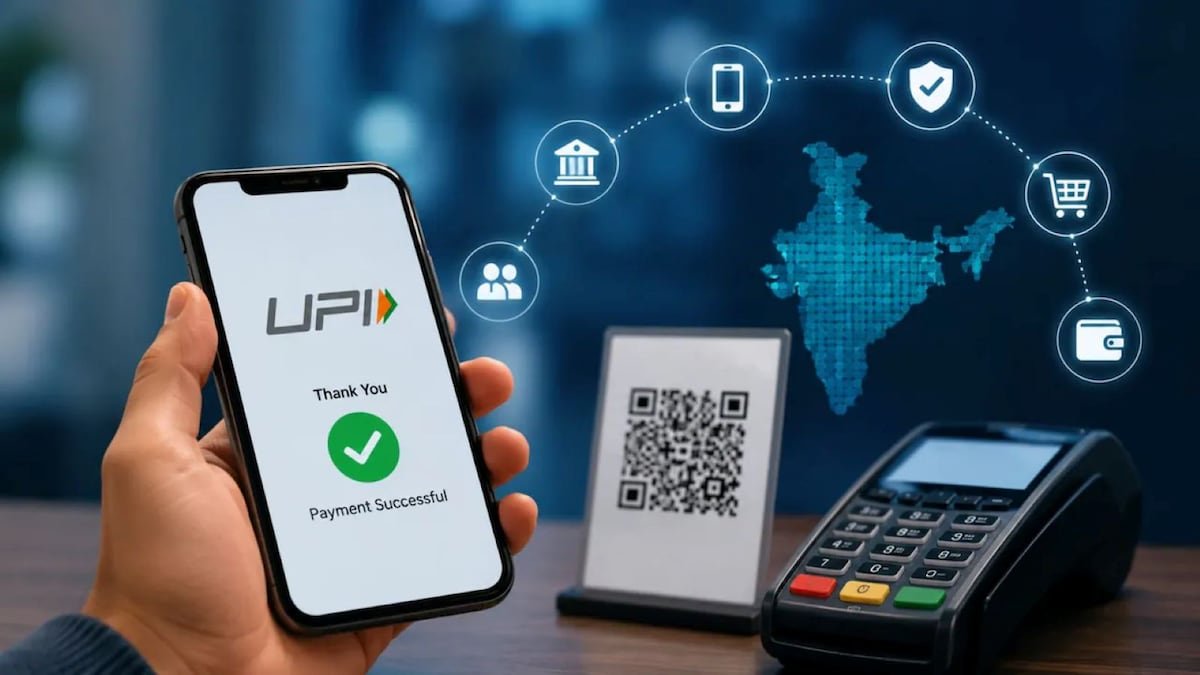

As UPI handles billions of transactions each month, questions around merchant charges, MDR and the cost of running the ecosystem have come into focus. A Q&A shared by the Payments Council of India (PCI) on X looks at who bears these costs and what sustaining UPI at scale means.

UPI charges: What is actually being discussed?
The first distinction is between using UPI and accepting UPI payments.
For consumers, UPI has remained free since its launch in 2016. Users can continue making instant bank-to-bank payments without a transaction charge.
For small merchants, including kirana stores, there is also no MDR for accepting UPI payments. Keeping digital payments accessible to India’s smallest businesses has been central to the platform’s expansion.
So, if consumers aren’t being charged and small merchants aren’t paying MDR, what is driving the discussion?
Who pays for UPI if it is free?
The answer lies in the cost of the infrastructure itself.
The Payments Council of India says the UPI ecosystem involves continuous investment in technology, cybersecurity, fraud prevention, compliance, customer support and innovation.
Banks, payment companies, fintechs, NPCI and the RBI have collectively invested in building and maintaining the network over nearly a decade.
The distinction is important: just because UPI is free for users doesn’t mean the ecosystem is cost-free to operate.
What about UPI merchant charges?
This is where the conversation gets more nuanced.
Merchant service charges, where applicable, are commercial arrangements between merchants and their payment service providers. Such charges do not automatically mean consumers would have to pay to use UPI.
The broader discussion is therefore about how payment acceptance is funded, particularly as transaction volumes continue to grow, rather than about putting a fee on a consumer’s everyday UPI transaction.
Why does UPI need sustainable funding?
UPI has moved well beyond being simply another payment option. It is now a piece of India’s digital public infrastructure, used by hundreds of millions of consumers and businesses.
As usage expands, the system needs continued investment to remain secure, resilient and available 24×7. That means spending on everything from fraud prevention and cybersecurity to infrastructure and customer support.
What has the government clarified on UPI MDR?
The government has clarified that UPI users will not have to pay Merchant Discount Rate (MDR) if such a charge is introduced in the future. Finance Minister Nirmala Sitharaman said any proposed MDR would apply to merchants, not customers.
The clarification came after concerns that changes proposed through the Taxation and Other Laws (Amendment) Bill, 2026 could eventually result in users being charged for UPI payments.
However, the Bill does not introduce an MDR or specify any fee for UPI transactions. It only creates a legal framework that would allow the government to modify the existing zero-MDR regime through future notifications.
Who pays MDR and why is it being discussed?
MDR is paid by the merchant, not the customer making the payment. The charge is generally shared among participants involved in processing a transaction, including the acquiring bank, issuing bank, payment networks and payment service providers, depending on the payment method and arrangement.
Banks and payment service providers have raised concerns about the costs of maintaining digital payment infrastructure, including technology upgrades, cybersecurity and transaction-processing systems.
Sitharaman has said the UPI and Services Steering Committee, headed by NPCI, will examine the issue only after Parliament passes the Bill.
For now, there is no change for UPI users, and the existing zero-cost payment experience continues.

