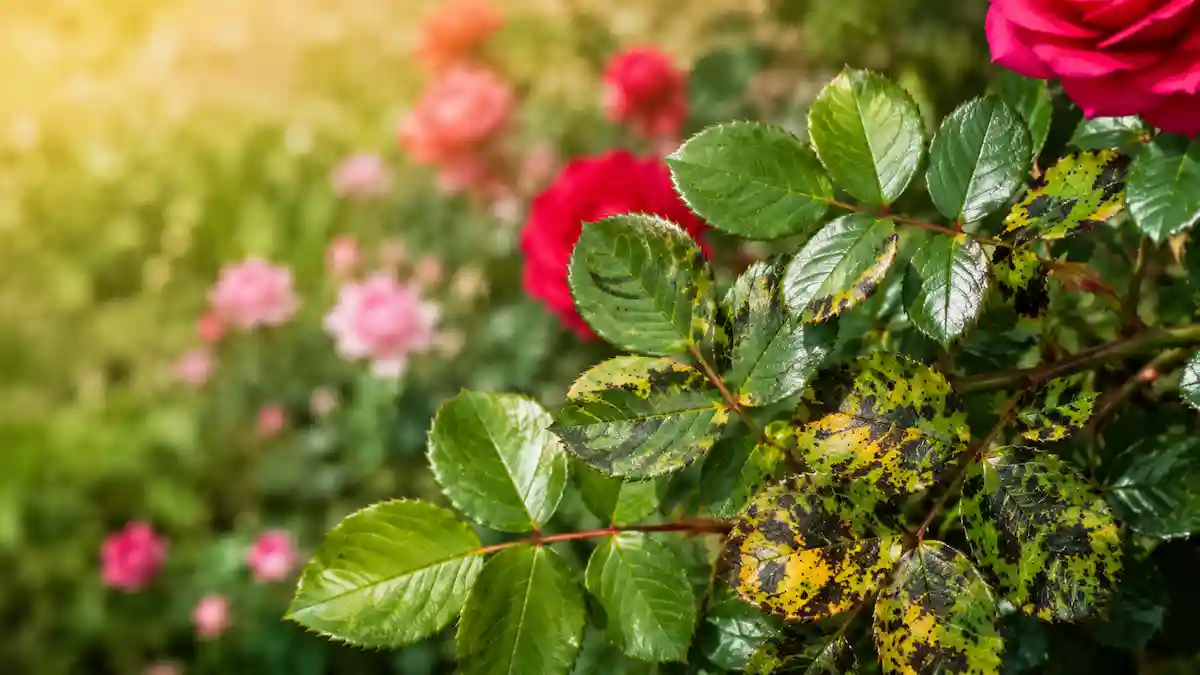

Black spots on rose leaves are usually caused by the fungus Diplocarpon rosae, the most common disease affecting garden roses worldwide. It is a fungal disease, not a random blemish, and it spreads fast once the weather turns warm and damp.
The good news is that black spot on roses is manageable. You need the right combination of sanitation, watering habits, and treatment timed correctly.

This guide walks through identification, causes, treatment steps, natural remedies, fungicide options, and prevention. Every section is written to be used on its own, so skip ahead if you already know your problem.
If you live in a humid climate, planting resistant varieties such as Knock Out or Drift roses can greatly reduce black spot problems from the start.

Quick Answer: Black spots on rose leaves are caused by the fungus Diplocarpon rosae. Remove infected leaves, water at the base of the plant, improve air circulation, and apply a fungicide or organic treatment every 7 to 14 days. Prevent future infections by cleaning up fallen leaves and avoiding overhead watering.
How to Identify Black Spots on Rose Leaves Before They Spread
Catching black spot early makes treatment far easier. The disease has a specific look that separates it from sunscald, nutrient spots, or other rose leaf diseases.
What Does Black Spot Disease on Roses Look Like?
Black spot shows up as round or irregular dark patches with feathery, uneven edges. Spots usually start small, around a quarter inch, and expand up to half an inch across.
A yellow ring often forms around each spot as the infection matures. The fungus only attacks the top surface of the leaf, never the underside.
Early Signs of Black Spot on Rose Bush Leaves
Look at the lowest leaves first. Black spot almost always starts near the base of the plant, where humidity sits longest and splashing soil water lands.

Tiny dark flecks the size of a pinhead are the earliest stage. By the time spots are visible without close inspection, spores are already spreading.
Black Spot vs. Other Common Rose Leaf Diseases
Rust produces orange, powdery pustules on the leaf underside instead of black lesions on top. Powdery mildew coats leaves in a white, dusty film rather than dark spots.
Cercospora leaf spot causes smaller, more uniform circles without the feathery black spot margin. If the spot is dark, feathery-edged, and on the upper leaf, black spot disease is the likely cause.
| Disease | Spot Color | Leaf Side Affected |
|---|---|---|
| Black spot | Dark brown to black | Upper surface only |
| Rust | Orange, powdery | Underside |
| Cercospora leaf spot | Small, purple-brown | Both surfaces |
When Black Spots Are Not Black Spot Disease
Not every dark mark is fungal. Fertilizer burn usually shows as scorched, crispy leaf edges rather than round spots.
Sun scorch tends to create pale, bleached patches on leaves facing direct afternoon sun. Bacterial leaf spot causes smaller, water-soaked lesions without the feathery black spot margin.
What Causes Black Spots on Rose Leaves and Rose Bushes?
Black spot has one direct cause and several conditions that make it worse. Knowing both halves helps you treat the plant and fix the environment at the same time.
Black spot disease is also called rose black spot in many gardening guides, and both terms refer to the same fungal infection.
The Fungus That Causes Black Spot Disease on Roses
The disease is caused by the fungus Diplocarpon rosae. It infects almost exclusively roses, which is why healthy neighboring plants rarely show symptoms.

Spores need free water sitting on the leaf surface for about seven hours before they can germinate and infect the tissue, according to university extension research.
Although black spot primarily affects leaves, severe infections can also produce dark, irregular lesions on young canes.
Why Warm, Wet Weather Makes Black Spot Worse
Spores germinate fastest around 65 to 75°F (18 to 24°C) when leaves stay wet overnight. Spring rain, heavy dew, and overhead sprinklers all create that window.
Black spots on rose leaves after rain are common, since splashing water carries spores onto healthy foliage and keeps it wet long enough to infect.
Symptoms can appear within three days of infection in warm conditions, and new spores can form in as little as ten days, which lets the disease cycle repeat quickly through a single season.
Why Some Rose Bushes Are More Susceptible Than Others
Hybrid tea roses and many old garden roses have little natural resistance. Miniature roses tend to be especially vulnerable.
Crowded planting, poor airflow, and low sunlight all raise the risk, regardless of variety. Stressed or underfed plants also fight off infection less effectively.
Roses planted in less than six hours of direct sun stay damp longer each morning, which extends the window spores need to germinate. Moving a struggling bush to a sunnier spot often reduces infection pressure on its own.
How the Black Spot Fungus Spreads Throughout the Year
Black spot is not a one-time event. It runs on a repeating yearly cycle, which is why treatment has to continue through the whole growing season.
Where the Fungus Survives During Winter
The fungus overwinters inside fallen leaves and infected cane lesions. It sits dormant through cold months, waiting for spring moisture to reactivate.
How Spores Infect New Leaves
Rain or irrigation splashes overwintered spores onto the lowest new leaves in spring. From there, each new infection produces fresh spores within ten to fourteen days, spreading the cycle upward through the plant.
Why Wet Leaves Speed Up Infection
Spores cannot infect dry tissue. They need roughly seven hours of continuous leaf wetness to germinate, which is why overnight dew and evening watering create the highest risk windows.
Why Are My Rose Leaves Turning Yellow with Black Spots?
Yellowing around black spot is not a separate problem. It is the plant’s normal reaction to fungal damage on the leaf tissue.
Why Black Spot Causes Yellow Leaves and Early Leaf Drop
As the fungus spreads inside the leaf, it disrupts chlorophyll production around each lesion. The leaf yellows, then drops, as the plant sheds damaged tissue.
Is It Normal for Roses to Lose Their Leaves?
A few yellow leaves dropping in late summer is normal. Widespread yellowing and defoliation climbing up the plant is not, and signals an active black spot infection that needs attention.
How Black Spot Affects Flowering and Plant Health
Fewer leaves means less energy for blooms. Repeated defoliation over several seasons weakens the root system and increases winter injury risk.
Severely stressed roses also become more attractive to aphids and other pests, compounding the damage.
When Is Black Spot on Roses a Serious Problem?
Not every case needs the same urgency. Matching your response to the severity level saves time and stops overtreatment.
Mild Infection
A handful of spotted leaves near the base, with no yellowing spreading upward. Sanitation and better watering habits are usually enough on their own.
Moderate Infection
Multiple leaves affected across the lower and middle plant, with some yellowing and leaf drop. This calls for regular fungicide or organic spray treatment alongside sanitation.
Severe Infection
Widespread defoliation reaching the upper canopy, with bare or nearly bare stems. This needs an immediate, consistent spray schedule and close monitoring through the rest of the season.
When a Rose Bush May Not Recover
A bush that loses nearly all its leaves for several consecutive years, combined with winter dieback, may be too weakened to bounce back. At that point, replacing it with a resistant variety is often the better long-term choice.
Quick Black Spot Treatment Checklist
- Remove infected leaves
- Throw infected leaves in the trash, not the compost
- Prune crowded stems for better airflow
- Water only at soil level, not overhead
- Apply fungicide or neem oil
- Repeat treatment every 7 to 14 days
- Clean up fallen leaves regularly
How to Get Rid of Black Spots on Rose Leaves Step by Step
Treating black spot works best as a sequence, not a single spray. Follow these steps in order for the fastest results.

Remove Infected Rose Leaves Without Spreading the Disease
Pick off spotted leaves by hand on a dry day. Carry them straight to a trash bag rather than dropping them on the ground.
Wet leaves spread spores easily, so avoid handling infected foliage right after rain or irrigation.
Prune Rose Bushes to Improve Air Circulation
Thin out crossing canes and interior growth so air can move through the plant. Leaves that dry faster after rain are far less likely to become infected.
Prune on a dry day whenever possible to reduce the chance of spreading fungal spores between cuts.
Water Roses the Right Way to Reduce Black Spot
Water only at the base of the plant, not the foliage. Morning watering gives any splashed leaves time to dry before nightfall, which breaks the fungus’s wet-leaf requirement.
Avoid watering late in the evening, since leaves remain wet overnight and give fungal spores the moisture they need to infect healthy foliage.
Clean and Disinfect Pruning Tools After Use
Wipe blades with rubbing alcohol or a diluted bleach solution between plants. Dirty pruners are a simple, overlooked way the fungus moves from one bush to the next.
What to Expect During the Recovery Process
New growth should appear healthy within two to three weeks of consistent treatment. Existing spotted leaves will not turn green again, but they stop spreading disease once the fungus is controlled.
Track progress by checking the newest leaves at the top of the plant, not the older ones lower down. Clean new growth is the clearest sign the treatment routine is working.
Natural and Organic Ways to Treat Black Spot on Rose Leaves
Home and organic treatments work best as prevention or for mild cases. Severe infections usually need a stronger fungicide alongside them.
| Treatment | Preventive | Curative |
|---|---|---|
| Neem oil | ✅ | Limited |
| Baking soda | ✅ | Limited |
| Potassium bicarbonate | ✅ | Moderate |
| Copper fungicide | ✅ | Good |
| Systemic fungicide | Limited | Excellent |
Does Neem Oil Really Work Against Black Spot?
Neem oil has genuine antifungal properties and is registered as a preventive fungicide by university IPM programs. It works best applied before spots appear or at the first sign of infection.
For a full walkthrough of mixing and applying it, this neem oil application guide covers ratios for garden use.
How to Use Baking Soda Spray on Rose Leaves
Mix one tablespoon of baking soda with a gallon of water and a few drops of dish soap. Spray in the morning to avoid leaf burn from sun exposure on wet leaves.
Homemade Black Spot Spray Recipes That Gardeners Use

| Recipe | Mix Ratio | Best Use |
|---|---|---|
| Baking soda spray | 1 tbsp per gallon water | Prevention, mild spots |
| Milk spray | 1 part milk, 2 parts water | Weekly prevention |
| Neem oil spray | Per label rate | Prevention and early infection |
This homemade fungicide recipe guide has more tested ratios for black spot and powdery mildew.
Homemade sprays work best before severe infection develops. Once more than one-third of the foliage is affected, university extension services generally recommend switching to a registered fungicide.
The Best Organic Fungicides for Black Spot Control
Potassium bicarbonate, neem oil, and sulfur are the three organic options most often recommended by cooperative extension services. Sulfur should never be combined with oil sprays, since the mix can burn leaves.

Natural Treatments That Don’t Actually Work
Vinegar sprays and cinnamon dust have no research support for black spot and can damage leaf tissue at effective concentrations. Compost tea helps soil biology but does not reliably stop this specific fungus.
Hydrogen peroxide sprays sound appealing but break down too quickly outdoors to give lasting protection. Save it for cleaning tools, not treating leaves.
Best Fungicides for Treating Black Spot on Roses
Once black spot is established, a labeled fungicide is usually the fastest path back to healthy foliage.
Avoid spraying open flowers during peak bee activity. Spray early morning or evening whenever possible to protect pollinators.
| Fungicide Type | Example Ingredients | Notes |
|---|---|---|
| Copper-based | Copper sulfate, copper soap | Good for dormant season use |
| Sulfur-based | Elemental sulfur | Avoid in hot weather above 85°F (29°C) |
| Systemic | Myclobutanil, propiconazole | Best for severe, repeat infections |
Copper-Based Fungicides
Copper works well as a dormant-season spray before leaves emerge in spring. It is less effective once black spot is already active on foliage.
Sulfur Fungicides
Sulfur is a reliable preventive option in cooler weather. Applying it above 85°F (29°C) risks scorching leaves, so timing matters as much as the product.
Systemic Fungicides for Severe Black Spot
Systemic products are absorbed into the plant and keep working between rain events. They are the strongest option for bushes that lose leaves every year despite other treatments.
How to Choose the Right Fungicide for Your Rose Bush
Mild, occasional spotting responds well to organic sprays. Recurring, aggressive infection usually calls for a systemic product applied on a regular schedule through the growing season.
Rotate between two different fungicide classes across a season rather than using the same product every time. This slows the fungus from building resistance to any single active ingredient.
Always read the label for rain-fastness and reapplication intervals. A product that washes off after one rain shower needs a tighter spray schedule than a longer-lasting formula.
Can Black Spot on Roses Be Cured Completely?
Black spot can be controlled, but the fungus is rarely eliminated forever from a garden once established nearby.
Can Infected Leaves Become Healthy Again?
No. Spots already on a leaf are permanent damage. Treatment protects new growth rather than reversing existing lesions.
How Long Does Black Spot Take to Go Away?
With consistent treatment, visible improvement in new growth typically shows within two to three weeks. Full recovery through a season depends on weather and how early treatment started.
When Your Rose Bush Should Start Producing Healthy New Growth
Expect clean new leaves within three to four weeks of starting a spray routine, assuming infected leaves were removed and watering habits were corrected at the same time.
How Long Does It Take to Get Rid of Black Spot on Roses?
Recovery follows a fairly predictable timeline once treatment starts, though weather and severity shift the exact pace.
First Week After Treatment
Spotting stops spreading to new leaves once spraying and sanitation begin. Existing spots do not disappear, but their spread slows within days.
Two to Three Weeks Later
New leaves emerging during this window should stay largely spot-free if the spray schedule and watering changes are consistent.
One Month and Beyond
Older infected leaves gradually drop and are replaced by clean growth. Full canopy recovery can take a full growing season on a heavily infected bush.
How to Tell if Your Black Spot Treatment Is Working
A few clear signals confirm progress before the whole plant looks visibly better.
New Leaves Stay Spot-Free
Fresh growth at the top of the plant staying clean is the strongest early sign treatment is working.
Leaf Drop Slows Down
Fewer yellow leaves falling each week means the fungus is losing ground against your spray and sanitation routine.
New Growth Looks Healthy
Stronger stems, fuller foliage, and more consistent blooming all point to a bush that is recovering rather than declining.
When Is the Best Time to Spray Roses for Black Spot Disease?
Timing a spray schedule matters more than product choice for long-term control.
When to Start Spraying Roses in Spring
Begin as soon as new leaves emerge, before any spots appear. Preventive spraying is far more effective than waiting for symptoms.
How Often Should You Spray for Black Spot?
Most fungicide labels call for application every seven to fourteen days through the growing season. Extension research supports this interval for consistent control.
What to Do After Heavy Rain
Reapply sooner than your normal schedule after heavy rain washes off spray residue. This is when new infections are most likely to start.
How to Prevent Black Spot on Rose Leaves from Coming Back
Prevention relies on removing the conditions the fungus needs, not just spraying reactively.
| Season | What to Do |
|---|---|
| Early spring | Start preventive spray as leaves emerge |
| Spring to summer | Inspect plants weekly |
| Summer | Remove infected leaves promptly |
| Fall | Clean up all fallen leaves |
| Winter | Prune and sanitize tools |
Keep Rose Leaves Dry Whenever Possible
Water at the base of the plant and avoid overhead sprinklers. Dry leaves cannot support spore germination.
A 2 to 3 inch layer of mulch helps reduce soil splash, one of the main ways black spot spores reach healthy leaves.
Remove Fallen Leaves Before the Fungus Overwinters
The fungus survives winter in dropped leaves and infected canes. Remove fallen leaves immediately each fall to interrupt the disease cycle before spring.
Improve Airflow Around Rose Bushes
Space plants so mature foliage does not touch its neighbors. Good spacing lets leaves dry within a few hours instead of staying wet overnight.
Feed Roses to Keep Them Healthy and Strong
A balanced feeding schedule supports the plant’s natural resistance. Avoid heavy nitrogen late in the season, since it pushes soft new growth that infects easily.
Choose Rose Varieties That Resist Black Spot
Planting resistant varieties is the single most effective long-term prevention step. It cuts spray frequency dramatically, especially in humid climates where the fungus thrives.

Knock Out roses are among the most disease-resistant shrub roses available worldwide, tolerating heat and humidity with minimal spotting. Drift roses, a compact groundcover type, share similar resistance and stay low-maintenance across most climates.
Carefree Beauty, bred specifically for disease tolerance, holds up well even in regions with long wet seasons. Several David Austin English roses, including Munstead Wood and The Generous Gardener, also carry stronger natural resistance than older hybrid tea varieties.
No rose is completely immune. Even resistant varieties can develop black spot under prolonged wet conditions or in overcrowded beds, but they need far fewer sprays to stay healthy than susceptible types.
Local garden centers and rose societies often keep lists of varieties proven to perform well in your specific climate, which is worth checking before planting new roses.
What Should You Do with Black Spot-Infected Rose Leaves?
How you dispose of infected material affects whether the fungus returns next season.
Should You Remove Every Leaf with Black Spots?
Remove leaves with active spots, but do not strip a heavily infected bush bare in one pass. Sudden total defoliation adds extra stress on top of the disease.
Can You Compost Diseased Rose Leaves?
Home compost piles rarely reach the sustained heat needed to kill fungal spores. Composting infected leaves risks spreading the fungus back into the garden later.
The Safest Way to Dispose of Infected Plant Material
Bag infected leaves and canes and send them out with household trash, or burn them where local rules allow. Municipal yard-waste composting facilities usually reach adequate temperatures, home piles do not.
Can Black Spot on Roses Spread to Other Plants?
Black spot is highly host-specific, which limits how far it can spread in a mixed garden bed.
How Black Spot Spreads Between Rose Bushes
Splashing water, whether from rain or sprinklers, carries spores from infected leaves to healthy ones nearby. Tools and hands can also transfer spores during pruning.
Can Other Garden Plants Become Infected?
Diplocarpon rosae infects roses almost exclusively. Other ornamentals in the same bed are not at risk from this particular fungus.
Simple Ways to Stop Black Spot from Spreading
Space rose bushes apart, water at the base, and clean tools between plants. These three habits address most of the spread pathway on their own.
Black Spot vs. Powdery Mildew: How to Tell the Difference
Both are common fungal rose problems, but they need different conditions and different treatments.
| Feature | Black Spot | Powdery Mildew |
|---|---|---|
| Appearance | Dark, feathery-edged spots | White powdery coating |
| Weather trigger | Wet leaves, rain, humidity | Dry days, humid nights |
| Leaf location | Upper surface | Both surfaces, buds, stems |
Key Differences in Symptoms
Black spot lesions are dark and irregular. Powdery mildew looks like a dusting of flour and often distorts new growth and buds.
Which Disease Is More Serious?
Black spot generally causes more defoliation over a season. Powdery mildew distorts growth but rarely triggers the same level of leaf drop.
Do They Need Different Treatments?
Yes. Powdery mildew tolerates drier conditions and often needs different fungicide chemistry than black spot, so check product labels for both diseases before spraying.
Black spot vs rust is another common mix-up. Rust produces bright orange, powdery pustules on the leaf underside, while black spot stays dark and stays on the upper surface. Many copper and sulfur fungicides control both.
How Climate Affects Black Spot on Rose Leaves
Black spot behaves differently depending on where you garden. Matching your routine to local weather patterns makes treatment far more effective.
| Climate Type | Risk Level | Key Adjustment |
|---|---|---|
| Humid, rainy summers | High | Spray every 7 days, prioritize airflow |
| Dry, arid regions | Low to moderate | Watch irrigation splash and dew |
| Coastal, foggy areas | High | Extend spray season, morning fog dries slowly |
Humid Climates
Tropical and subtropical regions with warm, wet summers see the heaviest black spot pressure. A season-long spray routine and strict sanitation are usually necessary here.
Dry Climates
Arid regions with low rainfall, such as parts of the Mediterranean, the Middle East, or inland Australia, see far less pressure. Irrigation splash and morning dew are still worth watching.
Coastal Climates
Coastal gardens deal with heavy morning fog and high air moisture, even without much rain. Leaves stay damp longer, so treatment often needs to run for a longer stretch of the year.
Greenhouse Roses
Enclosed, humid greenhouse air keeps leaves wet for extended periods, which favors the fungus. Ventilation and careful watering matter even more indoors than they do outside.
Common Mistakes That Make Black Spot on Roses Worse
Several habits accidentally help the fungus spread faster than it would on its own.
Watering the Leaves Instead of the Soil
Overhead watering is one of the biggest drivers of black spot outbreaks. Switching to soil-level watering alone can noticeably reduce infection rates.
Leaving Diseased Leaves on the Ground
Fallen infected leaves are the fungus’s overwintering site. Leaving them under the bush all winter guarantees a repeat infection in spring.
Pruning with Dirty Garden Tools
Unwashed pruners carry spores from plant to plant. This is an easy fix that many gardeners skip.
Waiting Too Long Before Starting Treatment
Treatment works best as prevention. Waiting until the bush is heavily spotted means a longer recovery and more leaf loss along the way.
Overcrowding Rose Bushes
Tight spacing traps humidity around the foliage. Give roses enough room for air to move freely between plants.
| Mistake | Better Practice |
|---|---|
| Overhead watering | Water at soil level |
| Composting diseased leaves | Dispose of them separately |
| Poor airflow | Prune regularly for spacing |
| Spraying too late | Start preventively each spring |
Common Myths About Black Spot on Roses
A few persistent myths lead gardeners to undertreat or mistreat black spot. Clearing them up saves wasted effort.
Myth: Baking Soda Always Cures Black Spot
Baking soda spray helps prevent mild infections, but it will not clear an already heavily spotted bush. Severe cases still need a proper fungicide.
Myth: One Spray Is Enough
A single application only protects the leaves present at that moment. New growth needs repeat coverage every 7 to 14 days through the season.
Myth: Rain Doesn’t Matter
Rain is one of the biggest drivers of new infection, since it splashes spores onto healthy leaves and keeps them wet long enough to germinate.
Myth: Diseased Leaves Can Be Composted
Home compost piles rarely get hot enough to kill fungal spores. Composting infected leaves usually just reintroduces the fungus to the garden later.
Frequently Asked Questions About Black Spot on Rose Leaves
Can Black Spot Kill a Rose Bush?
Black spot rarely kills a rose directly, but repeated defoliation weakens the plant over several seasons. Weakened roses become far more vulnerable to winter injury, pests, and other diseases, which can eventually lead to plant loss.
Will Neem Oil Cure Black Spot?
Neem oil works best as prevention or for mild, early infections. It rarely clears up a heavily spotted bush on its own, and severe cases usually need a stronger labeled fungicide alongside it.
Can Roses Recover Without Fungicides?
Yes, in mild cases. Correct watering, pruning for airflow, and removing infected leaves can control light black spot without chemical sprays, especially on naturally resistant rose varieties.
Does Rain Make Black Spot Worse?
Yes. Rain splashes fungal spores onto healthy leaves and keeps foliage wet long enough for infection to take hold. Extended wet spells in spring are the disease’s peak trigger.
Is Black Spot Harmful to People or Pets?
No. Black spot is a plant-specific fungus and poses no health risk to humans or animals. It only affects rose foliage and canes.
Which Rose Varieties Are Most Resistant to Black Spot?
Knock Out roses, Carefree Beauty, and several other modern shrub roses show strong resistance. Resistance can vary by region, so check with a local gardening authority or extension service for varieties proven in your climate.
Should I Cut Back My Rose If It Has Black Spot?
Light pruning to remove infected canes and improve airflow helps. Avoid a hard, whole-plant cutback during active infection, since it adds stress on top of the disease.
Can I Spray Roses While They Are Flowering?
Most fungicides and organic sprays are safe on flowering roses, but spraying in the early morning or evening protects pollinators. Always check the specific product label for flowering-stage restrictions.
Can Black Spot Spread Through the Soil?
Not directly. The fungus spreads through water splash and contact, not through soil itself, though spores in fallen leaves on the soil surface can still reinfect the plant.
Is Black Spot Worse in Containers or in the Ground?
Container roses often dry faster, which can reduce risk, but crowded containers with poor airflow can be just as vulnerable as ground-planted roses in humid conditions.
Can New Leaves Get Infected After Treatment?
Yes, if spraying stops too early or fallen leaves are left in the bed. Consistent treatment through the full growing season is what keeps new growth protected.
Why Do My Roses Keep Getting Black Spot Every Year?
Because spores overwinter in fallen leaves and infected canes. Unless sanitation and preventive spraying begin before symptoms appear, the disease cycle repeats each spring.
Can Rain Wash Away Fungicide?
Yes. Many contact fungicides need reapplication after heavy rain, while systemic fungicides continue working inside the plant. Always follow the product label for reapplication timing.
Final Thoughts on Treating and Preventing Black Spots on Rose Leaves
Most rose bushes recover well when black spot is caught early and treated consistently. A combination of good sanitation, proper watering, timely spraying, and disease-resistant varieties can keep roses healthy and blooming for many years.

None of this requires advanced skill. It requires consistency across the growing season, which is what separates gardens that fight black spot every year from ones that barely notice it.
Disclaimer: Information on this site is for educational purposes only. Results vary by climate, soil, weather, and growing conditions. For region-specific advice, consult your local USDA Cooperative Extension Service before making major gardening or soil changes.
Reference Sources:

