

As India positions itself as the world’s next major manufacturing destination amid shifting global supply chains and China-plus-one strategies, industry leaders believe the country now stands at a defining inflection point. But while optimism around India’s industrial future remains strong, corporate leaders say the next phase of growth will depend less on announcements and more on execution, policy certainty, infrastructure readiness and institutional reform.
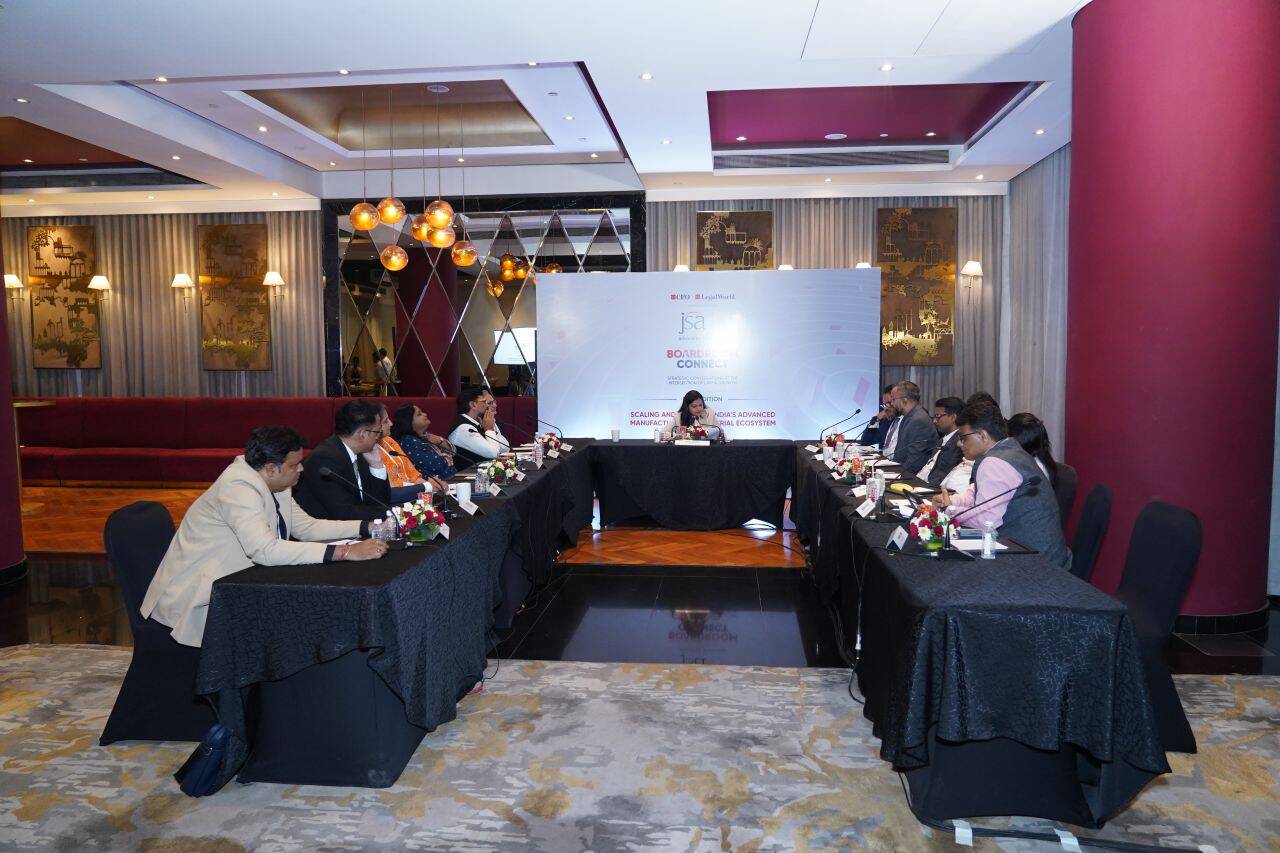
These issues came under sharp focus at Boardroom Connect: Scaling and Enabling India’s Advanced Manufacturing & Industrial Ecosystem, an exclusive CXO roundtable hosted by JSA Advocates & Solicitors in association with ETLegalWorld and ET CFO in Pune on May 8.
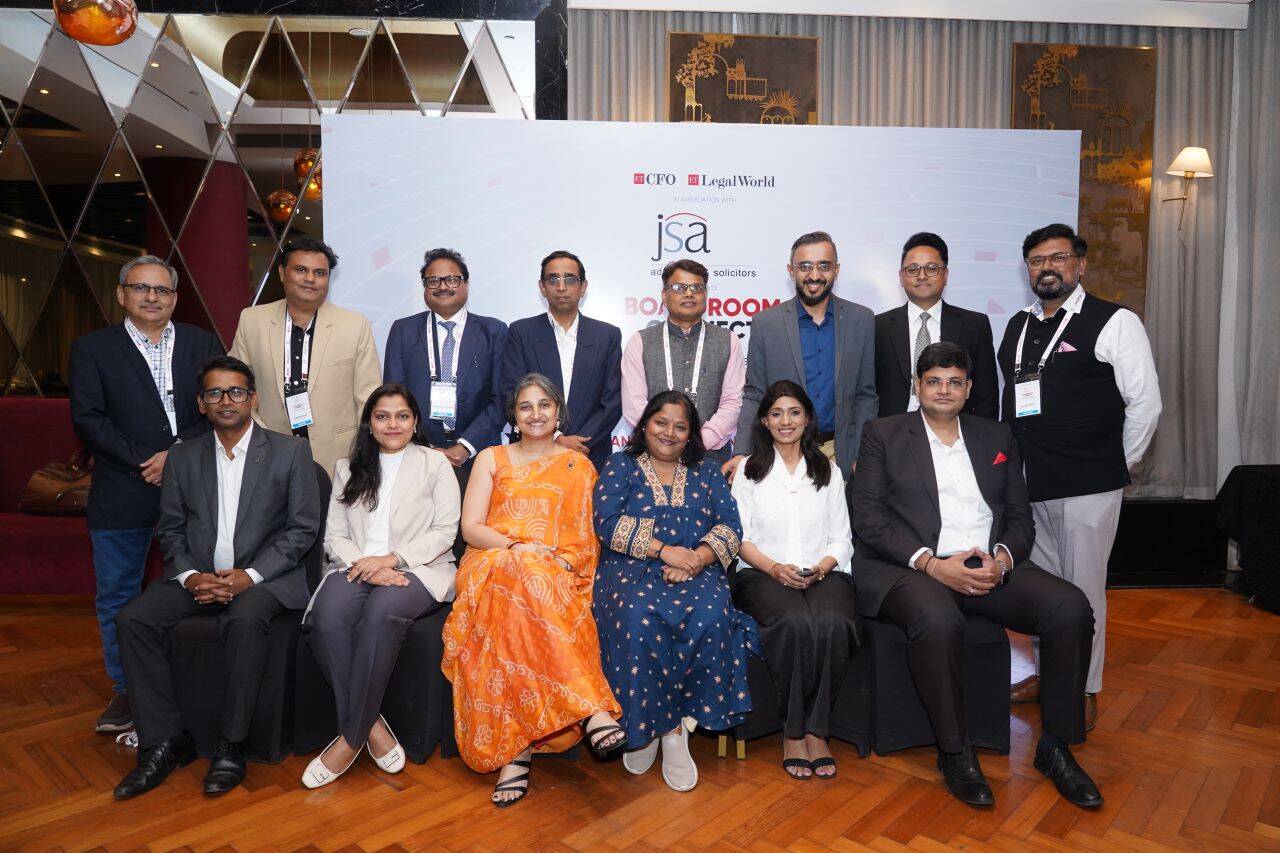
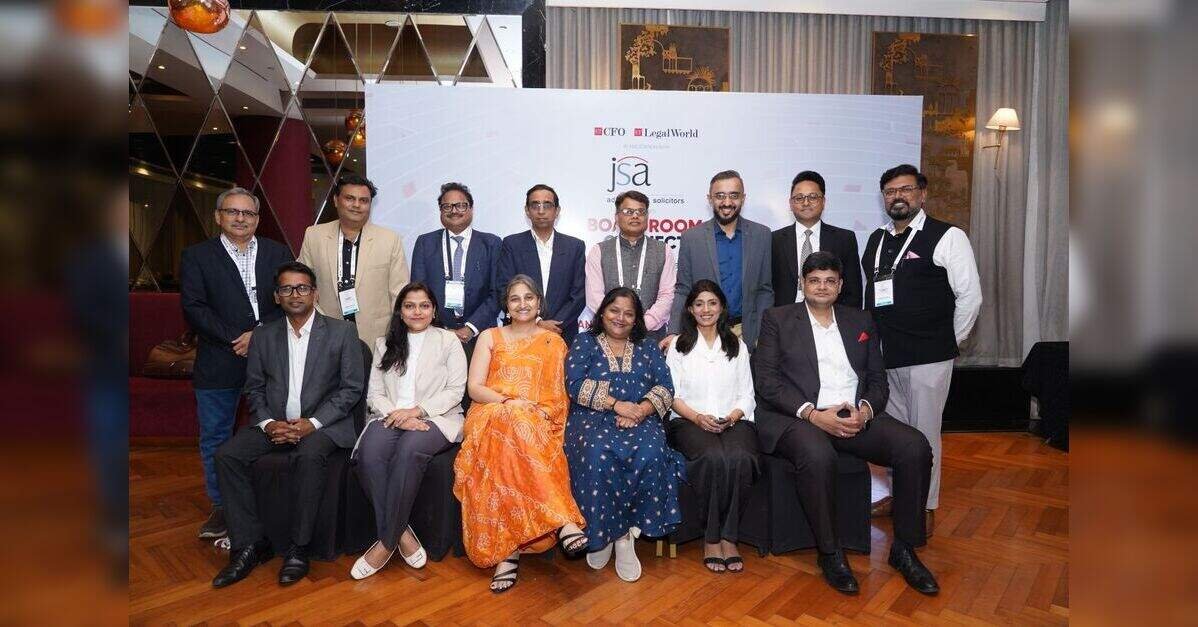
The discussion brought together senior legal counsels, CFOs and manufacturing executives including Venkatesh Raman, Partner, JSA Advocates & Solicitors; Manish Mishra, Partner, JSA Advocates & Solicitors; Ashish Suman, Partner, JSA Advocates & Solicitors; Baminee Viswanat, General Counsel, Bajaj Auto Limited; Pulkit Goyal, CFO, Honeywell Automation India & India Controller, Honeywell; Makarand Parkhi, Vice President – Legal & Commercial, Praj Industries; Rabindra Purohit, Vice President Legal, Compliance & CS, Deepak Fertilisers & Petrochemicals Corporation Limited; Neha Satav, Legal Head, Sterlite Technologies Limited; Aniruddha Gadre, Global Head – Treasury Insurance, Tech Mahindra; Garg Vyas, Senior General Manager – IP & Legal, Cummins; Sormistha Ghosh, Group General Counsel, Chief Risk Officer & Chief Sustainability Officer, Strides Pharma; Amol Nalawade, Head – Legal & IP, Epsilon Carbon; and Jagdish Baheti, Head Finance – India, Bauer Equipments.
Pune’s Manufacturing Evolution Beyond Automobiles
The conversation began with Pune’s transformation from a conventional automotive cluster into one of India’s most diversified advanced manufacturing ecosystems.
Calling Pune the “Detroit of the East” and the “Silicon Valley of Maharashtra,” Venkatesh Raman said the city’s industrial identity is undergoing a structural shift.
“Pune contributes close to 20 per cent of India’s automobile production and hosts almost every major OEM in the country. But manufacturing itself is changing. EVs, electronics, semiconductors, AI-led engineering and GCCs are now becoming part of the ecosystem,” Raman said.
According to him, Maharashtra’s policy support and investment-linked incentives have further strengthened investor confidence. He pointed out that Maharashtra accounted for nearly 39 per cent of India’s FDI inflows last year, reinforcing its position as one of the country’s most attractive industrial destinations.
Ashish Suman said Pune’s growth story was built on decades of industrial continuity rather than short-term policy cycles.
“It started as an automotive hub, but today Pune is also one of India’s largest GCC destinations. The ecosystem of auto ancillaries, engineering companies, educational institutions and technology firms creates a strong manufacturing base,” he observed.
Suman added that Pune’s proximity to Mumbai, established industrial zones and access to talent continue to give the city a structural advantage.
“There is enough capability here for Pune to emerge as one of India’s most important advanced manufacturing clusters,” he added.
Watch: Policy intent is visible; enforceability needs strengthening: Ashish Suman, Partner, JSA
Industry 5.0 and the New Manufacturing Economy
A recurring theme during the discussion was how manufacturing competitiveness is increasingly being shaped by technology integration.
Manish Mishra said Pune’s traditional engineering capabilities are now converging with digital technologies such as AI, IoT and automation.
“The city already had a strong engineering backbone. What is happening now is the integration of software, automation and intelligent systems into manufacturing. That combination uniquely positions Pune for the next phase of industrial growth,” Mishra remarked.
Participants agreed that Industry 5.0, driven by connected manufacturing, AI, automation and human-machine collaboration, is likely to redefine industrial competitiveness globally.
Pulkit Goyal noted that manufacturing is no longer only about production scale. “The future is about smart factories, connected supply chains and digital infrastructure. Manufacturing competitiveness will increasingly depend on technology adoption and operational intelligence,” he said. At the same time, executives cautioned that India’s manufacturing ambitions cannot rely only on historical advantages.
Watch: Collaboration between legal and finance will enable India’s manufacturing capability: Honeywell CFO
Ease of Doing Business vs Ease of Execution
One of the strongest themes to emerge during the roundtable was the gap between policy announcements and execution on the ground.
Pulkit Goyal argued that India needs to focus less on headline reforms and more on implementation efficiency.
“Every state talks about ease of doing business, but the real issue is ease of execution,” he said. “Why are states not benchmarking themselves against the world’s best industrial economies?”
According to him, India’s manufacturing bottlenecks remain deeply structural — ranging from logistics gaps and MSME readiness to infrastructure quality and skill development.
“You may solve one issue in one state and another issue somewhere else, but there is still no integrated manufacturing strategy,” Goyal said.
He also questioned whether initiatives such as the Production Linked Incentive (PLI) schemes have delivered broad-based industrial growth.
“PLI certainly created positive sentiment and attracted investments in sectors like electronics and semiconductors. But manufacturing’s contribution to GDP has still not increased meaningfully. It may be important to focus not just on the momentum created, but also on how effectively this translates into tangible execution,” he remarked.
We need to look beyond headlines,” he remarked.
Rabindra Purohit echoed concerns around industrial competitiveness, pointing out that the investment landscape has changed significantly after GST.
“Earlier, taxation structures influenced where industries invested. Today companies evaluate India as one market. States now compete aggressively on infrastructure, incentives and speed of approvals,” he explained.
Purohit also raised concerns around land acquisition challenges, rising industrial land prices and delays in subsidy disbursement.
“Industries are promised incentives and tax benefits, but implementation often changes midway. That creates uncertainty and litigation,” he said.
Legal Uncertainty and Rising Compliance Pressures
As the discussion deepened, the focus shifted from infrastructure and policy to what several participants described as one of the biggest challenges facing Indian manufacturing today is regulatory unpredictability.
Manish Mishra painted a stark picture of the growing tax and compliance burden confronting companies.
“The bigger problem today is administration,” he said candidly. “Earlier, companies would receive notices worth ₹5 crore or ₹10 crore. Today, notices of ₹1,000 crore or ₹1,200 crore are becoming common.”
According to Mishra, the larger concern is the uncertainty such disputes create for businesses. “A classification followed for ten years can suddenly be questioned retrospectively. That completely disrupts business planning for manufacturers and importers,” he observed.
He added that many disputes continue for years despite multiple hearings and submissions. “Today, if you get into a dispute, we are realistically telling clients that resolution may happen only by 2032,” Mishra remarked.
He also highlighted the working capital pressures created by blocked GST refunds, pre-deposit requirements and prolonged litigation. “A well-designed law can still become problematic if implementation turns adversarial,” he said.
Neha Satav shared similar concerns around contract enforcement and public-sector disputes. Recalling Sterlite Technologies’ experience during smart city and telecom infrastructure projects, she said even favourable legal orders often become difficult to enforce commercially.
“You spend years litigating, secure a favourable outcome, and eventually you are told to settle at commercially unviable terms if you want future business opportunities,” Satav said.
According to her, such situations discourage long-term investment confidence. “In many cases, companies eventually settle disputes at values that do not even cover legal costs because they want to continue doing business,” she observed.
FTAs, Global Trade and Competitive Risks
Another major segment of the discussion focused on India’s evolving free trade agreements with Europe, the UK, Australia and other regions.
Ashish Suman said FTAs could strengthen supply-chain competitiveness and reduce component costs for manufacturers.
“Lower costs across the supplier ecosystem can eventually improve competitiveness for Indian manufacturing,” he explained.
However, several participants warned against viewing FTAs as automatic growth drivers.
Manish Mishra cautioned that reducing import duties on components could significantly disrupt India’s domestic ancillary ecosystem. “If duties on imported auto components reduce to zero over time, what happens to the large auto ancillary ecosystem that India has built over decades?” he asked.
According to him, FTAs could encourage manufacturers to source more components globally instead of locally. “FTAs are important, but they are not magic wands that suddenly make a country a manufacturing hub,” Mishra remarked.
Participants also discussed how carbon border taxes, tariffs and geopolitical disruptions are reshaping global supply chains.
Aniruddha Gadre pointed out that trade agreements are increasingly being used as geopolitical tools. “FTAs are now also becoming mechanisms for geopolitical risk allocation,” he observed, referring to energy trade disruptions and shifting LNG supply routes.
AI, Automation and the Future of Work
The roundtable later turned toward AI-driven manufacturing, automation and the legal uncertainties emerging around digital industrial systems.
Participants agreed that while AI adoption is accelerating, regulatory frameworks globally are still evolving.
One of the central concerns raised was liability. “If an AI-enabled robot on a shop floor causes an accident, who becomes responsible, the software developer, the manufacturer, the operator or the company?” one participant asked.
Ashish Suman noted that current legal systems do not yet provide clear answers. “Today, most of these risks are still being contractually allocated because legislation is evolving slowly,” he explained.
Makarand Parkhi added that AI systems depend heavily on data, raising new concerns around data ownership, privacy and cybersecurity. “The moment manufacturing operations start feeding AI systems with operational data, questions around ownership and breach liability become extremely important,” he said.
Aniruddha Gadre argued that while AI dominates industry discussions today, real industrial deployment remains limited. “There is still a lot of hype around AI. The bigger challenge is whether industries truly comprehend the governance and accountability structures required around it,” he said.
Sormistha Ghosh cautioned companies against overestimating automation’s ability to replace human ecosystems. “AI is only as good as the data it receives. Garbage in, garbage out,” she remarked.
She also warned against weakening talent pipelines by excessively automating entry-level functions.
“If organisations stop hiring and training people at the bottom because AI appears cheaper, eventually there will be no middle management pipeline and no future leadership pool,” Ghosh observed.
India’s Manufacturing Opportunity, and Its Biggest Test
As the discussion progressed further, participants broadly agreed that India has a historic opportunity to emerge as a global manufacturing leader. But they also acknowledged that the country’s biggest challenge lies in converting potential into execution.
Infrastructure readiness, faster approvals, judicial reforms, policy consistency, specialised talent and institutional trust emerged as the core themes defining India’s next manufacturing decade.
As Jagdish Baheti summed up during the closing moments of the discussion, “India has the scale, the market and the engineering capability. The next challenge is execution, how quickly we can build the infrastructure, talent and policy ecosystem required for advanced manufacturing.”
Governance Gaps and Industry Frustration
One of the strongest themes to emerge from the discussion was the growing confidence gap between industry and institutions.
Several executives around the table agreed that policy announcements alone are no longer enough to inspire investor confidence. What companies increasingly look for is predictability in execution.
Neha Satav shared how this disconnect often becomes visible in large infrastructure and government-linked projects.
“You may spend years fighting a dispute, secure a favourable legal order, and still eventually be forced into a settlement if you want to continue doing business,” she said. “That is the practical reality many companies deal with.”
For globally active Indian firms, she added, overseas markets can sometimes feel operationally more predictable than India despite the country’s scale advantage.
“We export to the US, UK and Middle East. Ironically, the smallest share of business sometimes comes from India because execution becomes so complicated,” Satav noted.
Ashish Suman pointed out that companies often have little choice but to adapt because competition today is relentless. “If one player walks away from a difficult commercial situation, somebody else is immediately willing to step in,” he said. “That is the nature of competition globally.”
At the same time, Suman cautioned against assuming these challenges are unique to India. Delays, litigation and procedural bottlenecks exist across jurisdictions, he said, although India’s scale amplifies their impact.
India Cannot Compete on Low Costs Alone
As the discussion shifted toward long-term competitiveness, executives agreed that India’s manufacturing ambitions cannot rely only on labour-cost advantages.
Aniruddha Gadre stressed that the future of manufacturing will depend on research, innovation and specialised scientific capability rather than low-cost execution alone.
“We have built a strong engineering base over decades, but future manufacturing leadership will require deeper scientific research, advanced material sciences and original innovation,” he said.
According to Gadre, India now needs stronger research-led ecosystems that can support sectors such as semiconductors, AI, clean energy and advanced electronics.
The sustainability debate also featured prominently during the roundtable.
Sormistha Ghosh said industries are under increasing pressure to align with global ESG and climate expectations even as enabling ecosystems remain underdeveloped.
“Companies are being asked to commit to long-term sustainability targets while many supporting systems are still evolving,” she said.
She pointed to challenges around battery recycling, alternative fuels and long-term climate disclosures, arguing that governments and regulators need to move faster in building supporting infrastructure.
“Industry alone cannot solve this transition,” Ghosh said. “Policy support and ecosystem development are equally important.”
Makarand Parkhi highlighted how Indian industry has already demonstrated willingness to invest in green technologies. “We successfully demonstrated a sustainable aviation fuel-powered flight from Pune to Delhi years ago,” he said. “Industry is willing to innovate. Faster policy implementation now becomes critical.”
FTAs Could Reshape Manufacturing Dynamics
Another major area of debate was India’s evolving free trade agreements with regions including Europe, the UK and Australia.
Ashish Suman said FTAs could significantly improve supply-chain efficiencies and lower costs for Indian manufacturers by improving access to global markets and components.
But Manish Mishra warned that trade agreements also carry risks for domestic manufacturing ecosystems if implemented without safeguards. “FTAs are not magic solutions,” he said. “Trade agreements work on reciprocity. While they create opportunities, they can also disrupt domestic supply chains and ancillary industries.”
He cautioned that reducing duties on imported components could hurt India’s existing supplier base, particularly in sectors such as automotive manufacturing.
Sormistha Ghosh added that long-term competitiveness will increasingly depend on technology access and raw material security rather than labour arbitrage alone.
“India still depends heavily on external suppliers for several pharmaceutical inputs and technologies,” she noted. “Cost competitiveness alone will not sustain leadership forever.”
Amol Nalawade flagged another emerging challenge, compliance with evolving global technology regulations.
“As India exports more digital services and technology products, understanding frameworks such as the EU AI Act and international data regulations will become extremely important,” he said.
AI Is Creating a New Risk Landscape
The conversation became noticeably more cautious when the discussion turned toward AI, automation and digital manufacturing.
Executives agreed that while AI promises efficiency and productivity gains, it is simultaneously creating new legal, operational and governance risks that companies and regulators are still struggling to understand.
Opening the discussion, Neha Satav raised a fundamental question around accountability in AI-enabled manufacturing environments.
“If you have AI-enabled robotics on your shop floor and something goes wrong, who takes responsibility?” she asked. “Is it the software developer, the operator, or the company itself? These are questions that will lead to major litigation in the future.”
She also highlighted concerns around data ownership and privacy.
“Manufacturing companies are increasingly feeding operational data into machine-learning systems. But who owns that data? And if there is a breach, does existing law adequately cover it? In many ways, we are still unprepared,” she said.
Ashish Suman explained that most companies are currently managing such risks contractually because legal frameworks are still evolving.
“Today, these responsibilities are largely being allocated through contracts,” he said. “There is still no clearly established legal position.”
Aniruddha Gadre brought a more grounded perspective to the AI debate, arguing that real industrial adoption remains far more limited than public conversations suggest.
“There is a lot of hype around AI today,” he remarked. “Massive investments are happening, but actual use cases in manufacturing are still limited.”
According to him, companies often underestimate the complexity behind AI systems.
“AI depends entirely on data quality. If the wrong data goes in, the outcomes can be catastrophic, leading to ethical and bias issues that is how these systems work,” Gadre said.
He added that terms such as “ethical AI” are increasingly discussed in boardrooms even though most manufacturing organisations have limited understanding of what they actually mean.
Human Oversight Cannot Disappear
One area where the panel found broad agreement was that human oversight will remain essential despite advances in automation.
Several speakers referred to European regulations that mandate “human in the loop” supervision in AI-driven systems.
“You cannot completely remove humans from the process,” one participant observed. “Guardrails will always be necessary.”
Sormistha Ghosh cited examples from pharmaceuticals and automotive manufacturing where AI adoption has already triggered regulatory scrutiny.
“In pharma, regulators have already started defining the extent to which AI can be used,” she said. “And globally there are cases where even companies themselves could not conclusively identify software faults after accidents.”
According to her, accountability will ultimately continue to rest with organisations and people.
“Companies and human beings will still remain responsible,” she said.
Automation Versus Jobs
The final leg of the discussion focused on automation’s impact on employment — an issue that sparked both optimism and concern.
Several executives agreed that repetitive and monotonous tasks will inevitably become automated.
One participant recalled a recent conversation with an AI industry executive who described automation as a way to eliminate repetitive work.
“If repetitive jobs disappear, that is not necessarily a bad thing,” he said. “But if that is the only skill somebody has, then it becomes a problem.”
The broader consensus was that reskilling will become critical.
Pulkit Goyal described how workforce structures in sectors such as IT are already beginning to evolve.
“Traditionally, companies operated with a pyramid structure,” he explained. “Over time, that may evolve into a diamond structure where repetitive low-level work reduces, but demand rises for highly skilled specialised roles.”
He pointed to emerging job categories such as AI oversight engineers and prompt engineers as examples of new opportunities being created.
At the same time, panelists warned that India’s labour environment makes rapid workforce restructuring extremely difficult.
“In India, labour litigation remains a huge challenge,” Neha Satav said. “Even today, companies are dealing with disputes dating back to the COVID period.” Another participant added that Indian courts often take a worker-centric approach in labour matters.
“As the principal employer, you are usually held accountable first,” he remarked. Despite concerns around automation and AI, the overall tone of the discussion remained cautiously optimistic.
The consensus across the table was clear: India has a historic opportunity to strengthen its position in global manufacturing. But success will depend not just on incentives or geopolitical shifts, but on execution, institutional trust, legal certainty, infrastructure readiness and the country’s ability to build a future-ready workforce.
[Please note that the views expressed are strictly personal.]