

Amid mounting tensions between white settlers and the Shoshone, Union soldiers killed an estimated 250 to 500 Shoshone. Today, the Indigenous nation is working to bring “nature back into balance”
:focal(1128x752:1129x753)/https://tf-cmsv2-smithsonianmag-media.s3.amazonaws.com/filer_public/7c/51/7c51535e-f62b-4688-80a7-40a744294846/2m5hrrj.jpg)
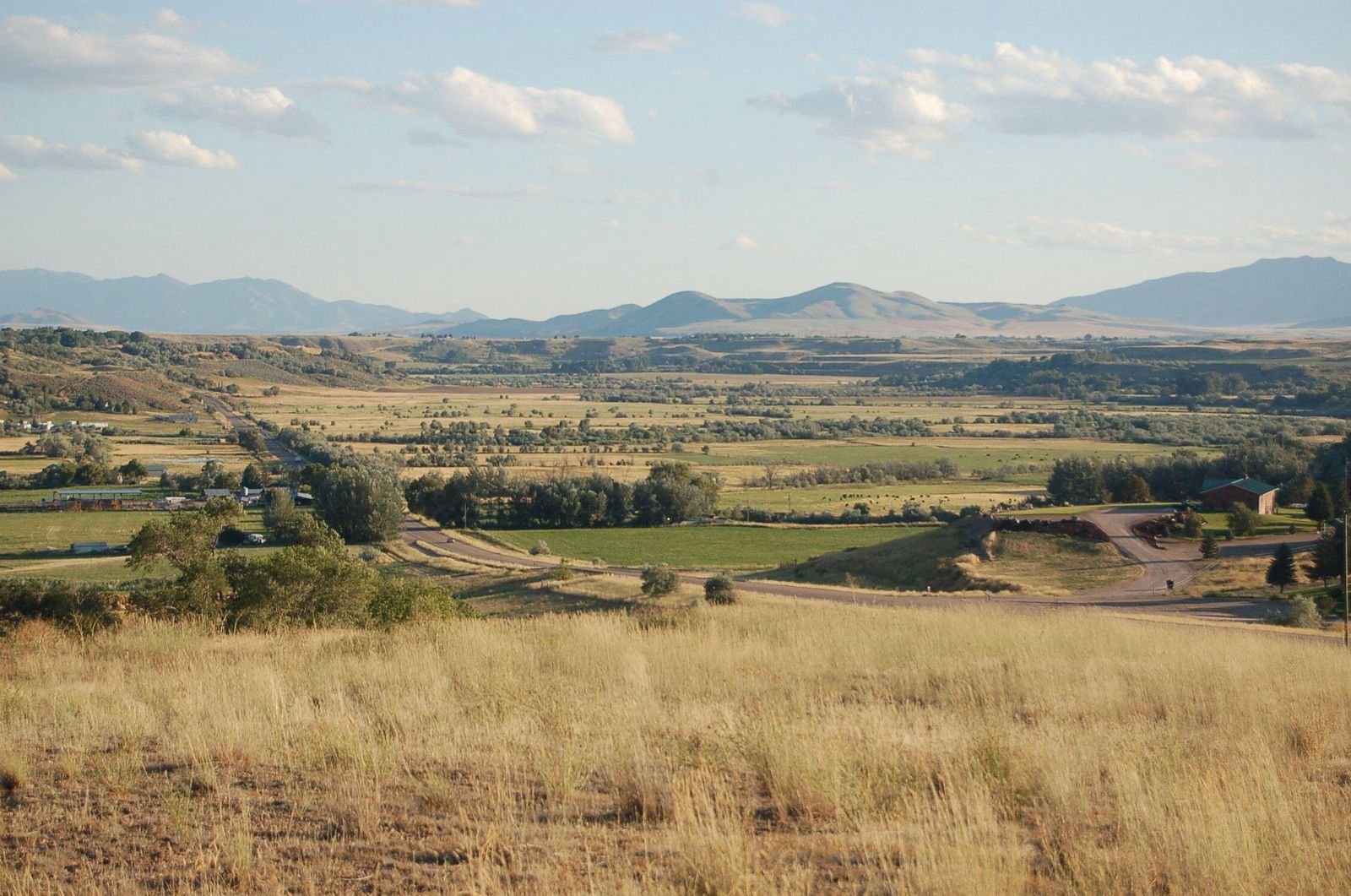
The site of the Bear River Massacre, which claimed the lives of an estimated 250 to 500 Shoshone on January 29, 1863
NB / TRAN via Alamy
The Bear River Massacre, which took place in a valley in what is now southeast Idaho on January 29, 1863, is often described as the worst attack on Native Americans in United States history.
Troops from a Union Army regiment slaughtered an estimated 250 to 500 men, women and children in a matter of hours. The death toll is believed to be higher than better-known massacres like Sand Creek in 1864 and Wounded Knee in 1890. Yet the attack on the Shoshone community is little remembered today.
Violence against Native Americans began soon after European settlers first landed on North American shores. Initially, it was the settlers themselves who clashed with Native people in disputes over land, but later, it was the U.S. government that directly attacked Indigenous tribes and forcibly removed people from their ancestral homelands.
An early 20th-century depiction of the Battle of Little Bighorn/https://tf-cmsv2-smithsonianmag-media.s3.amazonaws.com/filer_public/69/e7/69e7f694-785c-404a-89aa-2cb657394b3a/bighorn.jpg)
The best-known battle of the American Indian Wars took place on June 25-26, 1876, when Lieutenant Colonel George Armstrong Custer and some 750 soldiers from the Seventh Cavalry Regiment faced off against 2,000 Lakota Sioux and Northern Cheynne warriors on the high plains near Montana’s Little Bighorn River. Within an hour, Custer and all 210 of the men fighting directly alongside him were dead. Fourteen years later, the Seventh Cavalry massacred more than 250 Lakota at Wounded Knee in South Dakota, possibly in retribution for the losses incurred during Custer’s Last Stand.
Did you know? Sitting Bull and Wounded Knee
- Lakota leader Sitting Bull, who’d overseen Native warriors at the Battle of Little Bighorn, was killed by Lakota Indian Agency police on December 15, 1890.
- In the immediate aftermath of Sitting Bull’s death, hundreds of Lakota fled to the Pine Ridge Reservation in South Dakota, where many were massacred by American soldiers just two weeks later.
The 1890 Wounded Knee Massacre has become indelibly etched in America’s historical memory. Comparatively, few have heard of the Bear River Massacre, which took place 27 years prior. That may be in part because the attack happened in 1863, when public attention was focused on the Civil War. Bear River attracted limited press coverage; later historians paid scant attention to the massacre, showing little interest in examining the event from the Native American point of view.
That pattern of neglect began to change in the late 20th century, when a new crop of books about the American West presented a more even-handed treatment of Native history. In 1985, for example, Utah historian Brigham D. Madsen published Shoshoni Frontier and the Bear River Massacre. More recently, The Bear River Massacre: A Shoshone History, a 2019 book by Darren Parry, former chairman of the Northwestern Band of the Shoshone Nation, provided an Indigenous perspective on the massacre.
Northern Shoshone gathered at Fort Washakie in Wyoming in 1892/https://tf-cmsv2-smithsonianmag-media.s3.amazonaws.com/filer_public/dc/ea/dcea2226-df95-48e7-85b2-6a207729ad6b/ft_washakie.jpg)
The nomadic Shoshone people once roamed lands spanning modern-day Wyoming, Utah, Idaho, Nevada and California. The Eastern Shoshone developed more of a Plains horse culture, following vast herds of American bison that they depended on for food and clothing. The Western Shoshone, who lived in the desert basin and rangelands of Nevada and California, survived by gathering wild plants, hunting and fishing.
The tribe’s name is derived from the Shoshone word sosoni, meaning high-growing grasses. Some neighboring Native groups called the Shoshone the “Grass House People,” after their traditional grass thatch dwellings. The Shoshone themselves prefer the name Newe, or “People.”
“The Bear River Massacre does not define us today,” Darren tells Smithsonian magazine. “The loss has made us stronger, more resilient. It’s a horrific thing. I can’t even imagine what my ancestors suffered. But playing the victim here and becoming bitter is not the way to honor our ancestors. We honor them by telling their story.”
Darren initially heard about the massacre from his grandmother, Mae Timbimboo Parry, who’d received a firsthand account of it from her grandfather. As a child, he survived the attack by playing dead.
A plaque honoring the victims of the Bear River Massacre NB / TRAN via Alamy/https://tf-cmsv2-smithsonianmag-media.s3.amazonaws.com/filer_public/6e/f9/6ef9d1ec-746e-46cc-8e8a-19abe817821b/2m5hnpg.jpg)
Mae was a product of the Indian boarding school system, whose guiding philosophy was “kill the Indian to save the child.” Separated from their families at such institutions, Indigenous children were punished if they spoke their Native language or even referred to their people and culture. But Mae quietly resisted. She became fluent in Shoshone and wrote down the stories she’d heard from tribal elders at any early age. Her account is one of the main sources cited in her grandson’s book.
What exactly precipitated the 1863 massacre? Clashes between Mormon settlers and Native Americans were not infrequent at the time, and tensions only increased as new arrivals drove the Shoshone from their lands in greater numbers.
At first, Mormon leader Brigham Young encouraged peaceful relations with the local Indigenous population. He directed his followers to “feed them rather than fight them.” But settler appropriation of Shoshone lands soon destroyed tribal hunting and fishing grounds. The Shoshone began poaching cattle and stealing food to survive, leading the once-sympathetic Young and his fellow Mormons to view them as beggars and thieves.
On one occasion, a skirmish between the two groups resulted in the deaths of two white men and two Native Americans, angering white authorities and settlers. None of the individuals involved belonged to the Northwestern Shoshone, “but all were tarred with the same brush,” according to a website created by tribal historians.
Interpretive signs at the Bear River Massacre Site/https://tf-cmsv2-smithsonianmag-media.s3.amazonaws.com/filer_public/08/43/08437d68-9801-4406-8b01-ef68c49949e6/pioneer_historic_byway_-_bear_river_massacre_overlook_-_nara_-_7721060.jpg)
The U.S. Army tasked the Third Regiment California Volunteer Infantry, under the leadership of Colonel Patrick Edward Connor, with stopping the Shoshone. An immigrant from Ireland’s County Kerry, Connor had served in the Mexican-American War and would later lead a punitive campaign against the Sioux, the Cheyenne and the Arapaho.
The colonel viewed the Shoshone’s actions as “treasonous,” the Smithsonian’s National Postal Museum notes on its website. He carried warrants for the arrests of three tribal leaders and announced that he had no intention of taking prisoners.
Shoshone Chief Sagwitch and spouse Beawoachee/https://tf-cmsv2-smithsonianmag-media.s3.amazonaws.com/filer_public/33/e7/33e72814-5b00-4c51-bb69-6203a254595e/cc_chief_sagwitch_and_beawoacheejpg-web.jpg)
On January 28, 1863—the day before the massacre—the Deseret News, a publication founded by the Church of Jesus Christ of Latter-day Saints, spoke for many Mormons when it published an editorial stating that “with ordinary good luck, the volunteers will ‘wipe them out.’” The newspaper added, “If Col. Connor be successful in reaching that bastard class of humans who play with the lives of the peaceable and law-abiding citizens in this way, we shall be pleased to acknowledge our obligations.”
It wasn’t long before these grim wishes were fulfilled. On January 29, the Shoshone waited for the soldiers in a protected valley with natural hot springs, where the tribal bands would gather to rejuvenate themselves in the winter. They “knew that Colonel Connor was coming; they did not know that the colonel was coming to kill them all,” Darren writes in his book.
The day of the massacre was bitterly cold, with the land covered in several feet of snow. The American soldiers arrived early in the morning, when some of the Shoshone were still sleeping. Tribal members had hoped that Connor would ask them to peacefully surrender their leaders before resorting to violence, but the soldiers started firing without saying a word. The Shoshone possessed few rifles and soon ran out of the limited ammunition they had. Although they continued to fight with tomahawks, spears, and bows and arrows, they could do little to stop the carnage that ensued.
People jumped into the freezing river in a desperate attempt to escape. According to Mae’s writings, survivor Anzee Chee hid with several other women under a riverbank. Fearing that her crying baby would give away their location, she felt that she had no choice but to drown the child in the icy water. Some, like Mae’s grandfather, Yeager Timbimboo, the 12-year-old son of Shoshone Chief Sagwitch, saved themselves by playing dead.
By the early afternoon, hundreds of bodies were strewn across the snowy landscape. The worst slaughter of noncombatants on U.S. soil was over. Far from facing consequences for the massacre, Connor instead received a promotion to brigadier general for his actions.
The Bear River Battleground was declared a National Historic Landmark in 1990, only to be renamed the Bear River Massacre Site in 1993, after tribal members objected to the original nomenclature.
“When you attack a sleeping village of Indian men, women and children, you can’t call that a battle,” Brad Parry, Darren’s cousin and the vice chairman of the Northwestern Band of the Shoshone Nation, tells Smithsonian.
The Bear River Massacre: A Reflection on Shoshone History
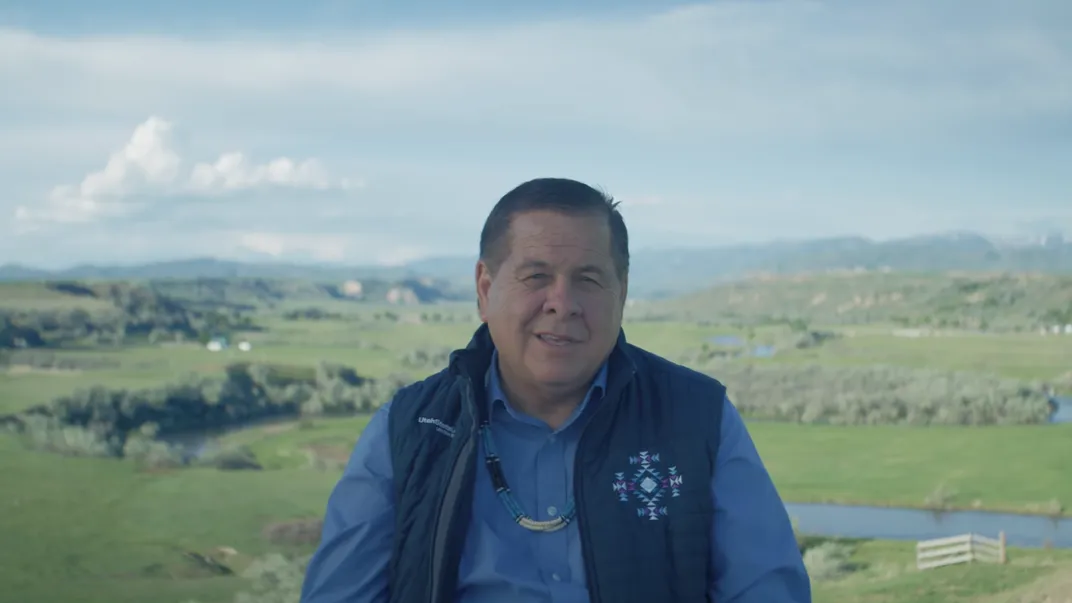
In 2018, Brad, with backing from the tribe, purchased 350 acres of the massacre site, making it the largest area owned by the Northwestern Shoshone. He was put in charge of an ambitious restoration project on the land, for which he won the inaugural Schnitzer Prize of the West this year.
The team removed invasive species, like the water-hogging Russian olive tree, and planted native species, including willows, milkweed, cedar, Indian tobacco and chokecherries. The Bear River, which had been channelized and dammed for agriculture, was released from its enclosures and allowed to flow freely. Beavers are being brought back to the land to recreate wetlands.
The Bear River is the Great Salt Lake’s largest tributary. By restoring the river, the group hopes to return 13,000 acre-feet of water to the Great Salt Lake annually, helping the dwindling lake recover some of its former size.
The project’s broader goal isn’t restoring the desert lake but reviving a culture.
“We want this to be a place where our kids grow up and learn about our history, the plants and medicines that we used, how to grow Indian tobacco, the chokecherry jam we used to make, how we used sagebrush and cedar for ceremony, our ancient way of life,” Brad says. “The settlers honored their ancestors by building monuments and putting up statues. Our way of honoring them is in the dirt, by bringing nature back into balance. The massacre site is now a place of healing. It is a living statement that we’re still here.”

