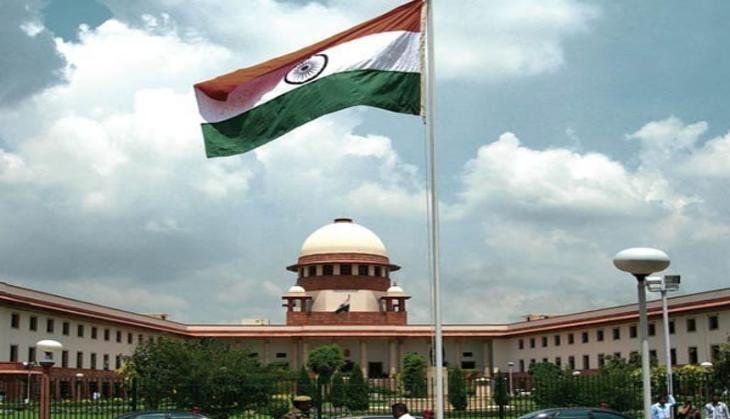


Supreme Court of India: Extinguishment of Operational Creditors’ Sub-Judice Claims upon Approval of a Resolution Plan
In M/S Tata Steel Ltd. v. Varsha & Anr., 2026 INSC 717, the Supreme Court decided the issue of whether Operational Creditors may enforce claims for past dues by way of civil suit/arbitration, subsequent to approval of a Resolution Plan, where such claims had been admitted by the Resolution Professional only at a notional value of Rupee One. While deciding this issue, the Court examined the interplay between the Interim and Final Lists of Creditors, the specific clauses of the Approved Resolution Plan dealing with sub-judice claims, and the ‘clean slate’ doctrine under the Insolvency and Bankruptcy Code, 2016.

Factual Matrix
Prior to initiation of Corporate Insolvency Resolution Process (CIRP) against the corporate debtor, Bhushan Steel Limited (BSL), Respondent No.1-Varsha had instituted a summary Civil Suit against BSL seeking recovery of INR 38,89,674.14 together with interest at 18% from the date of institution till realisation, later converted to Civil Suit No. 153 of 2011.
Intervenor-Masyc Projects Private Limited had similarly initiated six separate arbitral references before two independent arbitral tribunals in respect of goods engineered and supplied to BSL, which remained pending as on the date of approval of the Resolution Plan.
During pendency of these proceedings, CIRP was initiated against BSL at the instance of State Bank of India. Both Varsha and Masyc submitted to the jurisdiction of the Code and lodged claims as Operational Creditors, for INR 34,27,895 and INR 31,30,67,354 respectively.
On 17th January 2018, the Interim List of Creditors admitted both claims at a notional value of Rupee One each, with Note 3 recording that the claims were ‘subject to disputes pending before various authorities’ and that liability was ‘subject to the outcome of the ongoing proceedings.’ Varsha’s claim was later modified to INR 1,66,66,707 upon inclusion of compound interest.
On 3rd February 2018, Tata Steel Ltd. (Appellant-SRA) submitted its Resolution Plan. Since claims of financial creditors exceeded the liquidation value, Operational Creditors were held entitled to NIL payment.
Nevertheless the Plan provided for an Operational Creditors Settlement Amount of INR 1,200 crore, of which INR 1,000 crore was earmarked for essential and critical Operational Creditors and the balance INR 200 crore for pro-rata distribution among other Operational Creditors whose claims had been admitted.
On 20th March 2018, the Resolution Professional prepared the Final List of Creditors, again admitting the claims of Varsha and Masyc at a notional value of Rupee One each. However, Note 3 as appended to the Interim List was omitted, and in its place Note 2 was appended, stating that ‘claims which are subject to disputes pending before various authorities have been verified with a notional amount of INR 1.’
The Committee of Creditors approved the Resolution Plan on the same day, and the NCLT sanctioned it on 15th May 2018 under Section 30 read with Section 31 of the Code. Appeals before the NCLAT were dismissed on 10th August 2018, and Masyc’s challenge to treatment of its claim was dismissed as withdrawn by the NCLT on 25th October 2018.
The Appellant-SRA thereafter sought dismissal of the Civil Suit and termination of the arbitral proceedings, both of which were rejected by the Trial Court and the Sole Arbitrator respectively. The Appellant-SRA’s Writ Petition against the Trial Court’s order was dismissed by the High Court of Bombay, Nagpur Bench, on 28th March 2019, and the Review Petition met the same fate on 9th July 2019.
These orders were under challenge before the Supreme Court. Masyc was permitted to intervene by Order dated 27th August 2021, confined to the limited issue of whether Operational Creditors may enforce claims for past dues by suit/arbitration after approval of a Resolution Plan.
Parties’ Contentions
The Appellant-SRA contended that the Resolution Professional had, in conformity with Committee of Creditors of Essar Steel India Limited v. Satish Kumar Gupta, (2020) 8 SCC 531, rightly admitted the disputed claims at a notional value of Rupee One.
It emphasised that the Final List of Creditors did not carry any note indicating that liability was contingent on the outcome of pending proceedings, and that Clauses 8.2.4 and 8.6.10 of the Approved Resolution Plan made clear that Sub Judice Claims stood deemed owed and due as of the Insolvency Commencement Date at a Liquidation Value of NIL, with no amount payable beyond the Operational Creditors Settlement Amount.
It relied on the ‘clean slate’ doctrine as recognised in Ghanashyam Mishra & Sons Pvt. Ltd. v. Edelweiss Asset Reconstruction Co. Ltd., (2021) 9 SCC 657, and on the non-justiciability of the Committee of Creditors’ commercial wisdom as affirmed in Kalyani Transco v. Bhushan Power and Steel Limited, 2025 SCC OnLine SC 2093.
Respondent No.1-Varsha contended that the Appellant-SRA had procured approval of the Resolution Plan by suppressing Note 3 of the Interim List when preparing the Final List, thereby committing ‘an egregious breach of the Code.’
It argued that the INR 1,200 crore settlement pool exceeded the admitted claims of Operational Creditors by approximately INR 149.11 crore, which surplus ought to have been placed in escrow for sub-judice claims, and sought recall of the NCLT’s approval order under Rule 11 of the NCLT Rules, relying on Greater Noida Industrial Development Authority v. Prabhjit Singh Soni, (2024) 6 SCC 767.
Intervenor-Masyc contended that Clause 8.7.3(i) of the Resolution Plan expressly carved out claims recorded in Annexures 8 to 12 from extinguishment, and that its claims, being recorded in Annexures 8 and 10, survived.
It argued that Clause 8.2.2 was not confined to undisputed claims, that the notional INR 1 valuation was consciously adopted by the Appellant-SRA to preserve the pending litigation, and that abatement of proceedings under Clause 8.6.10(ii) was expressly conditional on payment of the Operational Creditors Settlement Amount, which could not extinguish proceedings while the underlying claim remained unquantified.
It invoked the principle of contra proferentem and proposed a ‘face value reservation mechanism’ by which a pro-rata share computed on the face value of each sub-judice claim ought to have been ring-fenced pending adjudication.
Issue
Whether, upon approval of a Resolution Plan under Section 31 of the Code, Operational Creditors whose claims had been admitted by the Resolution Professional only at a notional value of Rupee One, on account of the claims being sub-judice before other fora, could continue to prosecute their civil suit or arbitration proceedings for the ‘real’ or crystallised amount of their claim, or whether such proceedings stood extinguished by the approval of the Plan.
Findings of the Supreme Court
The Court held that the propositions of law governing the case were not in dispute i.e., all claims must be submitted to and decided by the Resolution Professional so that a prospective Resolution Applicant knows exactly what has to be paid, per JSW Steel Ltd. v. Pratishtha Thakur Haritwal, (2025) 9 SCC 673.
The Committee of Creditors’ commercial wisdom in the treatment of claims is non-justiciable and claims not incorporated in an approved Resolution Plan stand extinguished, consistent with the ‘clean slate’ principle recognised in Ghanashyam Mishra (supra).
On the allegation of fraud, the Court found it baseless, noting that no application under Rule 11 of the NCLT Rules had been filed till date, and that in the absence of such proceedings, allegations of manipulation could not be entertained in an appeal preferred by the Successful Resolution Applicant.
On the notional valuation, the Court held that the Final List of Creditors dated 20th March 2018 did not carry Note 3 as appended to the Interim List, and instead carried Note 2, by virtue of which the claims stood altered from a ‘notional’ Rupee One, subject to adjudication, into a ‘quantified’ Rupee One claim with apparent finality. The argument that the notional value was assigned to keep the claims alive pending litigation was accordingly held contrary to the Resolution Plan.
The Court further held that no Resolution Plan can succeed if uncertain or unquantified claims are permitted to linger and resurface against a Successful Resolution Applicant years after approval, as this would be ‘akin to a hydra-headed recurrence’ antithetical to the clean slate principle.
It held that the Appellant-SRA had been informed that admitted Operational Creditor claims aggregated approximately INR 1,422 crore, against which it voluntarily provided a corpus of INR 1,200 crore, and that only INR 200 crore was available for pro-rata distribution to Operational Creditors whose claims stood crystallised and quantified as on 20th March 2018 which, for Varsha and Masyc, was Rupee One each.
Reading Clauses 8.7.3, 8.6.10 and 8.2.4 of the Resolution Plan conjointly, the Court held that these provisions unequivocally stipulated that all legal proceedings by Operational Creditors, whether under Annexure 8 or Annexure 10, ‘shall immediately, irrevocably and unconditionally stand withdrawn, abated, settled and/or extinguished,’ and that the Plan, read in its entirety, did not provide an express carve-out protecting sub-judice claims from extinguishment.
The Court also held, with reference to Regulation 12(2) of the CIRP Regulations as then in force, that the Corporate Debtor’s liability towards Operational Creditors had to be crystallised and quantified as on the date of the Final List, and that Clause 8.2.2(vi) fortified this position by providing that the Operational Creditors Settlement Amount would remain unaltered notwithstanding subsequent claims.
Holding that there was no ambiguity in the Resolution Plan, the Court found neither the principle of contra proferentem nor Masyc’s ‘face value reservation mechanism’ applicable, and observed that it would be commercially unsound for an approved Resolution Plan to prescribe a twelve-month payment timeline for certain Operational Creditors while simultaneously permitting indeterminate claims to remain pending until crystallisation.
Accordingly, the Court held that all legal proceedings, including arbitration and civil suits, which had not culminated in determinable, quantifiable claims by the date of approval of the Resolution Plan by the NCLT, stood abated, extinguished, waived or withdrawn, and that no amount beyond Rupee One each was payable to Respondent No.1-Varsha and Intervenor-Masyc.
The Civil Appeals were allowed, the impugned Judgment and Orders of the Bombay High Court were set aside, and both the Civil Suit and the arbitration proceedings were dismissed.
In an afterword, the Court observed that the Code does not adequately account for the position of small operational creditors, including MSMEs and statutory local bodies, who stand significantly disenfranchised by being placed at the bottom of the repayment waterfall, and suggested that the Law Commission and the Legislature may usefully examine the matter to ensure a fair and balanced repayment mechanism alongside an efficient insolvency regime.

