



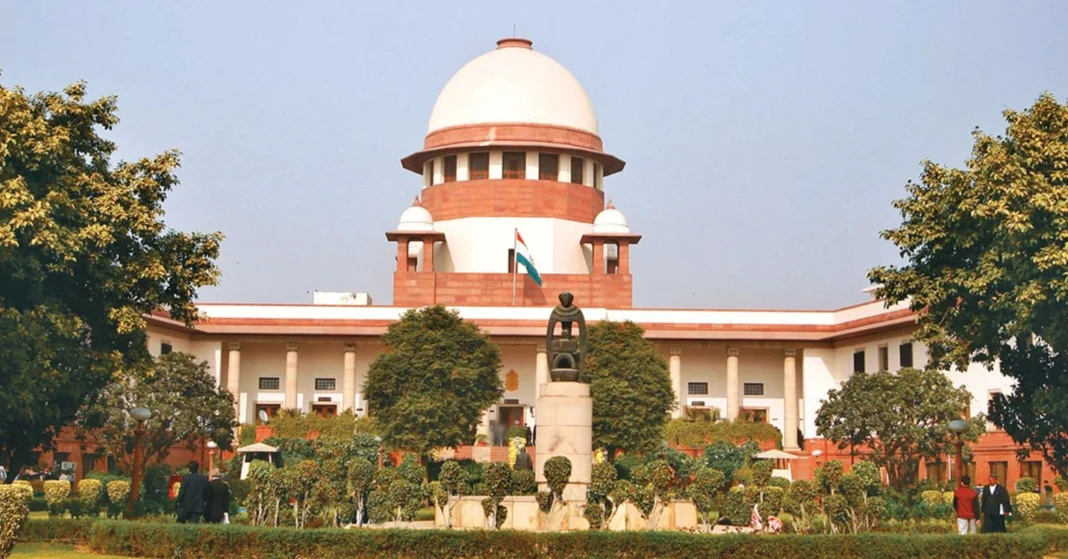

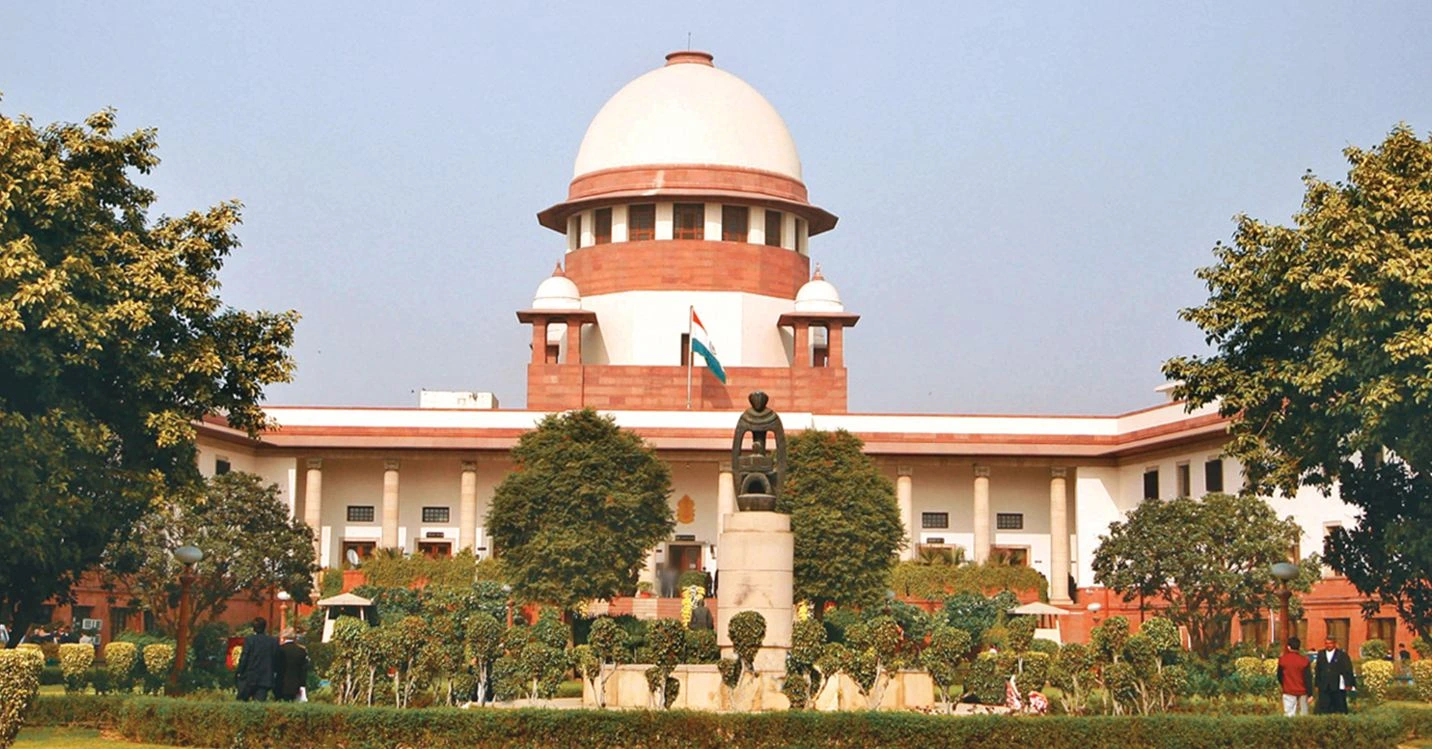
A Constitution Bench led by Chief Justice of India D.Y. Chandrachud heard the matter, underscoring the need for judicial vigilance and systemic coherence given the protracted nature of the cases arising out of the 2023 violence. The unrest, which resulted in widespread loss of life and property, has generated a complex matrix of criminal cases, compensation issues and law-and-order implications.
During the hearing, the Court noted that despite various directions issued earlier, a comprehensive status report from the Central Bureau of Investigation (CBI) is yet to be placed before it. The bench, also comprising Justice Hima Kohli and Justice P.S. Narasimha, emphasised that a detailed schedule of investigations, prosecutions and trial progress is crucial for meaningful judicial supervision.
The Apex court observed that the monitoring of trials conducted in Manipur may require structural recalibration. While trials are currently proceeding in local courts, the Court flagged concerns about logistical challenges, security constraints and potential delays that could compromise the delivery of timely justice. As a result, it is evaluating whether trial supervision should be transferred to courts outside the state or placed under some form of centralised judicial oversight.
Senior advocates appearing before the bench highlighted the scale and sensitivity of the litigation, which involves numerous accused, evidentiary complexities and significant public interest. They argued that without an efficient monitoring mechanism, the trials might lag, eroding confidence in the legal process and impeding closure for victims and affected families.
The Supreme Court’s intervention follows earlier directions aimed at stabilising peace and upholding the rule of law in Manipur in the aftermath of the violence. The judges reiterated that the judiciary has a constitutionally mandated role in ensuring that prosecutions are not hamstrung by administrative inertia or resource constraints.
In issuing its latest order, the Court directed the CBI to file a status report detailing the number of cases registered, arrests made, charge sheets filed and the progress of prosecution across various courts. It also asked for information on challenges faced by investigative teams, including any constraints in evidence gathering or witness protection.
The bench indicated that once the CBI report is submitted, it will assess whether existing trial arrangements are adequate or whether cases should be moved to Special Courts or other judicial fora better equipped to handle them. The Court emphasised that expeditious, fair and transparent trials are essential, not only for upholding individual rights but also for restoring public faith in the justice delivery system.
Legal experts say the Supreme Court’s engagement signals a shift toward sustained judicial oversight in complex conflict-related litigation. They note that the judiciary is keen to balance respect for federal structures with the need to ensure that justice is neither delayed nor denied.
On January 7, the Supreme Court h directed that the complete 48-minute audio recording purportedly linking former Manipur Chief Minister N Biren Singh to events surrounding the 2023 ethnic violence, together with his admitted voice samples, be transmitted to the National Forensic Science University (NFSU), Gandhinagar, for comprehensive forensic scrutiny.
The Bench of Justice Sanjay Kumar and Justice K Vinod Chandran ordered that all available voice recordings, including those supplied by the petitioner, be forwarded in their entirety to the NFSU. The forensic institution was asked to conduct an expedited examination and place its report before the Court in a sealed cover, in keeping with established judicial practice in matters involving sensitive evidence and ongoing investigations.
The order was passed on a writ petition seeking a court-monitored investigation into the authenticity and evidentiary value of the disputed audio material. Emphasising the need for scientific certainty, the Court
The proceedings arise against the backdrop of an earlier communication from the NFSU in November 2025, wherein the laboratory had informed the Court that the audio clips earlier sent to it exhibited indications of tampering and were therefore unsuitable for reliable voice spectrographic analysis.
On that basis, the laboratory had expressed its inability to render any definitive opinion regarding similarity or dissimilarity between the questioned voice and the admitted samples. The petitioner has challenged that conclusion, contending that the Manipur Police had selectively forwarded truncated and edited excerpts rather than the full recording, thereby vitiating the forensic exercise.
Appearing for the petitioner, the Kuki Organisation for Human Rights Trust, Advocate Prashant Bhushan submitted that the matter had been listed on multiple occasions and that the State had been represented throughout. He asserted that the writ petition itself annexed the transcript of the complete 48-minute conversation and that the audio file had been made available, placing the authorities on notice of the existence of the full recording. According to the petitioner, any forensic opinion based on partial material would be inherently flawed and contrary to the principles governing the appreciation of electronic evidence under Section 65B of the Indian Evidence Act, 1872.
Appearing for the State of Manipur, Additional Solicitor General (ASG) Aishwarya Bhati disputed this position and maintained that the complete recording had been received only after the previous hearing, noting that it had not been formally served earlier. In response, the petitioner argued that the State could have sought the material during the course of repeated hearings and that the absence of a formal notice could not justify reliance on incomplete evidence.
Taking note of the rival submissions, the Bench considered it appropriate to ensure procedural fairness and evidentiary completeness by directing that the entire recording, along with admitted voice samples, be subjected to a fresh forensic examination. The Apex Court retained seisin over the issue pending receipt and consideration of the sealed forensic report.
The matter is likely to come up for further hearing once the CBI status report is filed, after which the Court may issue more definitive directions on trial monitoring and case management.